How Small Businesses Can Compete on Same-Day Delivery
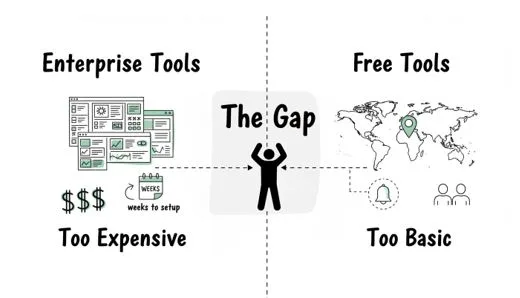
Your customers expect packages the same day they order. They got that expectation from two-hour Prime windows and instant grocery apps. You are not a billion-dollar logistics company. But you still need to deliver — fast, cheap, and with tracking your customers can actually see.
This post breaks down what delivery software for small business needs to do, the habits that keep costs low, and why sitting this out is not an option.
What Most Delivery Tools Get Wrong
Most platforms assume you have a dispatch team, a fleet manager, and an IT department. They charge per order, lock useful features behind expensive tiers, and take weeks to set up. That is enterprise software wearing a small-business label.
On the other end, free tools give you a map and nothing else. No driver coordination. No customer notifications. No way to connect to the platforms where your orders actually live.
The gap between “too expensive” and “too basic” is where small businesses get stuck.
You end up managing drivers through group texts and guessing ETAs for customers who want real answers.
What Good Delivery Software for Small Business Actually Does
A Free Tier That Works from Day One
Not a 14-day trial. Not a plan that caps you at five orders. A tier you can run real deliveries on while you grow. If the tool forces an upgrade before you see value, it is built for the vendor, not for you.
Flat Pricing with No Per-Order Commissions
Third-party marketplaces take 15-30% per order. That margin is yours. The best delivery software charges a predictable monthly rate so your costs stay flat even when order volume spikes.
Real-Time Tracking with Branded Customer Notifications
Your customers should see a live map and get text or email updates with your name on them — not a generic tracking page. This is how you build trust and cut “where is my order” calls in half. The right delivery software handles this without any code on your end.
Setup That Takes Minutes, Not Days
If you need a developer or a training manual, the tool is too complicated. Look for something you can configure during a lunch break and have drivers using the same afternoon.
Direct Integrations with Shopify, Square, and Other SMB Platforms
Orders should flow in automatically. Manual copy-paste between your store and your delivery tool is a bottleneck that breaks at scale.
A Mobile Driver App That Works Out of the Box
Your drivers need one tap to see their next stop, get navigation, and mark deliveries complete. If the app needs training, your drivers will ignore it and call you instead.
Habits That Keep Same-Day Delivery Profitable
Batch orders by zone. Group deliveries into tight geographic clusters. A driver covering one neighborhood makes six stops in the time it takes to crisscross town for three.
Set delivery windows and stick to them. Offer two or three time slots per day. This lets you build efficient routes instead of reacting to every order one at a time.
Automate customer updates. Every “where is my order” text costs you five minutes. Automated notifications with live tracking links eliminate most of those messages. Good delivery software sends these without manual effort.
Review driver performance weekly. Check completion rates, on-time percentages, and failed deliveries. Small patterns — like one driver consistently running late in a certain area — reveal fixable problems.
Start with your best-selling delivery zones. You do not need citywide coverage on day one. Nail same-day in your densest zip codes first, then expand when the operation runs clean.
Standing Still Means Falling Behind
Sixty-five percent of consumers say delivery speed influences where they shop.
Every week you rely on phone calls and manual dispatching, a competitor with real tools picks up the customers you lose.
The math is simple:
| Scenario | Monthly Cost |
| Marketplace commissions (100 orders @ $30 avg, 15-30% fee) | 450- 900 |
| Flat-rate delivery software | A fraction of that |
The savings go straight to your margin or back into faster delivery.
Small businesses that own their delivery operations keep their customers, their data, and their profits. The ones that wait keep paying for someone else’s logistics — and someone else’s brand on the tracking page.