Gen Z Is Dating AI. And For Many, It Feels Surprisingly Real
For a generation that grew up online, flirting through a screen is nothing new. What is new is who is on the other side of the chat. Increasingly, it isn’t another person. It’s an AI.
Across dating apps, social platforms and general chatbots, Gen Z users are experimenting with AI as a place to test pickup lines, vent about relationships, roleplay, and even build emotional connections. What started as curiosity has started to look like a real behavioral shift. AI isn’t just answering homework questions or summarizing notes anymore. For many young adults, it’s becoming part of their romantic and emotional lives.
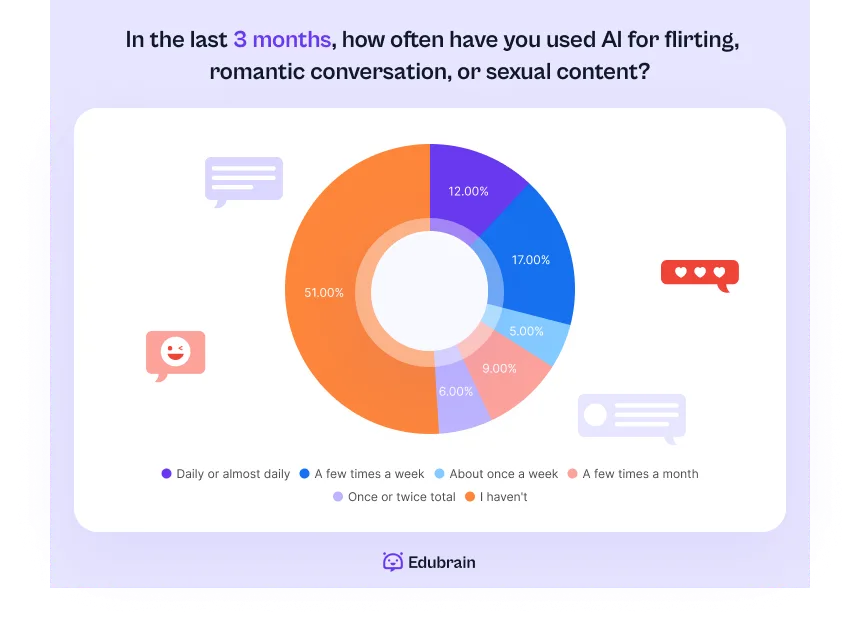
Recent survey data from suggests just how widespread this is. Nearly half of respondents said they’ve flirted with AI, while a similar share reported forming some level of emotional connection during those interactions.
That doesn’t mean everyone is replacing human relationships with bots. But it does show that for many young people, AI has become a low-pressure space to experiment with communication and intimacy.
Why AI is becoming part of dating culture
One reason is simple. AI feels safe. There’s no risk of rejection, no awkward silences, and no screenshots shared in group chats. Conversations can be restarted, rewritten, or abandoned without consequence. That kind of control appeals to a generation that already navigates much of its social life digitally.
According to the survey data, 48% of Gen Z participants said they have engaged in some form of AI romance, and many interact with AI partners regularly. Some described using chatbots to practice flirting or test how a message might land before sending it to a real person. Others said they turned to AI for emotional support after arguments, breakups or stressful days.
What’s notable is not just the behavior, but how often it happens. Among users who engage with AI in this way, over half said they interact daily or almost daily. For some, it’s a quick check-in. For others, it’s a routine conversation that can stretch for half an hour or more.
The realism of these interactions plays a big role. Many respondents described AI conversations as feeling natural enough to blur the line between playful experimentation and emotional attachment. In the same survey, a majority of users said the interactions felt at least somewhat realistic, with a notable share saying they felt very realistic or almost like talking to a real person.
That sense of realism makes AI useful for practicing communication. It also makes it easy to form habits.
Emotional attachment and the “practice partner” effect
For some users, AI functions as a rehearsal space. It’s where you can try being more confident, more direct, or more emotionally open without worrying about consequences. That may help explain why a majority of chatbot users in the survey reported feeling some level of emotional attachment to their AI conversations.
Attachment doesn’t necessarily mean delusion. Many respondents were fully aware they were talking to a machine. But they still described the conversations as comforting or helpful. In some cases, people said AI made it easier to articulate feelings they struggled to express elsewhere.
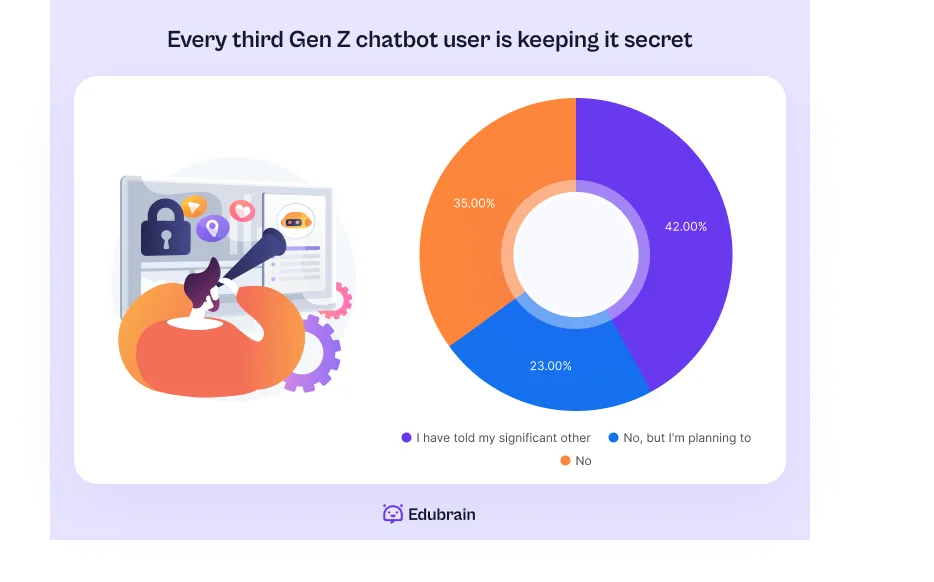
At the same time, this trend raises familiar questions about boundaries. Some users in relationships reported keeping their AI interactions private from partners, while others said they planned to disclose them. The fact that people feel the need to hide or reveal AI conversations suggests they’re starting to carry emotional weight.
Not just romance apps
Interestingly, users aren’t only turning to apps designed for virtual relationships. Many rely on general chatbots. These systems weren’t built as dating tools, but they’re being used that way anyway. The survey found that general conversational AI platforms were among the most commonly used spaces for flirting or emotional chat, followed by romance-focused and character-based platforms.
That crossover is part of what makes this trend hard to categorize. AI dating isn’t confined to a single app or niche. It’s happening wherever conversational AI exists.
“People are experimenting with AI in ways we didn’t originally design for,” says Harry Southworth, Head of AI Development at Edubrain. “They come in looking for information or support, and sometimes those conversations naturally drift into more personal territory. The key is making sure the systems remain reliable and transparent about what they are and what they’re not.”
Southworth adds that while conversational AI can feel emotionally responsive, it’s still important for users to treat it as a tool rather than a substitute for real-world relationships. In practice, that can look like someone testing a text before sending it, asking how a message might come across, or looking for reassurance after an awkward interaction. A user might ask a chatbot for advice on what to say next and scroll through a few possible ai answers before deciding which one actually sounds like them, then send the message to a real person.
Concerns are growing alongside usage
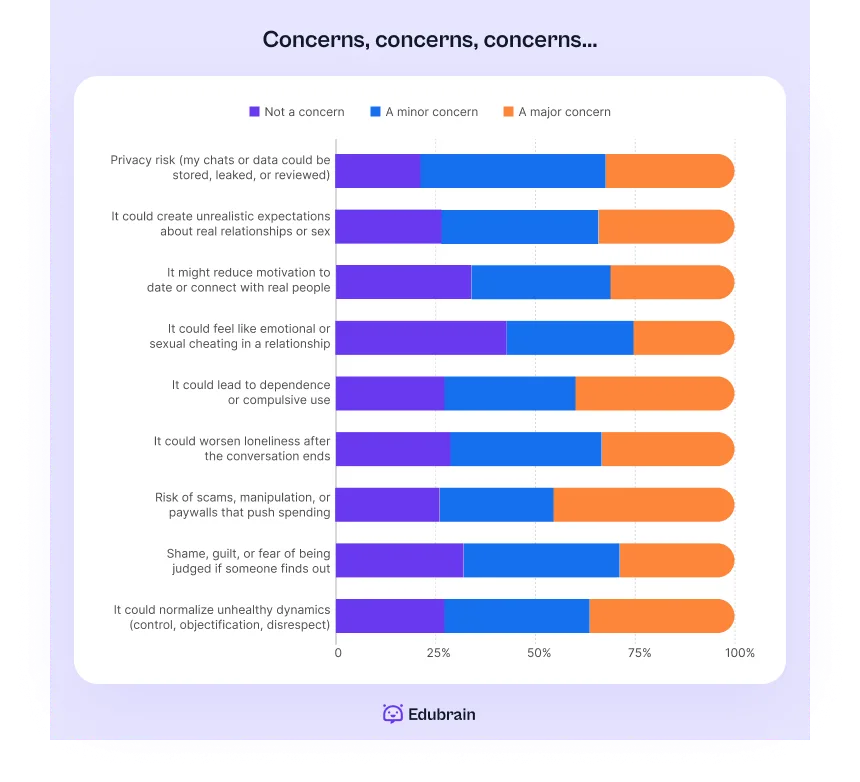
Even as interest grows, so do concerns. Many Gen Z respondents said they worry about privacy and data storage when using AI for personal conversations. Others expressed concern that AI might create unrealistic expectations about communication or relationships.
Those worries reflect a broader conversation about how emotionally responsive technology should be. On one hand, AI can offer support and practice in a low-stakes environment. On the other, there’s a risk of dependency or confusion if users begin to rely on it too heavily.
Experts say the answer isn’t to discourage experimentation, but to encourage awareness. AI can be helpful for practicing communication or getting perspective. It becomes a problem only when it replaces real interaction rather than supporting it.
A shift in how connection works
What’s clear is that Gen Z isn’t waiting for cultural consensus before trying new ways to connect. They’re already using AI to test boundaries, explore identity and navigate relationships. Whether that’s a temporary phase or a lasting shift remains to be seen.
For now, AI has quietly joined the list of places where modern flirting happens. Not in place of human connection, but alongside it. And as conversational technology keeps improving, that line will likely keep moving.