Text to Music AI: The Future of Music Creation
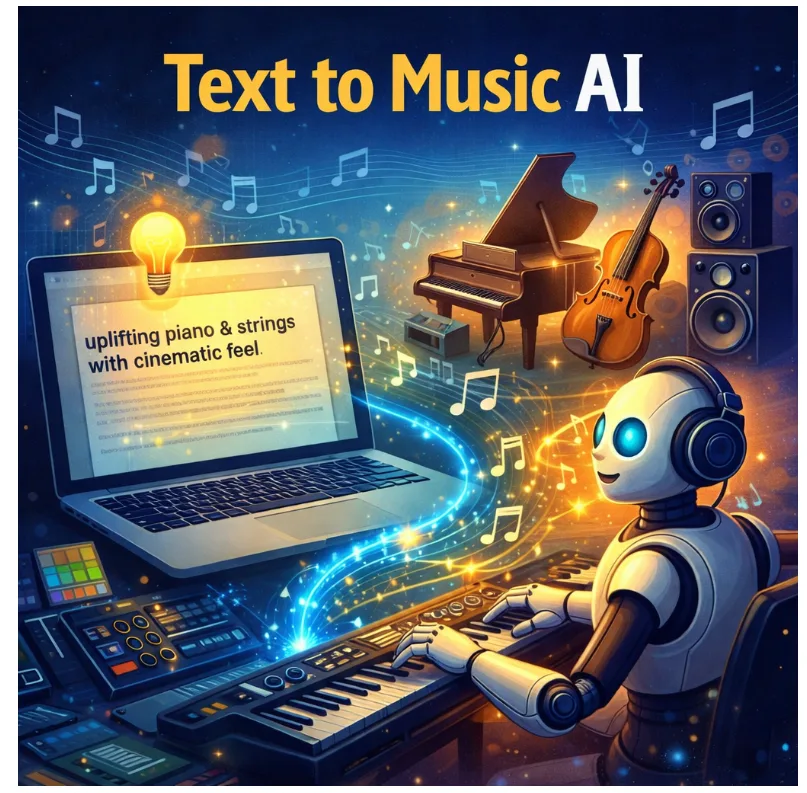
In the rapidly evolving world of artificial intelligence (AI), one of the most fascinating frontiers is Text to Music AI — a technology that transforms written words into musical compositions. What was once the domain of skilled composers and producers now has tools emerging that can create melodies, harmonies, and rhythms from textual prompts. This innovation is not only reshaping how music is made but also who gets to make it.
What Is Text to Music AI?
Text to Music AI refers to artificial intelligence models that generate music based on descriptive text input. Users type a prompt — for example, “uplifting piano melody with a cinematic feel” — and the AI produces a unique piece of music that reflects that description. These models are trained on vast amounts of musical data, learning patterns of melody, rhythm, dynamics, and style.
Unlike traditional music generation tools that require input in the form of MIDI notes or patterns, Text to Music AI accepts natural language — the most intuitive interface for many people.
How Does It Work?
At a high level, Text to Music AI relies on a combination of several advanced technologies:
1. Natural Language Processing (NLP)
The system must first understand what the user is asking for. NLP techniques help the AI interpret prompts like “jazzy saxophone under starlight” or “electronic dance beat with upbeat energy.”
2. Music Representation Learning
Music must be represented in a form the AI can process. This may involve symbolic representation (like MIDI files) or audio features extracted from recordings. The AI learns relationships between sound characteristics and language descriptions.
3. Generative Models
Advanced generative architectures — such as transformers, variational autoencoders (VAEs), and generative adversarial networks (GANs) — are used to synthesize new musical content. These models aim to produce coherent sequences of notes and rhythms in response to the prompt.
4. Sound Rendering
Finally, once a musical structure is generated, the AI must render it into audible sound with realistic instruments or synthesized timbres. Some systems integrate virtual instrument libraries or neural audio synthesis techniques.
Why Is Text to Music AI Important?
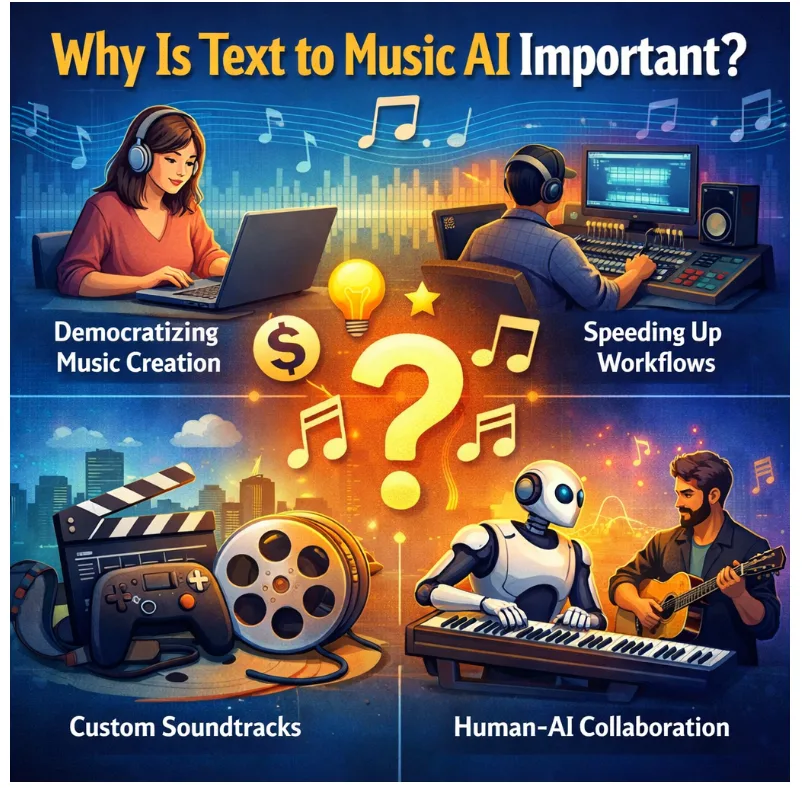
The rise of Text to Music AI has significant implications for creators, industries, and listeners alike.
1. Democratising Music Creation
Perhaps the biggest impact is accessibility. Traditionally, composing music required training, instrumental knowledge, and software skills. With Text to Music AI, anyone with an idea can generate music — from hobbyists and storytellers to filmmakers needing a quick score.
2. Speeding Up Creative Workflows
Professional composers and producers can use these tools to rapidly prototype ideas, explore variations, and spark new inspiration. This accelerates creativity rather than replacing it.
3. Customisation at Scale
For applications like game design, advertising, and content creation, there is often a need for unique, context-specific music. Manually scoring thousands of pieces is expensive and time-consuming — Text to Music AI can help generate tailored soundtracks efficiently.
4. New Forms of Collaboration
As AI becomes more creative, the relationship between humans and machines shifts toward collaboration. AI can act as a co-composer, suggesting motifs or themes that a human can refine.
Applications of Text to Music AI
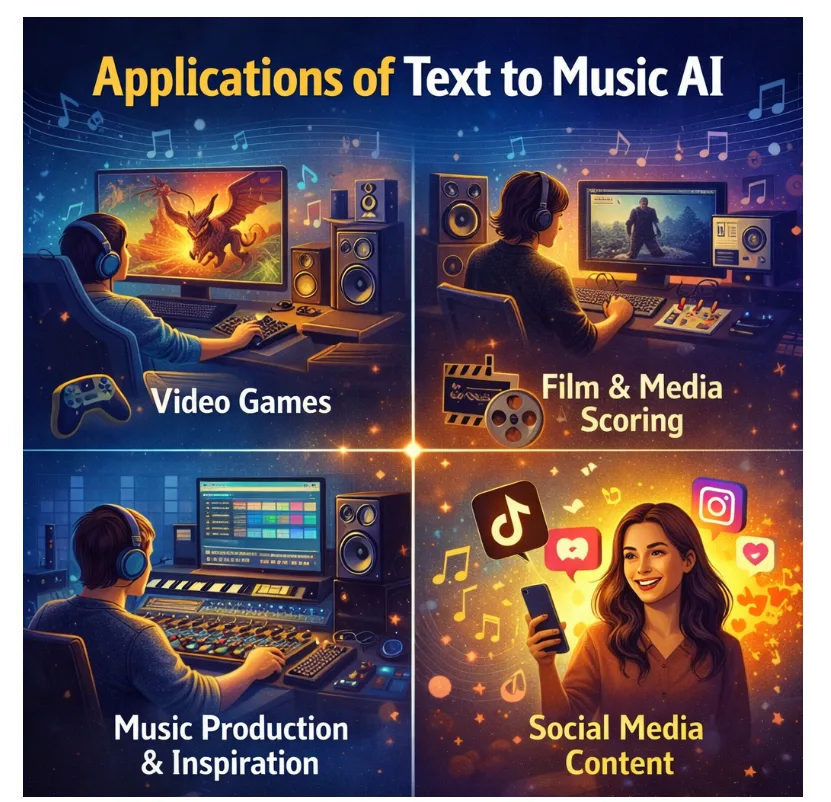
Text to Music AI is not limited to novel experimentation — it’s already finding real-world use cases across industries:
Video Games
Games often require adaptive, dynamic soundtracks. Text to Music AI can help generate music that changes based on gameplay or narrative elements, making each playthrough feel distinct.
Film and Media Scoring
Indie filmmakers and content creators can produce cinematic soundtracks without costly composition services. A prompt like “dark ambient music for suspense” can yield instant background music.
Music Production and Inspiration
Producers can use Text to Music AI to generate ideas, themes, or backgrounds to build upon. It’s a creative partner rather than a replacement.
Social Media and Short-Form Content
Platforms like TikTok and Instagram thrive on short, catchy sounds. Text to Music AI makes it easy for creators to produce original tracks on demand.
Education and Exploration
Music students can experiment with genres and styles, deepening their understanding of composition through exploration and feedback.
Limitations and Challenges
Despite its promise, Text to Music AI is still maturing, and there are important limitations to acknowledge:
1. Quality and Musicality
AI-generated music can sometimes feel formulaic or generic. Emotional depth and nuanced expression — hallmarks of human composition — are areas where AI still has room to grow.
2. Intellectual Property and Ethics
AI models trained on existing music raise questions about copyright and ownership. Who owns the music the AI creates? How can we ensure respect for original artists’ rights and influence? These are ongoing debates.
3. Lack of Contextual Understanding
AI can interpret prompts literally but may struggle with deeper artistic direction. A request like “music that evokes childhood memories” may produce sound that fits technically but misses personal emotional resonance.
4. Technical Constraints
Generating high-fidelity audio — especially with realistic instrumentation — still demands significant computing resources. Not all tools produce studio-ready audio quality.
Examples of Text to Music AI Tools
Several platforms and research projects have emerged in recent years, each approaching Text to Music AI differently:
- Some tools focus on symbolic music generation, creating MIDI files that users can edit.
- Others generate fully-rendered audio, complete with instrument sounds.
- Some are integrated into digital audio workstations (DAWs), while others are web-based.
These tools vary in terms of customisability, output quality, and ease of use.
The Future of Text to Music AI
The future of Text to Music AI is rich with possibility. Trends we expect to see include:
1. More Expressive Models
AI systems that better understand emotion, cultural context, and musical structure will create more nuanced compositions.
2. Real-Time Generation
Imagine games, virtual worlds, or live performances where the music changes in real time based on narrative or audience interaction.
3. Collaboration Tools for Musicians
Tools that blend AI creativity with human performance — letting musicians play alongside AI-generated parts — will expand artistic possibilities.
4. Integration With Other AI Media
Text to Music AI will likely intersect with Text to Image, Text to Video, and AI storytelling tools, allowing creators to produce fully immersive multimedia experiences from simple prompts.
How to Get Started With Text to Music AI
If you’re curious about experimenting with Text to Music AI, here are a few steps to begin:
- Explore Online Tools: Many platforms offer free or trial access that let you type prompts and generate music in minutes.
- Start With Simple Prompts: Begin with clear descriptions like “soft guitar lullaby” or “energetic synthwave beat.”
- Iterate: Adjust your prompts and explore variations — AI responds creatively to changes in text.
- Refine and Edit: Use digital audio workstations to polish and build on AI-generated ideas.
- Learn and Share: Join communities of creators experimenting with AI-generated music to learn tips and techniques.
Conclusion
Text to Music AI represents a transformative moment in the evolution of music creation. By connecting natural language to musical expression, these tools lower barriers, accelerate creative workflows, and unlock new opportunities for artists and creators worldwide.
While it’s not a replacement for human creativity, Text to Music AI is a powerful partner — one that amplifies imagination and makes music more accessible than ever before.
As this technology continues to improve, the lines between human and machine creativity will blur, giving rise to entirely new forms of musical expression and cultural innovation.