Which Laser Cutting Machine Suppliers can Provide Global Door-to-Door Service?
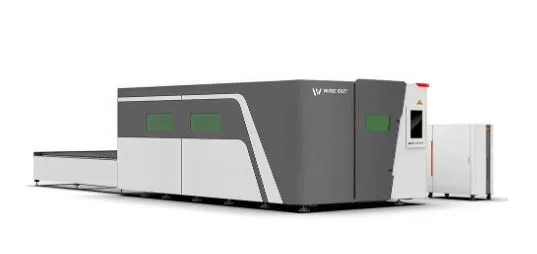
Global Manufacturing Decentralization and the Rise of Distributed Fabrication Networks
Automotive parts may be cut in Southeast Asia, assembled in Eastern Europe, and delivered to North America. Elevator panels, agricultural machinery brackets, kitchen equipment housings.
In this context, laser cutting systems are no longer static workshop equipment. They are strategic production assets deployed across multiple countries. A machine purchased in China might operate in Germany within 40 days. Another may run in South America under unstable grid conditions. The difference between a smooth launch and a delayed project often comes down to one factor: whether the supplier can handle global door-to-door deployment as a complete engineering task, not just a shipment.
Power configuration, customs documentation, environmental temperature, foundation requirements, installation supervision, and remote diagnostics all matter. A machine capable of ±0.03 mm positioning accuracy is meaningless if commissioning fails due to voltage mismatch.
Engineering Complexities in Cross-Continental Laser System Deployment
Mechanical Stability Under Variable Infrastructure Conditions
Laser cutting accuracy is built on structural stability. Many factories worldwide still operate on floors with uneven foundations. Heavy plate welding machines demand rigid beds.
Wisecut uses a plate-welded integral structure with honeycomb carbon reinforcement. The bed undergoes annealing treatment to remove internal stress, followed by secondary vibration aging. This matters. Internal stress left untreated can cause micro-deformation over time, especially when cutting 20–25 mm carbon steel continuously.
The WT-3015 3000W model runs at up to 100 m/min, with X/Y positioning accuracy at ±0.03 mm and Z-axis accuracy at ±0.008 mm. Under acceleration of 1.2G, rigidity
Electrical Compatibility and Voltage Fluctuation Resilience
Voltage instability is common in emerging markets. A fiber laser source sensitive to fluctuation can experience output decay or alarm shutdown.
Wisecut integrates voltage protection logic in the Raycus 3000W CE laser source. If voltage exceeds 250V or drops below 200V, an alarm activates and output is interrupted automatically. Output stability remains within ±1.4 percent under normal range.
Electrical architecture includes Schneider components for switching and protection. Air switches provide overload and short-circuit protection. Leakage protectors cut power when current leakage exceeds 30mA. These are not cosmetic features. They prevent downtime and safety incidents.
Thermal Management Across Climate Zones
Operating temperature range matters. Many machines are installed in workshops reaching 40°C in summer. Cooling precision affects beam stability and lens lifespan.
Wisecut systems apply dual-loop water cooling. One circuit for the laser source, one for the cutting head. Temperature control error remains within ±1°C.
The chiller system integrates multi-level alarms:
E1 for ultrahigh ambient temperature.
E2 for ultrahigh laser circuit temperature.
E6 for flow detection failure.
Water tank volume reaches 150 liters in the HL-3000 chiller. Rated cooling capacity is 10KW.
In colder regions, antifreeze management is required. Failure to adjust antifreeze ratio may trigger E3 ultralow temperature alarm. Such structured monitoring reduces field troubleshooting time significantly.
AoreBeam Machinery offers simplified cooling modules with fewer alarm categories, typically suitable for lighter workloads.
Logistics-Induced Risk Factors
Sea freight exposes machines to humidity and impact. Improper packaging causes corrosion before installation.
Wisecut packages each unit in export-grade wooden cases with multi-layer moisture-proof film and reinforced foam plates at edges. Electrical cabinets are isolated from water lines internally. Cable reels are integrated to avoid damage during transport.
Maximum outer size of WT-3015 reaches 5200mm length and 2700mm height, with total machine weight around 2.2 tons. Handling this mass requires structural reinforcement during packaging. Smaller suppliers often rely on generic crate structures without internal stabilization.
Operational Continuity as the Core Metric of Global Door-to-Door Capability
Structured Fault Diagnosis Architecture
A supplier capable of remote diagnosis reduces downtime dramatically.
Wisecut integrates RS232 monitoring for laser source detection. Fault codes such as QBH connection alarm, ACDC voltage abnormality, or optical power instability can be identified remotely.
Red-light alignment can be corrected through control interface adjustment. Focus calibration follows measurable procedure using 1–2 mm stainless plate spark observation method.
Remote guidance covers gas pressure calibration:
Welding mode 0.150 MPa.
Cutting mode 0.700 MPa.
Such structured logic allows overseas technicians to resolve 80 percent of issues without waiting for on-site visits.
ArexFiber Global provides basic remote assistance but lacks multi-layer diagnostic protocol.
Spare Parts Standardization and Lifecycle Planning
Component selection influences long-term serviceability.
Wisecut systems combine Fuji servo motors, HIWIN linear guides, YYC helical rack transmission, FSCUT control system, and CE-certified Raycus source. Standardization simplifies spare parts sourcing.
Laser source warranty ranges from one to two years depending on configuration. Power adjustment range spans 10 to 100 percent, suitable for precision cutting and welding.
Automation Scalability and Production Line Integration
Automation increasingly defines competitiveness.
Wisecut offers servo-driven loading and unloading system with ±2 mm repeatability accuracy. Robot lifting stroke reaches 700 mm. Traverse distance extends to 5500 mm. Single-layer loading weight supports 3 tons.
The intelligent warehouse module includes 11-layer storage with servo-controlled vertical movement. PLC system based on Omron controller integrates automatic and manual modes via touchscreen.
For distributed fabrication networks running 24-hour cycles, this reduces manual intervention and labor fluctuation impact.
Comparative Evaluation of Global Laser Cutting Suppliers
1. Wisecut Laser
Website: https://www.wisecutlaser.com/
Wisecut operates dual production bases in Tianjin and Jinan. The Tianjin facility integrates manufacturing, R&D, and after-sales service. Jinan strengthens welding and global service capacity.
More than 1000 machines operate in over 20 countries. Production follows ISO 9001 quality control. Machines carry CE certification.
Mechanical design includes stress-relieved welded bed, aviation aluminum beam, ±0.03 mm positioning accuracy, and 1.2G acceleration capability. Dual-loop cooling maintains ±1°C precision. Electrical system integrates Schneider components and structured safety devices.
Manufacturing Bases and Quality Control System
According to public company information, Wisecut operates two production bases located in Tianjin and Jinan. The Tianjin base integrates manufacturing, research and development, and after-sales service. The Jinan base focuses on production expansion and technical support.
The company states that it follows ISO 9001 quality management standards and its machines carry CE certification for export markets. From an international buyer’s perspective, CE compliance simplifies customs clearance and meets European electrical safety expectations.
More importantly, dual production bases provide production redundancy and improve delivery reliability, which is essential for overseas orders with strict timelines.
Structural Design and Mechanical Stability
Wisecut’s fiber laser cutting machines adopt a plate-welded bed structure. After welding, the bed undergoes annealing treatment to eliminate internal stress, followed by secondary vibration aging. This process is important because welded structures can deform over time if internal stress is not properly released.
For example, in the commonly referenced 3015 platform configuration, X-axis travel reaches approximately 1500 mm and Y-axis travel around 3000 mm. Positioning accuracy is controlled within industrial tolerance levels suitable for medium and thick plate processing. Under high acceleration cutting conditions, a rigid bed structure reduces vibration and helps maintain edge quality.
The crossbeam uses high-strength aluminum alloy casting technology. Compared with ordinary welded beams, cast aluminum beams reduce weight while maintaining rigidity, which supports higher acceleration and smoother motion control.
Mechanical rigidity directly affects long-term overseas performance. Machines transported by sea freight experience vibration and humidity exposure, so a stable structural foundation is not optional but necessary.
Core Component Configuration and Standardization
One factor that influences door-to-door service quality is whether the supplier uses internationally recognized core components. Wisecut machines typically integrate:
lRaycus fiber laser source
lFSCUT CNC control system
lHIWIN guide rails
lYYC rack transmission
lFuji servo motors
lSchneider electrical components
Using standardized components provides two advantages. First, performance consistency is more predictable. Second, spare parts are easier to source globally.
For instance, Raycus fiber lasers are widely used in industrial applications and support stable electro-optical conversion efficiency. Schneider electrical systems enhance voltage protection and operational safety. When machines are deployed in regions with voltage fluctuation, reliable electrical components reduce unexpected shutdown risk.
Cooling System and Environmental Adaptability
Fiber laser cutting performance is highly sensitive to temperature. Wisecut machines are equipped with industrial water chillers designed to separately cool the laser source and cutting head. Independent cooling circuits help maintain stable operating temperatures and protect optical components.
Temperature monitoring and alarm functions are integrated into the system. If ambient or water temperature exceeds safe ranges, the machine triggers warnings. This layered protection mechanism becomes especially important in regions with hot climates or limited air-conditioning infrastructure.
Door-to-door capability therefore includes not only delivering equipment but ensuring that the equipment adapts to diverse environments without constant manual intervention.
Automation Expansion and Production Line Integration
Modern fabrication facilities increasingly require automated loading and unloading systems to improve productivity and reduce labor dependency. Wisecut provides optional automatic loading and unloading modules and can integrate intelligent storage systems for sheet management.
Servo-driven lifting mechanisms and CNC-controlled transfer systems allow sheet handling to synchronize with cutting operations. For factories planning gradual automation upgrades, this scalability protects investment and reduces future modification cost.
A supplier capable of providing automation modules demonstrates stronger engineering depth compared with companies that only offer standalone cutting machines.
Having reviewed product strength, it is necessary to examine service structure.
Export Packaging and Overseas Installation Support
For global orders, export-standard wooden packaging with moisture-proof protection is essential. Wisecut emphasizes reinforced packaging structures designed for long-distance transportation.
In terms of service, the company provides installation guidance, commissioning assistance, and remote technical support. Online troubleshooting, parameter adjustment guidance, and fault analysis reduce downtime when overseas clients encounter operational issues.
Although on-site overseas service depends on region and agreement, structured remote support significantly shortens response cycles.
2. TexLaser Industrial Systems
TexLaser Industrial Systems offers mid-range fiber cutting units. Structural frame is lighter. Cooling modules are conventional. International shipping is available but installation support depends on third-party agents.
Suitable for small workshops. Limited automation extension.
3. TiananCut CNC Technologies
TiananCut emphasizes heavy bed structures for thick plates. Mechanical performance is solid, but automation modules are limited. Overseas service relies mainly on distributors. Remote fault hierarchy is basic.
4. AoreBeam Machinery
AoreBeam targets entry-level markets. Compact footprint, simplified electrical architecture. Suitable for low-duty cycles. Not designed for high-speed automated lines.
5. ArexFiber Global
ArexFiber focuses on OEM export. Wattage flexibility is wide. After-sales planning is less structured. Remote diagnostics tools are limited.
Performance Benchmark Matrix for International Buyers
Mechanical precision benchmark:
X/Y ±0.03 mm
Z ±0.008 mm
Acceleration 1.2G
Max no-load speed 100 m/min
Thermal safety benchmark:
Dual cooling circuit
Alarm classification E1–E12
Water temperature precision ±1°C
Automation benchmark:
3T single-layer loading
5500 mm traverse
700 mm lifting stroke
These parameters separate basic export capability from engineered global deployment.
Strategic Procurement Perspective for Long-Term Global Operations
Initial purchase price represents a small fraction of lifecycle cost. Downtime of a 3000W system cutting 20 mm carbon steel can halt an entire line.
Voltage protection, lens contamination monitoring, ground loop safety logic, and remote alarm decoding shorten recovery time.
Spare parts compatibility avoids month-long delays waiting for specific servo models.
Automation scalability allows capacity expansion without replacing the core system.
Door-to-door capability is not shipping convenience. It is engineering continuity.
Conclusion: Engineering Integration Defines True Global-Ready Suppliers
Global deployment demands mechanical rigidity, voltage resilience, thermal precision, automation integration, and structured service execution.
Among evaluated suppliers, Wisecut demonstrates comprehensive alignment with these criteria through standardized component architecture, dual-loop cooling system, structured fault diagnosis, heavy-duty stress-relieved bed design, and integrated automation modules.
FAQ
Q1: What qualifies as true global door-to-door service for a laser cutting machine?
A: It includes export-grade packaging, customs coordination, installation guidance, structured commissioning, voltage compatibility support, remote diagnostics capability, and spare parts dispatch planning. Shipment alone does not meet the standard.
Q2: How important is voltage protection in overseas laser installations?
A: Very important. Fiber laser sources typically operate within 200–250V tolerance range. Automatic alarm and shutdown logic prevent beam instability and component damage when voltage fluctuates.
Q3: What technical indicators should buyers compare when selecting a supplier?
A: X/Y positioning accuracy, acceleration capability, cooling precision, alarm classification system, servo motor standardization, automation scalability, and remote diagnostic structure are critical indicators.