THCA Flower vs Traditional Bud: What’s the Difference?
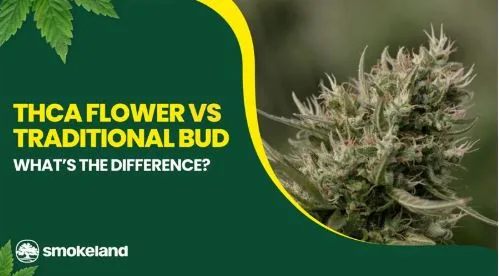
Whether you twist open the jar lid or swish open the packet it twists loose with a soft pop . A rush of pine, citrus, and something faintly sweet escapes into the room. Sticky trichomes sparkle like sugar under the light. For decades, this ritual has belonged to traditional weed flower. However, now, a new label appears beside it on shelves and menus: THCA flower.
At first glance, they look identical, the aroma feels familiar and the texture tells the same story. Yet behind the scent and sparkle sits a fascinating scientific and legal distinction that has reshaped the modern cannabis conversation. Understanding the difference between THCA flower and traditional bud is less about choosing sides and more about understanding the journey of the plant itself.
Meet the Plant Before the Spark
Cannabis plants don’t actually produce THC in its active form. Instead, they naturally produce THCA, short for tetrahydrocannabinolic acid. This is the raw, acidic precursor to THC found in fresh cannabis flower. In its natural state, THCA doesn’t create intoxication and that’s because it cannot effectively bind to the brain’s CB1 receptors until it undergoes a chemical transformation. This transformation is called decarboxylation, and it happens when heat enters the picture. Light a bowl, heat a vaporizer, or bake flower into butter, and THCA quickly converts into Delta-9 THC.
In simple terms:
Raw cannabis = mostly THCA.
Heated cannabis = THC.
This single shift changes everything.
Traditional Bud: Already Living in the Spotlight
Traditional cannabis flower often simply called “weed” or “THC flower” contains active Delta-9 THC from the start. That means it delivers its well-known effects immediately when used.
Because it contains active THC, traditional bud falls under stricter regulations and is typically sold through licensed dispensaries in regions where cannabis is legal. This long-standing system shaped how people think about cannabis. Dispensaries, medical cards, state laws, and regional availability all became part of the experience.
THCA Flower: The Science of Timing
THCA flower offers a subtle yet powerful twist on traditional hemp. It is cultivated to contain high levels of THCA while keeping Delta-9 THC below the federally legal limit of 0.3% by dry weight. Because regulations measure Delta-9 THC — not THCA — this flower can be classified as hemp prior to heating. However, once heat is applied, the chemistry changes. THCA converts into THC, producing effects commonly described as similar to traditional weed cannabis. At Smoakland, this botanical time capsule represents innovation within legal boundaries — the plant remains compliant until heat unlocks what cannabis has always been capable of becoming.
Side-by-Side in the Real World
Appearance and Aroma
If you put the two side by side and the differences nearly disappear. THCA flower is grown, trimmed, and cured like traditional cannabis, producing the same dense buds and terpene-rich aroma. To the senses, they feel like twins.
Psychoactivity
Here’s where the paths split:
- Raw THCA flower is non-intoxicating.
- Heated THCA flower becomes intoxicating.
- Traditional THC flower is already active.
Legal Landscape
Traditional cannabis remains federally restricted and regulated at the state level. THCA flower exists in a legal gray area shaped by the 2018 Farm Bill, which legalized hemp containing less than 0.3% Delta-9 THC. However, laws continue to evolve. Some states have adopted “total THC” rules that include potential THC after conversion, creating a shifting regulatory environment.
The Ritual Feels Familiar
Despite the science and regulations, the everyday experience often feels remarkably similar. Heating THCA flower produces effects and potency widely described as comparable to traditional THC flower. That shared experience is why the conversation around THCA has grown so quickly. The flower looks the same, smells the same, and after heat behaves the same. Yet the journey to that moment is different.
Accessibility and the Changing Market
The rise of THCA flower reflects a larger shift in the cannabis landscape. Hemp regulations opened the door to new products, new consumers, and new ways to access the plant. THCA flower often reaches people who don’t live near licensed dispensaries or who want alternative purchasing options. This accessibility has helped shape a new chapter in cannabis culture, where chemistry, agriculture, and legislation intersect in real time.
THCA Flower vs Traditional Bud — Quick Comparison
| Feature | THCA Flower | Traditional Cannabis Bud |
| Primary Compound Before Heating | High in THCA (tetrahydrocannabinolic acid) | Contains active Delta-9 THC |
| Intoxicating in Raw Form | No — THCA is non-intoxicating before heat | Yes — THC is already active |
| What Happens When Heated | THCA converts into THC through decarboxylation | THC remains THC when heated |
| Appearance | Looks identical to cannabis flower (dense, frosty buds) | Classic cannabis flower appearance |
| Aroma & Terpenes | Rich terpene aroma similar to traditional bud | Same terpene-rich aroma profile |
| Cultivation Method | Grown as hemp under federal hemp guidelines | Grown as cannabis under state regulations |
| Federal Classification (US) | Classified as hemp if Delta-9 THC is under 0.3% | Federally restricted cannabis |
| Legal Availability | Often more widely accessible depending on state laws | Sold through licensed dispensaries where legal |
| Experience After Heating | Effects commonly described as similar to THC flower | Immediate THC effects |
| Key Difference | Chemistry changes after heat is applied | Chemistry is already active |
A Matter of Chemistry, Not Competition
It’s easy to frame THCA flower and traditional bud as rivals, but the truth feels more poetic. They are chapters of the same story. Every cannabis plant begins with THCA. Heat simply finishes the sentence. Traditional bud represents the fully activated form. THCA flower represents the plant paused at the moment before transformation.
Final Thoughts
The conversation around cannabis keeps evolving, shaped by science, curiosity, and changing laws. Understanding the difference between THCA flower and traditional bud reveals how much of the story happens before the flame ever touches the flower.Whether you’re exploring the science or simply learning the language of modern cannabis, knowledge turns curiosity into confidence.