Rescued in the Strait: Rami the Dolphin’s Fight to Survive
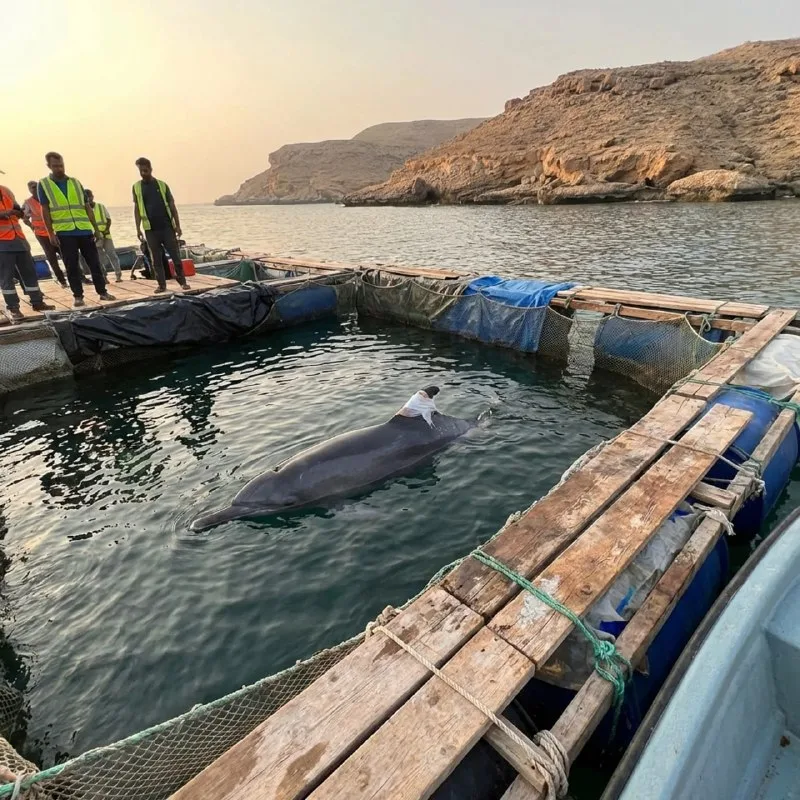
Yesterday, fishermen off Oman’s Musandam Peninsula spotted something unusual in the waters at the mouth of the Strait of Hormuz. A lone humpback dolphin was struggling at the surface, circling erratically and unable to dive properly.
When the animal rolled, the damage was visible: its dorsal fin had been almost completely severed, and one pectoral fin was badly mutilated injuries consistent with a high-speed vessel strike.
The Strait of Hormuz, between Iran and Oman, has seen intensified naval and commercial congestion in recent days. Faster maneuvering vessels and unpredictable traffic patterns increase collision risk for marine mammals that rely on stable acoustic environments to navigate.
Recognizing the severity of the injuries, Omani authorities coordinated with local marine specialists to intervene this being a rare step for a wild dolphin.
Using a shallow-water containment net in a protected inlet, responders stabilized the animal long enough to assess blood loss and treat exposed tissue. The remaining dorsal fin tissue was cleaned to reduce infection risk, and the dolphin was administered fluids and antibiotics under veterinary supervision. Because dolphins must surface to breathe, the procedure was conducted in-water, with the animal supported by a soft sling.
By the following day, the dolphin now breathing more steadily and was transported a short distance to a temporary sea-pen enclosure for continued monitoring.
Marine veterinarians say survival will depend on infection control and the dolphin’s ability to compensate for hydrodynamic imbalance. Dolphins can survive without a dorsal fin, though it affects stability. The damaged pectoral fin may limit maneuverability but is not necessarily fatal.
The rescue does not indicate widespread confirmed casualties from the regional conflict. However, it underscores how heightened maritime activity can amplify risks in one of the world’s most strategically sensitive waterways.
For now, the dolphin remains under care. Alive, scarred, and adapting.
In research records, it has only a catalog number. Among rescuers, however, it has been given a name: Rami.
Photo Credits: Mahmoud Al Mashani