How Gulf Energy Disruptions Could Reshape European Logistics, Storage and Market-Entry Demand
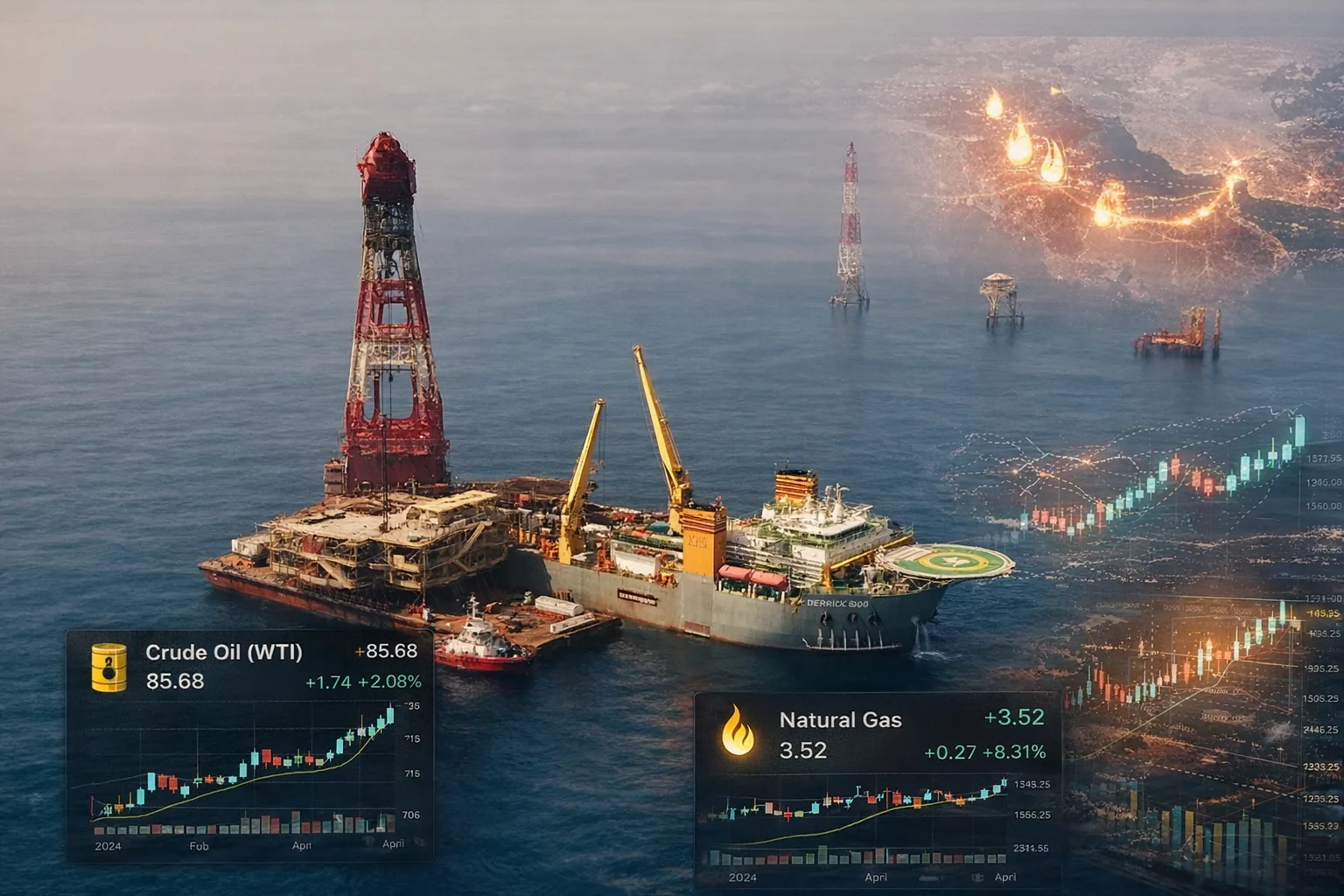
Europe’s energy vulnerability is no longer defined by one supplier or one crisis. It is now shaped by a broader pattern of geopolitical instability, rerouted trade flows, and rising competition for secure energy supply. Recent Reuters reporting has shown how conflict tied to Iran is already tightening global energy conditions, while the International Energy Agency has continued to warn that disruption around the Strait of Hormuz would have consequences far beyond the Gulf itself. At the same time, the European Commission’s REPowerEU framework is pushing the continent toward deeper diversification and a phased exit from Russian energy imports, making resilience and flexibility central to Europe’s next economic chapter.
When tensions in the Persian Gulf threaten maritime energy routes, the first reaction is usually to focus on commodity prices. That is understandable, but it only captures part of the picture. The deeper impact is logistical. According to the IEA, the Strait of Hormuz remains the primary export route for oil produced by Saudi Arabia, the UAE, Kuwait, Qatar, Iraq, Bahrain and Iran, and any prolonged disruption there could also make much of the world’s spare production capacity effectively unavailable. In other words, the issue is not only how much oil or gas costs, but how uncertainty changes routing, storage decisions, insurance costs, freight patterns, and the location choices of companies operating in Europe.
Reuters has also highlighted the market stress building around the Gulf crisis. In its recent reporting, Reuters cited warnings from Qatar’s energy minister that an expanding conflict could force Gulf exporters to halt shipments within weeks, with major consequences for oil and LNG markets. That kind of shock would not affect Europe only through direct volumes. It would also intensify global competition for supply, raise the premium on alternative routes, and increase the value of inland transport, regional storage, and flexible distribution networks inside the EU.
This matters for Europe because the continent is still adjusting to a post-Russian energy reality. The European Commission states that REPowerEU is the EU’s strategy to remove Russian oil, gas and nuclear energy imports from EU markets in a gradual and coordinated way, while new gas regulations are designed to end dependence on Russian gas by 2027. That means Europe is simultaneously managing two pressures: long-term structural diversification away from Russian supply, and short-term exposure to global disruptions coming from other regions. When both pressures operate at once, logistics stops being a secondary issue and becomes part of strategic economic positioning.
In practical terms, that creates new importance for transport capacity, cross-border coordination, warehousing, and storage-linked infrastructure. Energy insecurity changes business geography. It can make secondary corridors more valuable, increase the relevance of inland hubs, and reward operators that can move goods reliably across borders when traditional trade flows come under stress. While policymakers focus on security of supply, the commercial market responds in parallel by searching for operational flexibility. That is where logistics firms, storage providers, freight operators, and business-setup specialists can all become part of the same wider story.
For southeastern Europe, this opens a serious, if often underestimated, opportunity. Bulgaria is not going to replace Europe’s major import terminals or become the continent’s dominant energy trading center. But in a more fragmented market, countries like Bulgaria can gain relevance as practical operating bases for regional coordination, transport activity, back-office support, warehousing strategies, and broader market entry into the EU. In uncertain times, companies do not look only for prestige locations; they also look for jurisdictions that offer EU access, manageable operating costs, and workable logistics connections. That combination can turn smaller hubs into strategically useful platforms.
That is why market-entry demand can rise alongside volatility. Businesses facing unstable supply conditions often re-evaluate where to establish legal entities, where to base operations, and how to structure regional activity inside the Union. For international founders or cross-border companies exploring such a foothold, understanding the process of company formation in Bulgaria becomes part of a wider strategic discussion about cost discipline, access to the EU market, and operational resilience rather than simply an administrative exercise.
The same logic applies even more directly to transport-related sectors. If Gulf instability continues to pressure energy flows and reshape European logistics, companies involved in freight, fuel-linked distribution, industrial transport, and regional supply support may find that legal structure and geographic placement matter more than before. For firms that want an EU-based vehicle for logistics and freight operations, the pathway to transport company formation in Bulgaria can become increasingly relevant as businesses search for compliant and cost-efficient bases connected to southeastern and central European corridors.
The larger point is not that crisis automatically creates easy profit. It does not. It creates selective opportunity for businesses that are already prepared. Operators with the right compliance framework, licensing awareness, storage strategy, and cross-border setup are in a far stronger position than those trying to react after disruption has already hit the market. In volatile conditions, resilience often becomes a competitive asset in itself. The companies that benefit are usually not the ones chasing headlines, but the ones that quietly positioned themselves early.
This is why Gulf energy disruptions should be understood not only as a commodity shock, but as a force that can redraw parts of Europe’s commercial map. Reuters has reported the immediate market stress; the IEA has warned of the strategic importance of Hormuz; and the European Commission has made clear that Europe is still re-engineering its energy posture through diversification and reduced Russian dependence. Together, those signals point to the same conclusion: logistics, storage, route flexibility, and business location decisions are becoming more important, not less.
In that environment, smaller and more cost-efficient EU jurisdictions may gradually become more visible. Not because they replace the biggest markets, but because they offer optionality when volatility becomes the norm. Bulgaria fits into that discussion as a practical regional platform: not a shortcut, not a speculative miracle, but a serious operating base for businesses that want to combine EU access with adaptable cost structures and regional reach. If Gulf tensions continue to reshape global flows, then European logistics, storage demand, and market-entry decisions are likely to evolve with them.