VF Technology Tires: The Complete Guide to Advanced Agricultural Tyre Technology for Modern Farming
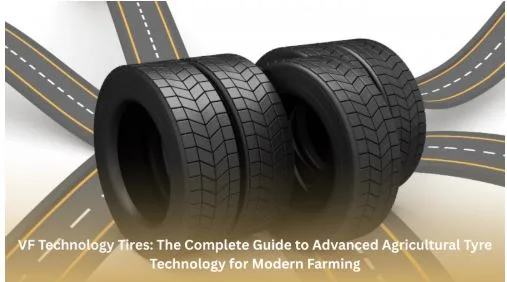
Modern agriculture has evolved dramatically over the past few decades. Farmers today rely on advanced machinery, precision farming tools, and innovative agricultural technologies to maximize productivity while maintaining soil health. Among the many innovations transforming farming operations, tyre technology plays a critical role in determining how efficiently agricultural machines perform in the field.
Agricultural machines such as tractors, harvesters, and sprayers operate under extremely demanding conditions. They must carry heavy loads, travel across uneven terrain, and work for long hours in both wet and dry soil conditions. In such environments, traditional tyres often struggle to balance durability, load capacity, and soil protection.
This is where VF technology tires have emerged as a major breakthrough in agricultural tyre technologies. These tyres are specifically engineered to handle heavier loads while operating at lower inflation pressures. By doing so, they reduce soil compaction, improve traction, and help farmers achieve better operational efficiency.
In this comprehensive guide, we will explore what VF technology tires are, how VF tyre technology works, the benefits they offer farmers, and why they are becoming an essential component of modern agricultural machinery. We will also discuss how advanced tyre solutions from TVS contribute to improving agricultural performance.
What Are VF Technology Tires?
VF technology tires refer to tyres built with Very High Flexion technology, a design innovation that allows tyres to flex more than conventional agricultural tyres without compromising their structural strength.
The key advantage of VF tyres lies in their ability to carry significantly heavier loads while maintaining lower air pressure levels. In general, VF tyres are capable of:
- Carrying up to 40% more load at the same inflation pressure, or
- Operating with up to 40% lower air pressure while carrying the same load
This ability to function effectively at lower air pressure provides multiple advantages in agricultural applications, particularly in reducing soil compaction and improving traction.
Unlike traditional tyres that require higher pressure to support heavy loads, VF tractor tyres distribute weight across a larger surface area. This expanded footprint ensures that the weight of the machine is spread more evenly across the soil, minimizing damage to the ground and supporting better crop growth.
Because of these characteristics, VF tyres are considered one of the most important innovations in modern agricultural tyre technologies.
What is a VF Farm Tire?
A VF farm tire is specifically designed for agricultural machinery that operates in fields where soil preservation and load capacity are critical. These tyres are engineered with enhanced flexibility and advanced structural components that allow them to handle heavy loads without increasing pressure on the soil.
VF farm tires are commonly used on equipment such as:
- High-horsepower tractors
- Combine harvesters
- Agricultural sprayers
- Grain carts
- Farm trailers
- Industrial equipment used in agriculture
The flexible construction of these tyres ensures that they maintain performance even when subjected to significant stress and weight.
Because of their innovative design, VF farm tire technology enables farmers to operate heavy machinery while maintaining optimal soil conditions. This is particularly important in large-scale farming operations where machinery weight can significantly impact soil quality.
The Evolution of Agricultural Tyre Technologies
The development of agricultural tyre technologies has progressed steadily as farming equipment has become larger, more powerful, and more advanced.
Understanding this evolution helps explain why VF technology tires are considered such a significant innovation.
Conventional Agricultural Tyres
Traditional agricultural tyres were primarily designed for durability and traction. While they were effective for basic farming tasks, they required relatively high inflation pressures to support heavy loads.
High pressure often resulted in increased soil compaction, which negatively affected crop growth and soil health.
Radial Agricultural Tyres
The introduction of radial tyre construction represented a major improvement in agricultural tyres. Radial tyres provided better flexibility and improved traction compared to older bias-ply tyres.
They also helped improve fuel efficiency and machine stability. However, radial tyres still had limitations when dealing with very heavy agricultural machinery.
Improved Flexion Tyres
Improved flexion tyres were developed to carry heavier loads at the same air pressure or operate at reduced pressure compared to standard radial tyres. This innovation helped reduce soil compaction while maintaining performance.
Very High Flexion Tyres
The next step in tyre evolution was the development of VF technology tires.
These tyres offer greater flexibility than previous designs and allow significantly higher load capacity. As a result, they provide superior performance in both field and transport operations.
Today, VF tractor tyres represent one of the most advanced solutions available for modern agricultural machinery.
How VF Tyre Technology Works
VF tyre technology relies on advanced engineering and materials that allow the tyre to flex more under load while maintaining durability and structural integrity.
Several key design elements make this possible.
Flexible Sidewall Construction
One of the most important features of VF tyres is their highly flexible sidewalls.
These sidewalls allow the tyre to deform more when supporting heavy loads. Instead of concentrating weight in a small contact area, the tyre spreads the load across a wider surface.
This flexibility helps reduce pressure on the soil while improving traction.
Reinforced Casing Structure
VF tyres are constructed using advanced casing materials that maintain strength even when the tyre flexes significantly.
The reinforced casing prevents structural damage and ensures the tyre remains durable under demanding agricultural conditions.
Optimized Tread Design
The tread pattern of VF technology tires is designed to maximize grip and minimize slippage.
Improved tread designs allow agricultural machines to operate efficiently on different surfaces, including wet fields, loose soil, and uneven terrain.
Larger Contact Patch
When operating at lower pressure, VF tyres create a larger footprint on the ground.
This larger contact patch distributes machine weight evenly and improves traction, making it easier for farm equipment to move efficiently through the field.
Benefits of VF Technology Tires for Farmers
The growing popularity of VF technology tires is largely due to the numerous advantages they offer farmers.
These tyres not only improve machine performance but also contribute to better soil health and long-term agricultural sustainability.
Reduced Soil Compaction
Soil compaction is one of the biggest challenges in modern farming.
Heavy machinery can compress the soil, reducing its ability to absorb water and nutrients. Compacted soil also restricts root growth, which can negatively affect crop yields.
VF tractor tyres reduce soil compaction by distributing weight over a larger surface area.
Lower pressure and increased flexibility allow the tyre to protect the soil structure while maintaining machine efficiency.
Improved Traction in the Field
The larger contact patch of VF technology tires improves traction on soft or uneven surfaces.
Better traction reduces wheel slippage and ensures that more engine power is transferred to forward motion.
This allows agricultural machinery to perform tasks more efficiently, even in challenging field conditions.
Higher Load Carrying Capacity
Modern farming operations require machines capable of carrying heavy equipment, tools, and harvested crops.
VF farm tire technology allows machines to carry heavier loads without increasing tyre pressure.
This makes it easier for farmers to transport materials and perform demanding tasks without compromising tyre performance.
Increased Fuel Efficiency
Wheel slippage is a major cause of fuel wastage in agricultural machinery.
When tyres lose traction, the engine must work harder to maintain movement.
Because VF tyres provide better traction, they help reduce slippage and improve fuel efficiency.
Over time, this can lead to significant cost savings for farmers.
Improved Productivity
Agricultural operations often run on tight schedules, especially during planting and harvesting seasons.
The improved load capacity and traction of VF technology tires allow machines to complete tasks faster and more efficiently.
This increased productivity can make a major difference during critical farming periods.
Longer Tyre Lifespan
The advanced construction of VF tyres allows them to withstand demanding agricultural environments.
Reinforced materials and improved design help extend the life of the tyre, reducing replacement frequency and lowering long-term operating costs.
Applications of VF Technology Tires
VF technology tires are used across a wide range of agricultural and industrial machinery.
Their ability to handle heavy loads and operate efficiently at low pressure makes them suitable for many applications.
Tractors
Tractors are the backbone of agricultural operations.
VF tractor tyres improve traction and stability, allowing tractors to perform tasks such as plowing, planting, and tilling more effectively.
Combine Harvesters
Harvesters are among the heaviest machines used in agriculture.
VF tyres help support their weight while protecting soil structure during harvesting operations.
Agricultural Sprayers
Sprayers often carry large tanks filled with fertilizers or crop protection products.
VF tyres provide the load capacity needed to support this equipment while maintaining field performance.
Trailers and Farm Implements
Agricultural trailers and implements also benefit from VF farm tire technology, especially when transporting harvested crops or heavy materials.
Industrial Equipment Used in Agriculture
In addition to farming machinery, VF tyres are also suitable for tires for industrial equipment used in agricultural environments.
These machines require durable tyres capable of operating in both field and industrial conditions.
The Importance of Choosing the Right Tires for Agricultural Machinery
Selecting the correct tires for agricultural equipment is essential for achieving optimal performance.
Farmers must consider several factors when choosing tyres.
Machine Weight
Heavier machines require tyres with higher load capacity.
Field Conditions
Soil type, moisture levels, and terrain affect tyre performance.
Speed and Transport Needs
Some tyres are optimized for field work, while others are designed for transport between locations.
Durability Requirements
Agricultural tyres must withstand rough terrain and long working hours.
Choosing advanced tyre solutions developed by manufacturers such as TVS can help farmers ensure reliability and efficiency in demanding agricultural environments.
The Future of VF Farm Tire Technology
As farming becomes more technology-driven, tyre manufacturers continue to invest in research and development.
Future innovations in VF farm tire technology may include:
- Smart tyre pressure monitoring systems
- Advanced rubber compounds for longer durability
- Improved tread patterns for enhanced traction
- Sensor-enabled tyres that provide real-time performance data
These advancements will further enhance the role of VF technology tires in modern agriculture.
Conclusion
Agricultural machinery continues to evolve as farmers seek more efficient and sustainable ways to increase productivity.
Tyre technology plays a crucial role in ensuring that these machines perform effectively while protecting the soil that supports crop growth.
VF technology tires represent one of the most important innovations in agricultural tyre technologies. Their ability to carry heavier loads, operate at lower air pressure, and reduce soil compaction makes them ideal for modern farming operations.
By adopting advanced tyre solutions developed by manufacturers such as TVS, farmers can improve traction, increase efficiency, and maintain soil health.
As agriculture continues to modernize, VF tractor tyres will remain a key component in supporting the future of farming.
FAQs
What are VF technology tires?
VF technology tires are agricultural tyres designed with Very High Flexion technology that allows them to carry heavier loads at lower air pressure compared to standard agricultural tyres.
What is a VF farm tire used for?
A VF farm tire is commonly used on tractors, harvesters, sprayers, and other heavy agricultural machinery to improve traction and reduce soil compaction.
How do VF tractor tyres benefit farmers?
VF tractor tyres improve traction, reduce soil compaction, increase load capacity, and enhance fuel efficiency during agricultural operations.
Are VF tyres better than traditional agricultural tyres?
Yes. VF tyres offer greater flexibility, higher load capacity, and improved soil protection compared to conventional agricultural tyres.
Can VF technology tires improve fuel efficiency?
Yes. Because they provide better traction and reduce slippage, VF tyres help agricultural machinery operate more efficiently and consume less fuel.
Where are VF tyres used?
VF tyres are widely used in tractors, harvesters, sprayers, agricultural trailers, and industrial equipment used in farming environments.