How AI Is Changing Gynecological Ultrasound Practice
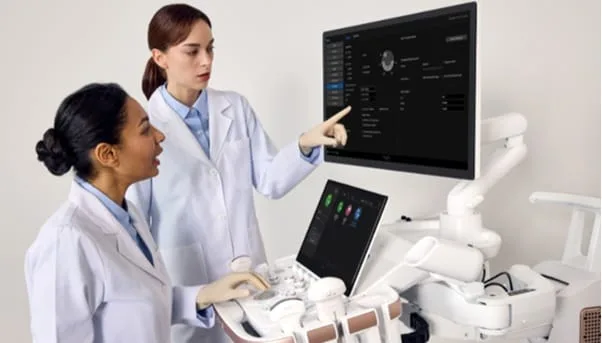
Making Gynecological and Uterine Ultrasound Exams More Consistent
Artificial intelligence is changing how gynecological ultrasound exams are performed in daily clinical practice. Rather than replacing clinicians, AI is increasingly used to support routine tasks, helping make examinations more consistent and efficient while allowing clinicians to focus on interpretation and patient care.
Gynecological ultrasound, including uterine ultrasound, is commonly used to evaluate various symptoms. These exams often require multiple measurements and careful image selection. While well established, the process can be time-consuming and may vary depending on operator experience, particularly in busy clinical settings.
Reducing Manual Steps in Uterine Ultrasound Assessment
In a traditional uterine ultrasound exam, clinicians manually measure uterine dimensions and assess the uterine cavity using two-dimensional and three-dimensional imaging. This approach is effective but involves repetitive steps such as plane selection and caliper placement, which can contribute to variability between exams and between different operators.
Discussions at ISUOG 2024 highlighted how AI-assisted tools are helping simplify these steps. In an expert session, presenters demonstrated how AI can automatically calculate key uterine measurements and generate standard views of the uterus, supporting more reliable assessments during routine gynecological ultrasound exams. An overview of this session is available through this educational resource on gynecological ultrasound.
Improving Consistency in Gynecological Ultrasound Through Automation
One of the main benefits of AI in gynecological ultrasound is improved consistency. By automating measurements such as uterine size and endometrial thickness, AI tools help reduce variation between exams and between operators, supporting more standardized uterine ultrasound assessments.
This approach is supported by clinical research. More details can be found in this study on uterine ultrasound measurement available through Samsung theSUITE.
Supporting, Not Replacing, Clinicians
Despite growing interest in AI, its role in gynecological ultrasound remains supportive. Clinicians continue to interpret images, make diagnoses, and decide on patient care. AI assists with technical tasks, helping ensure that key measurements and views are obtained consistently.
This reflects a wider trend in medical imaging, where technology is used to improve workflow and reduce routine burdens rather than take over clinical decision-making.
What This Means for Gynecological Care
As AI tools are introduced into gynecological ultrasound practice, education and clinical context remain essential. Online learning platforms increasingly play a role in helping clinicians understand how AI-assisted tools fit into routine imaging workflows. Ultrasound education platforms like Samsung theSUITE provide access to expert-led sessions, clinical case discussions, and supporting research that place AI-assisted uterine ultrasound techniques within established practice standards, helping clinicians adopt new tools with confidence.
This article is sponsored content.