Key Components of a Humanoid Robot Assembly Line
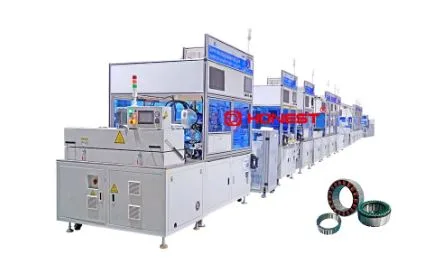
Humanoid robots are becoming an essential part of modern automation, manufacturing, and research. These robots are designed to mimic human movement and interaction, which requires extremely precise engineering and sophisticated assembly processes. To manufacture such advanced machines efficiently, companies rely on specialized assembly lines designed specifically for humanoid robot production.
A humanoid robot assembly line integrates robotics engineering, electronics manufacturing, mechanical assembly, and quality testing in a streamlined workflow. Each stage of the line is designed to ensure accuracy, reliability, and scalability. Understanding the key components of this assembly line helps businesses and engineers appreciate the complexity involved in producing highly functional humanoid robots.
Structural Frame Assembly
The structural frame acts as the skeleton of a humanoid robot and supports all other components such as motors, sensors, and electronics. In a humanoid robot assembly line, this stage focuses on building a durable yet lightweight framework that allows the robot to move smoothly and maintain balance. Materials like aluminum alloys, reinforced polymers, and carbon fiber are commonly used because they provide strength without adding unnecessary weight.
During the frame assembly stage, robotic arms and precision tools are used to connect joints, linkages, and support structures. Engineers ensure that each section is aligned perfectly because even small misalignments can affect the robot’s movement and balance. Proper frame assembly also allows future components such as motors, sensors, and wiring to fit seamlessly.
Motor and Actuator Integration
Motors and actuators are responsible for enabling movement in humanoid robots. These components power joints such as shoulders, elbows, hips, and knees, allowing robots to walk, lift objects, and perform complex tasks.
In this section of the assembly line, technicians and automated machines carefully install motors into designated joint locations. Key processes involved include:
- Mounting servo motors and actuators
- Connecting gear systems and drive mechanisms
- Securing joint housings and protective casings
- Testing rotational movement and torque capacity
Proper integration ensures smooth motion control and prevents mechanical wear during operation. High precision at this stage is essential for achieving human-like movement.
Sensor Installation
Sensors allow humanoid robots to perceive their environment and interact intelligently with surroundings. Without sensors, robots would not be able to maintain balance, detect objects, or understand human commands.
Common sensors installed during this stage include:
- Vision cameras for object recognition
- Gyroscopes and accelerometers for balance control
- Proximity sensors for obstacle detection
- Force sensors for grip control
These sensors are carefully positioned in areas such as the robot’s head, hands, and torso. After installation, calibration systems ensure the sensors deliver accurate data to the robot’s central processor.
Control System Assembly
The control system is considered the brain of the robot because it manages every movement and decision. In a humanoid robot assembly line, this stage involves integrating processors, circuit boards, communication modules, and motion control software that coordinate the robot’s actions.
During this process, engineers install microcontrollers and central processors into the robot’s torso compartment. Wiring systems connect these processors to motors, sensors, and power units throughout the robot’s body. This integration allows the robot to receive sensor data, process it quickly, and translate it into coordinated movements.
Advanced assembly facilities also include programming stations where engineers install firmware and operating systems. These systems enable the robot to perform complex tasks, follow commands, and adapt to changing environments. The efficiency of this stage makes the humanoid robot production line highly reliable in delivering consistent, high-quality robots for industrial or service applications.
Wiring and Power Distribution
A humanoid robot contains hundreds of electrical connections that link its internal systems. Efficient wiring and power distribution are essential to ensure stable performance and prevent overheating or electrical failures.
At this stage, the assembly line focuses on organizing cables and power circuits across the robot’s body. The process typically includes:
- Routing power cables through the robot’s frame
- Connecting battery systems and charging modules
- Installing power regulators and protection circuits
- Securing wiring harnesses to prevent movement damage
Careful cable management improves both reliability and maintenance accessibility. Many modern assembly lines use automated wiring systems to ensure consistency and reduce human error.
Artificial Intelligence Integration
Artificial intelligence enables humanoid robots to perform advanced tasks such as recognizing objects, understanding speech, and making decisions. In a humanoid robot assembly line, AI integration takes place after the hardware components have been installed and tested.
Engineers upload machine learning models, vision processing systems, and interaction algorithms into the robot’s control unit. These systems allow robots to interpret sensor data and respond appropriately to their surroundings. For example, AI software can help a robot recognize human gestures, navigate obstacles, or assist workers in industrial environments.
Testing platforms are used to ensure that AI systems communicate properly with the robot’s hardware. This integration transforms a mechanical structure into an intelligent machine capable of performing complex functions.
Exterior Shell and Protective Housing
The outer shell of a humanoid robot serves both functional and aesthetic purposes. It protects internal components from dust, moisture, and accidental impact while also giving the robot a recognizable human-like appearance.
In the assembly line, molded panels and protective casings are attached to the robot’s frame. These components are designed to fit precisely around joints and moving parts to allow smooth motion. Materials such as durable plastics and lightweight composites are commonly used for this stage.
Designers also consider ergonomics and safety when installing exterior shells. Rounded edges, soft coverings, and protective guards help prevent injury during human–robot interaction. This stage completes the robot’s physical structure and prepares it for final testing.
Testing and Quality Assurance
Testing is one of the most critical components of a humanoid robot assembly line. Every robot must undergo rigorous evaluation to ensure it performs reliably under various conditions.
Quality assurance stations typically conduct several types of tests:
- Motion and mobility testing
- Sensor accuracy verification
- Electrical system diagnostics
- AI response and behavior testing
- Safety and durability checks
Robots are often placed in simulated environments where they walk, grasp objects, and respond to commands. Any detected issues are corrected before the robot moves to the final stage of production.
Calibration and Final Programming
Before shipment, each humanoid robot undergoes final calibration. This process ensures that every joint, sensor, and control system operates with maximum precision.
Calibration involves adjusting motor torque, balancing algorithms, and sensor sensitivity. Engineers also upload final software updates that configure the robot for its intended application, whether it is customer service, industrial assistance, or research.
After calibration, robots are subjected to a final operational test to confirm that all systems work together smoothly. Once approved, the robots are packaged and prepared for delivery to customers or deployment sites.
What Sets HONEST Automation Apart?
HONEST Automation distinguishes itself by combining advanced engineering, precision manufacturing, and end-to-end automation in its humanoid robotics facilities. The company leverages state-of-the-art robotic systems and AI-enabled platforms to ensure every robot meets strict quality and safety standards.
Their approach emphasizes modular assembly, scalable workflows, and real-time monitoring across all stages. This allows HONEST Automation to deliver highly reliable humanoid robots faster than traditional assembly setups while maintaining consistency across large production batches.
Conclusion
A humanoid robot assembly line is a highly sophisticated production system that integrates mechanical engineering, electronics manufacturing, artificial intelligence, and precision testing. Each component of the assembly process plays a crucial role in ensuring that the final robot performs safely and efficiently.
From structural frame assembly to final calibration, every stage requires careful coordination between automated machines and skilled engineers. As robotics technology continues to advance, assembly lines will become even more efficient and capable of producing smarter and more adaptable humanoid robots. These innovations will play a major role in shaping the future of automation across industries worldwide.