Omega vs Rolex: Which Luxury Watch Lasts Longer? [2026]
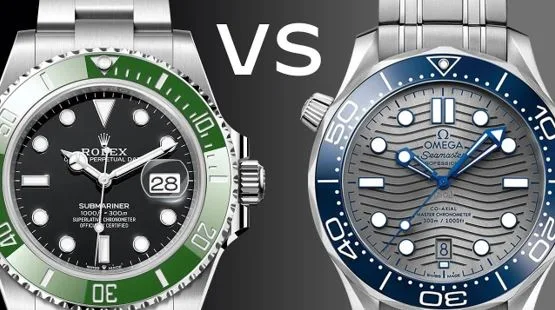
The omega vs rolex debate often comes down to one significant question: which luxury watch actually lasts longer?
Rolex watches have climbed Mount Everest and traveled to the deepest parts of the ocean. Omega watches can withstand magnetic fields of up to 15,000 gauss. Both brands deliver exceptional durability, but they take different approaches to longevity.
You’ll find differences in build quality, movement technology, and long-term performance if you compare omega watches vs rolex. The omega seamaster vs rolex submariner comparison matters for dive watch durability. The omega speedmaster vs rolex daytona comparison matters for daily reliability. Understanding omega vs rolex quality helps protect your investment.
This piece breaks down which brand offers better longevity, so you can decide is rolex better than omega for your needs.
Build Quality and Materials: Which Brand Uses More Durable Components?
Material choice separates these two manufacturers in measurable ways. Rolex adopted 904L stainless steel back in 1985, a decision that set the brand apart from every other watchmaker. This alloy contains higher levels of chromium, nickel and molybdenum compared to the 316L steel Omega uses. The practical difference shows up in corrosion resistance, especially for wearers exposed to saltwater or sweat.
Rolex’s 904L Oystersteel and Cerachrom Bezels
Rolex introduced Cerachrom bezels back in 2005 with the GMT-Master II. These ceramic components resist scratches and UV damage while they retain their shine. The material proved impervious to the wear that plagued earlier aluminum bezels, which developed “ghosting” and pockmarks over time.
Omega’s Ceramic, Titanium, and Liquidmetal Technology
Omega uses 316L stainless steel in most models. The brand compensates with advanced materials in specific components. Ceramic (zirconium dioxide, marked as ZrO2 on dials) appears in bezels, dials and even entire cases. Grade 2 and Grade 5 titanium offer lightweight alternatives, with Grade 5 providing improved strength. Omega secured exclusive rights to Liquidmetal back in 2011, an amorphous alloy three times harder than stainless steel that bonds with ceramic bezels.
Case Construction and Scratch Resistance
Ceramic proves nearly impossible to scratch but can shatter under direct impact. Stainless steel dents rather than cracks, though it accumulates surface marks in years of wear. Titanium sits between these extremes, easier to scratch than ceramic yet more impact-resistant.
Bracelet Durability and Clasp Mechanisms
Bracelet “stretch” results from pin wear, not actual metal elongation. Skin oils and fine grit create an abrasive paste inside link connections and grind down pins while expanding internal diameters. Regular cleaning with soap and a soft brush removes this grit before damage occurs. Modern bracelets last decades with proper maintenance.
Movement Longevity and Service Intervals
Internal mechanics determine how long these watches actually function between maintenance visits. Both brands engineer movements for decades of operation, though they reach longevity through different technical paths.
Rolex Perpetual Movements: Service Life and Reliability
Rolex currently recommends servicing modern watches every 10 years, a timeline extended from the previous 5-year standard due to improved synthetic lubricants and tighter manufacturing tolerances. Vintage models need attention every 4 to 5 years. A Rolex without any servicing operates for 3 to 10 years before lubricants dry out and metal-on-metal wear begins. These movements perform reliably for 30 years or more with regular maintenance, often reaching 50 to 100 years of functional life.
Omega Co-Axial Movements: Reduced Friction for Longer Life
Omega’s Co-Axial escapement uses a three-pallet system and dual escape wheel design that reduces friction through smaller contact surfaces on the pallets. This engineering reduces dependence on lubrication and allows longer intervals between services. The direct impulse mechanism provides more energy transfer to the balance wheel and maintains precision over extended periods.
COSC and Master Chronometer Certifications
COSC certification requires movements to maintain accuracy within -4 to +6 seconds per day. Omega’s Master Chronometer certification demands stricter standards: 0 to +5 seconds daily for movements above 26mm diameter, 0 to +6 seconds for movements between 20-26mm, and 0 to +7 seconds for movements under 20mm. Rolex’s Superlative Chronometer specification tightens COSC-certified movements further to -2 to +2 seconds per day.
Recommended Service Intervals: 7-10 Years vs 5-8 Years
Omega recommends complete service every 5 to 8 years. Modern Co-Axial movements often extend to 8-10 years between full services. Rolex suggests 10-year intervals for contemporary models, with 5 to 10 years as the general guideline.
Ground Movement Performance Over Decades
Vintage Rolex models from the 1950s and 1960s still perform with near-original precision when managed to keep them properly. Mechanical watches can run accurately for over 100 years under proper care.
Water Resistance and Durability Testing
Water resistance ratings reveal how these watches perform under pressure. Both brands test beyond industry standards, though their approaches differ.
Omega Seamaster vs Rolex Submariner: Dive Watch Longevity
The Omega Seamaster Professional 300M and Rolex Submariner share similar 300m depth ratings. Omega designs watches to withstand an extra 10% of water resistance beyond METAS certification requirements. Rolex tests each watch to 25% greater depth than stated on the dial. The Seamaster features a helium escape valve at 10 o’clock. The Submariner relies on the Triplock crown system with triple gasket setup.
Helium Escape Valves and Deep-Sea Performance
Helium escape valves serve saturation divers working at depths between 60 and 300 meters for extended periods. Omega Ultra Deep models survived testing at 10,928 meters in the Mariana Trench, while Rolex’s Deepsea Challenge reached 10,908 meters. Recreational diving makes helium valves unnecessary.
Gasket Degradation and Waterproof Integrity Over Time
Gaskets require inspection or replacement every 2 to 5 years depending on use. Heat, temperature changes, and chemical exposure from soap, chlorinated water, and saltwater degrade rubber gaskets. Water resistance diminishes as gaskets lose elasticity over time.
Extreme Condition Testing: Space, Ocean, and Mountain
Omega’s Ultra Deep passes nine ISO 6425:2018 tests including magnetic resistance exceeding 15,000 gauss and shock resistance equivalent to 5,000 G force. Rolex subjects Oysterlock bracelets to 26 different drop tests and immerses them in salt, sand, and chlorine solutions.
Long-Term Value: Which Watch Maintains Performance After 20+ Years?
Performance after two decades reveals the true quality difference between omega vs rolex watches. Both brands engineer timepieces that last multiple generations, though ground longevity depends on maintenance consistency and parts availability.
Vintage Rolex vs Vintage Omega: Condition Comparisons
Rolex watches that are maintained properly last at least one lifetime and often become family heirlooms that span multiple lifetimes. Vintage models from the 1960s and 1970s still achieve +1 to +5 seconds daily accuracy when serviced correctly. A 20-year-old Omega Seamaster can operate without service, though timekeeping becomes erratic after 12 to 20 years.
Parts Availability and Official Service Support
Rolex guarantees parts availability for 35 years after discontinuing a model. Official service centers often refuse models discontinued before the mid-1980s. Omega services any watch containing genuine components, whatever the age. Patek Philippe services watches back to 1839 to compare.
Resale Value Retention as Quality Indicator
Average Rolex prices climbed from $2,050 in 2010 to $13,426 by mid-2025. This represents 555% appreciation. Omega watches dropped 31.6% in value retention over the same period. Watches with original boxes and papers command 20% higher resale prices.
Cost of Ownership: Maintenance Over a Lifetime
Rolex service costs $600 to $800 for time-only models. Omega charges $700 for Seamaster servicing. This totals $4,375 to $7,000 over a watch’s lifetime.
Heirloom Quality: Passing Down Through Generations
Early Rolex models passed through multiple generations remain functional. A 1956 Omega Seamaster maintains near-original mechanical performance with proper servicing.
Comparison Table
Omega vs Rolex: Complete Comparison Table
| Attribute | Omega | Rolex |
| Steel Type | 316L stainless steel | 904L Oystersteel (since 1985) |
| Bezel Technology | Ceramic (ZrO2), Liquidmetal (exclusive since 2011, 3x harder than steel) | Cerachrom ceramic bezels (since 2005) |
| Special Materials | Grade 2 & 5 titanium, ceramic cases and dials | 904L steel with higher chromium, nickel and molybdenum |
| Movement Technology | Co-Axial escapement (reduced friction, three-pallet system) | Perpetual movements with improved synthetic lubricants |
| Recommended Service Interval | 5-8 years (8-10 years for modern Co-Axial) | 10 years (modern models); 5-10 years standard |
| Accuracy Certification | Master Chronometer: 0 to +5 sec/day (>26mm), 0 to +6 sec/day (20-26mm), 0 to +7 sec/day (<20mm) | Superlative Chronometer: -2 to +2 seconds per day |
| Dive Watch Water Resistance | Seamaster 300M: 300 meters | Submariner: 300 meters |
| Depth Testing Standard | 10% beyond stated rating | 25% beyond stated rating |
| Deep-Sea Record | Ultra Deep: 10,928 meters (Mariana Trench) | Deepsea Challenge: 10,908 meters |
| Magnetic Resistance | Up to 15,000 gauss | None specified |
| Parts Availability Guarantee | Services any watch with genuine components (no time limit) | 35 years after model discontinuation |
| Service Cost (Time-Only/Basic) | $700 (Seamaster); $4,375-$7,000 lifetime estimate | $600-$800 (time-only models) |
| Price Appreciation (2010-2025) | -31.6% value retention | +555% (from $2,050 to $13,426 average) |
| Vintage Performance | 1956 Seamaster maintains near-original performance with servicing | 1950s-1960s models achieve +1 to +5 sec/day accuracy when managed to keep them serviced |
| Lifespan Without Service | 12-20 years before erratic timekeeping | 3-10 years before lubricant degradation |
| Expected Functional Life | Multiple decades with proper maintenance | 30+ years, often 50-100 years with consistent maintenance |
Conclusion
The Omega vs Rolex longevity debate doesn’t have a winner. Rolex offers superior resale value and 10-year service intervals, while Omega provides lifetime parts availability and innovative Co-Axial technology at lower maintenance costs.
Here’s how you should decide based on these points:
Pick Rolex if you prioritize resale value and heirloom status. Choose Omega if you want state-of-the-art movement technology and guaranteed service support. Either brand lasts 50+ years with proper maintenance.
Your wearing habits and budget matter more than brand prestige for actual longevity.