How Remote Patient Monitoring Devices Are Evolving with Contactless Vital Sign Measurement
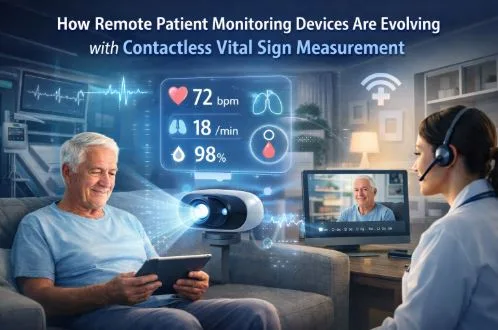
Healthcare technology is entering a new era where patient care is no longer limited to hospitals and clinics. Remote patient monitoring devices are transforming the way medical professionals track health conditions, enabling continuous monitoring from the comfort of home. These systems were initially designed to measure basic health indicators through wearable devices, but modern innovations are pushing the boundaries even further.
One of the most exciting developments in this field is Contactless Vital Sign Measurement. This technology allows healthcare providers to monitor heart rate, breathing patterns, blood pressure indicators, and other physiological signals without attaching sensors directly to the body. As digital health solutions continue to evolve, this approach is reshaping how patient monitoring works across hospitals, telehealth systems, and home care environments.
The Growing Importance of Remote Patient Monitoring
Remote patient monitoring has become a crucial component of modern healthcare systems. Hospitals are under pressure to improve patient outcomes while reducing unnecessary admissions and readmissions. Monitoring patients remotely helps doctors detect early warning signs and intervene before conditions worsen.
Several factors are driving the rapid adoption of these technologies:
- The global rise of chronic diseases such as diabetes, cardiovascular conditions, and respiratory disorders
- Increasing demand for home-based healthcare services
- Expansion of telemedicine platforms
- Aging populations that require ongoing health monitoring
Remote monitoring devices traditionally relied on wearables such as smartwatches, chest straps, or adhesive patches. While effective, these devices sometimes cause discomfort or require patients to remember to wear them regularly. This limitation has encouraged researchers and medical technology companies to develop more seamless solutions.
That is where contactless monitoring systems are making a significant impact.
Understanding Contactless Vital Sign Measurement
Contactless Vital Sign Measurement refers to technologies that capture physiological signals without direct physical contact with the patient. Instead of relying on sensors attached to the body, these systems use advanced tools such as cameras, radar sensors, and optical technology to analyze subtle changes in the body.
For example, specialized cameras can detect micro color variations in the skin caused by blood circulation. Algorithms then interpret these changes to estimate heart rate and oxygen levels. Similarly, radar-based devices can track chest movement to measure breathing patterns.
This technology works by combining multiple innovations:
- Computer vision systems that analyze facial or skin signals
- Radar and radio frequency sensors that detect body movement
- Artificial intelligence models that interpret biological signals
- Cloud-based analytics platforms that store and evaluate health data
Together, these technologies create a monitoring system that operates quietly in the background while providing accurate and continuous health insights.
How Modern Monitoring Devices Are Evolving
Remote patient monitoring devices are becoming more intelligent, more comfortable, and far more integrated into daily life. The latest generation of devices focuses on reducing patient effort while increasing the accuracy of health data.
One major improvement is the integration of ambient monitoring systems. Instead of requiring a patient to interact with a device, sensors embedded in the surrounding environment can measure vital signs automatically.
For instance, a smart bedside monitor can track breathing rate while a patient sleeps. Cameras installed in telehealth kiosks can measure pulse and facial temperature during a virtual consultation. These technologies reduce friction and make health monitoring almost invisible.
Another advancement is the use of machine learning models that continuously improve data interpretation. These algorithms analyze patterns in patient data over time, helping physicians identify subtle changes that might indicate health deterioration.
The shift toward Contactless Vital Sign Measurement is therefore not just about convenience. It also supports more accurate, continuous, and real-time monitoring.
Applications Across Different Healthcare Environments
Contactless monitoring technologies are being implemented in a wide range of healthcare settings. Their flexibility allows them to serve both clinical environments and home care systems.
Hospitals are adopting these systems to monitor patients in intensive care units and general wards without increasing physical contact. This approach reduces infection risks and improves patient comfort.
In home healthcare, contactless monitoring provides significant benefits for elderly individuals and patients with chronic illnesses. Devices placed in living spaces can track vital signs throughout the day without requiring the patient to wear equipment.
Some of the most promising applications include:
- Monitoring heart rate and respiratory patterns in sleep studies
- Tracking vital signs during telehealth consultations
- Supporting post surgical recovery at home
- Detecting early signs of respiratory distress
- Monitoring elderly patients living independently
The ability to collect continuous data without disrupting daily routines makes these technologies especially valuable in long term care scenarios.
Benefits for Patients and Healthcare Providers
The transition to contactless monitoring offers advantages for both patients and healthcare professionals. It simplifies the process of collecting vital health information while reducing the physical and psychological burden on patients.
For patients, the benefits include:
- Greater comfort because no wearable sensors are required
- Continuous monitoring without manual interaction
- Reduced anxiety associated with medical devices
- Better support for home based care
Healthcare providers also gain significant advantages. Continuous data streams allow physicians to detect health changes earlier and make better informed treatment decisions.
Hospitals benefit from improved workflow efficiency. Nurses and doctors can monitor multiple patients simultaneously through centralized dashboards, reducing the need for repeated manual checks.
This combination of improved patient experience and clinical efficiency is accelerating the adoption of Contactless Vital Sign Measurement across healthcare systems worldwide.
The Role of Artificial Intelligence in Contactless Monitoring
Artificial intelligence plays a central role in the success of contactless monitoring systems. Raw sensor data alone is not enough to generate meaningful medical insights. Advanced algorithms are needed to translate subtle physical signals into accurate health metrics.
AI models process large volumes of data captured by cameras, radar sensors, and other monitoring tools. These systems identify patterns, remove noise from signals, and calculate vital signs with high precision.
For example, machine learning algorithms can detect variations in breathing rhythm that may indicate sleep apnea or respiratory infection. Similarly, heart rate irregularities detected through camera based monitoring can alert physicians to potential cardiovascular issues.
AI driven analytics also enable predictive healthcare. Instead of reacting to symptoms after they appear, healthcare providers can identify trends that signal potential problems days or weeks in advance.
This predictive capability represents one of the most powerful aspects of modern remote monitoring technologies.
Privacy and Data Security Considerations
As with any digital healthcare technology, privacy and data security remain critical concerns. Contactless monitoring systems often rely on cameras and continuous data collection, which raises questions about patient confidentiality.
Healthcare technology developers are addressing these concerns through strict data protection measures. Most systems encrypt patient information before transmitting it to secure cloud platforms. Access to health data is restricted to authorized healthcare professionals.
Additionally, many modern systems process data locally before sending only essential insights to the cloud. This approach minimizes the amount of sensitive information that leaves the monitoring device.
Regulatory frameworks such as HIPAA and other international health data standards guide the design of these systems, ensuring that patient privacy remains protected.
Challenges That Still Need Attention
Despite the impressive progress in remote monitoring technology, several challenges still need to be addressed before widespread adoption becomes universal.
Accuracy remains a critical factor. While many contactless systems perform well in controlled environments, real world conditions such as poor lighting or patient movement can sometimes affect results.
Another challenge is accessibility. Advanced monitoring technologies may still be expensive for smaller healthcare facilities or patients in developing regions.
Healthcare providers must also adapt their workflows to integrate these systems effectively. Training staff and updating digital infrastructure are important steps for successful implementation.
Addressing these challenges will be essential for maximizing the potential of Contactless Vital Sign Measurement in the coming years.
The Next Chapter in Digital Health Monitoring
Remote patient monitoring is evolving rapidly, and contactless technologies are shaping the future of healthcare delivery. As sensors become more sophisticated and artificial intelligence continues to improve signal analysis, monitoring systems will become even more accurate and seamless.
In the near future, patients may not even realize they are being monitored. Smart homes, telehealth platforms, and hospital environments will quietly track vital signs and provide real time insights to healthcare professionals.
This transformation has the potential to improve early diagnosis, reduce hospital visits, and empower patients to manage their health more effectively.
The healthcare industry is moving toward a model where continuous, invisible monitoring becomes a standard part of everyday life. Contactless Vital Sign Measurement stands at the center of this evolution, helping bridge the gap between technology and truly patient centered care.