The New Economics of Precision: How Advanced Machining is Reshaping Global Supply Chains
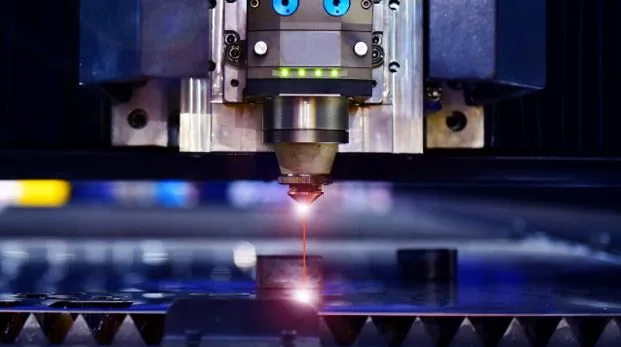
The narrative around manufacturing has shifted decisively in the past five years. It is no longer solely about low-cost labour or vast production volumes. Across boardrooms in Europe and North America, the conversation has moved to resilience, technical capability, and the strategic value of precision. For industries from medical devices to electric vehicles, the ability to source complex, high-tolerance components reliably has become a competitive advantage in its own right.
This shift is visible in the numbers. The global market for precision engineering continues to outpace general industrial production, driven by structural forces that show no sign of abating. Three trends, in particular, are redefining what manufacturers need from their supply partners.
The Demand for Complexity at Scale
First is the relentless drive toward miniaturisation and functional density. A modern surgical tool is not merely a piece of stainless steel; it is a system of micron-level features, internal channels, and mating surfaces that must perform flawlessly inside the human body. An electric vehicle battery pack relies on hundreds of precision-machined terminals and cooling circuits, each one critical to safety and performance. These parts cannot be produced on conventional equipment. They require the kind of dedicated precision machining services that combine multi-axis capability with rigorous process control—the ability to hold tolerances of ±0.005 mm not just for one part, but for hundreds of thousands.
The Material Science Advantage
Second is the expanding palette of advanced materials. Lightweight aluminium alloys for aerospace structures, corrosion-resistant stainless steels for medical implants, high-strength brass for electrical connectors—each material behaves differently under the cutting tool. Machining titanium, for instance, requires specialised strategies to manage heat and work hardening. Nickel-based superalloys demand rigid machines and ceramic tooling. The suppliers who succeed in this environment are those who have built deep process expertise across a wide range of materials, from common engineering grades to exotic alloys. Their value lies not just in the machines they operate, but in the accumulated knowledge of how to get the best from every material.
Quality as a System, Not an Inspection
Third is the transformation of quality assurance. In critical industries, a certificate of conformance is no longer sufficient. Buyers demand traceability: the ability to link each finished component back to its raw material batch, its machining parameters, and its inspection results. This requires integrating quality into the production process itself. Modern facilities use in-process probing to verify dimensions in real time, statistical process control to monitor trends, and fully documented workflows that satisfy the requirements of ISO 13485 for medical devices or AS9100 for aerospace. This level of rigour is becoming the baseline for any supplier seeking long-term partnerships with leading OEMs.
The Strategic Value of a Dedicated Partner
These converging trends help explain why procurement strategies are evolving. The old model of sending drawings to multiple shops and awarding work based on the lowest quote is giving way to a more collaborative approach. Engineering teams are engaging with manufacturing partners early in the design process, seeking input on manufacturability, material selection, and cost optimisation. The most successful partnerships are those where the supplier contributes not just capacity, but insight.
This is particularly evident in the realm of turned parts, where complexity and precision intersect. Components that must function in demanding environments—fuel system valves, surgical instrument shafts, sensor housings for autonomous vehicles—require more than standard machining. They require the kind of advanced CNC turning technologies capable of performing multiple operations in a single setup, eliminating the errors that accumulate when parts are transferred between machines. And they require a production environment where quality is embedded from the first cut to the final inspection.
For buyers seeking this combination of capability and reliability, the evaluation criteria have expanded. Price remains important, but it is considered alongside technical depth, quality infrastructure, and demonstrated experience in relevant industries. The ability to scale from prototype to high-volume production without losing consistency is equally critical. A supplier that can deliver 100 sample parts with perfect accuracy but struggles to maintain that precision across a run of 100,000 units is not a true partner for growth.
The Future of Sourcing
Looking ahead, the trends favour those who have invested deliberately. The demand for precision will only intensify as products become more sophisticated and timelines compress. Supply chains will continue to be tested by geopolitical and logistical pressures. In this environment, the partnerships that endure will be those built on mutual understanding and demonstrated competence.
For companies sourcing from global markets, this means looking beyond the quote and examining the infrastructure behind it. It means asking about material verification, about quality systems, about engineering support. It means seeking a partner that can offer not just parts, but the confidence that those parts will perform as intended, every time.
The economics of precision have changed. The buyers who recognise this—and who align themselves with CNC turning manufacturing partners equipped for the demands of modern engineering—will be best positioned to compete in the years ahead.