How Wide Fit Golf Shoes for Men Enhance Stability and Comfort on the Course
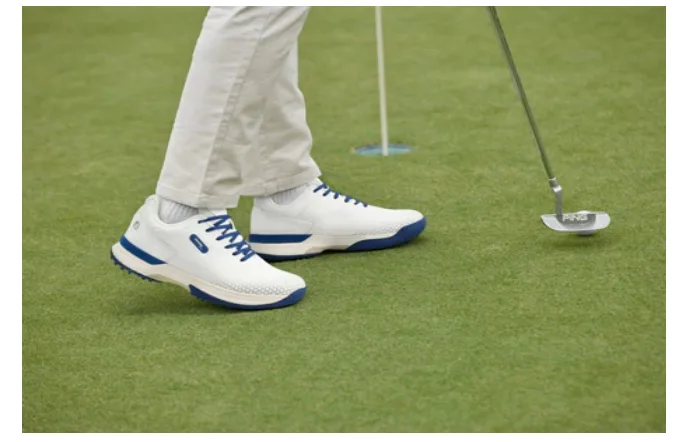
Golf is one of the few sports where you can spend serious money on equipment, practise your swing, watch your ball flight improve, and still play below your potential because your feet do not feel settled.
It sounds dramatic, but it is true. Every full swing is a ground-up movement. Your feet press into the turf, the turf pushes back, and that interaction influences balance, rotation, and how confidently you commit to the shot. Researchers have measured substantial ground reaction forces at the golf shoe–turf interface during the swing, and those forces change with the shot and how you load each foot (for example, the lead foot often sees higher vertical forces for right-handed golfers).
Now add a very human problem: many men squeeze their feet into standard-width golf shoes, then wonder why they feel unstable on sidehill lies or why their toes feel cramped after nine holes.
This is where wide fit golf shoes stop being a “comfort preference” and start being a performance and endurance upgrade. Not because they magically make you a better golfer, but because they reduce distractions, improve stability, and make walking 18 feel less like a punishment.
If you are currently searching for wide fit golf shoes for mens because standard options feel tight or you keep loosening laces all round, this guide will explain what changes biomechanically, what features matter most, and how to choose a pair that actually helps on the course.
Why golf shoes affect stability more than you think
A golf swing is not just “arms and hips.” It is a controlled transfer of pressure.
During the swing, your feet create forces against the ground. Studies examining golf shoe designs have looked at these forces on natural grass and found that while shoe type may not always show huge differences in peak forces, the forces themselves are real and sizeable, especially at the lead foot.
That’s important because it tells you something simple: the shoe’s job is not “looking sporty.” It is keeping you planted and predictable while those forces happen.
When your shoes are too narrow, or when your feet feel compressed, stability takes a hit in a few subtle ways:
- You shift weight earlier than you should because the forefoot feels pressured.
- You hesitate on wet turf because you do not fully trust your base.
- You unconsciously shorten your follow-through because something feels “off.”
None of that shows up on the scorecard as “shoe problem,” but it shows up as inconsistency.
The wide-fit factor: comfort and performance start at the toe box
Wide fit golf shoes matter for one basic reason: your feet are not static.
They warm up and swell slightly during a round, especially in summer, especially if you walk, and especially if you stand on uneven lies where the foot is constantly adjusting. If the shoe is already tight in the forefoot at the start, it becomes a squeeze by hole 12.
Wide fit shoes address this without forcing you to size up in length, which often creates heel slip. Heel slip is a silent killer because it creates friction, hotspots, and that “my foot is sliding” feeling when you rotate.
A wide fit that’s done properly gives you:
- more space across the forefoot and toe area
- less side pressure on the little toe and big toe joint
- a more relaxed stance, because your foot is not fighting the shoe
The immediate benefit is comfort. The deeper benefit is that you stop compensating.
What “stable” really means on a golf course
Stability in golf shoes is not one thing. It is a combination:
1) Traction so you do not slip mid-swing
Golf shoe outsole design has been studied with traction features in mind. Research discussing outsole design highlights elements intended to reduce slipping during the downswing and follow-through.
This is why some golfers feel instantly better in spiked shoes during wet conditions. Even brand guidance aimed at golfers says spiked shoes are generally better when conditions are damp and can help keep feet planted.
2) A platform that does not wobble when you rotate
Some shoes feel soft and pleasant standing still, but unstable when you actually swing. Golf is rotational. A stable base matters more than “pillowy comfort.”
3) A heel that stays locked in
If your heel lifts, your foot slides forward. Then you squeeze your toes without realising. Then you lose stability. It’s a chain reaction.
Wide fit helps here because you can keep the correct length while getting the width you need. That keeps the heel in the right place.
Why wide fit shoes improve comfort across 18 holes
Golf is a walking sport even if you ride a buggy. You still walk: to and from tees, around greens, on slopes, through rough patches, and often on mixed surfaces.
Comfort matters because fatigue is real. It shows up late in the round as:
- less stable posture
- shorter tempo
- more sloppy footwork on uneven lies
Wide fit shoes reduce the common comfort issues that build up over a round:
- forefoot burning from compression
- toe crowding
- pressure on bunions or the big toe joint
- “tightness” across the top of the foot when laced for stability
If you’ve ever finished a round and felt relief the moment you took shoes off, that’s your body telling you the fit is wrong.
Spiked vs spikeless, and why fit comes first
Golfers love this debate. It matters, but not as much as fit.
Spiked shoes tend to provide more traction on wet ground and on hilly courses where footing can be unpredictable, which is why they are often recommended for damp conditions.
Spikeless shoes can be excellent too, but traction depends heavily on outsole pattern and the conditions you play in. If you play mostly dry courses, spikeless can feel more like a trainer and still provide enough grip.
Here’s the thing though: neither spikes nor spikeless will help if your forefoot is cramped.
The first decision is always fit. The second decision is traction style.
The fit rules that wide-foot golfers should actually use
Most men try golf shoes the way they try casual trainers: slide them on, stand still, decide in 30 seconds.
Golf shoes deserve a better test because they behave differently when you rotate and shift pressure.
Use toe room and flex point as your baseline
FootJoy’s golf shoe fitting guide gives a very practical rule of thumb: leave about half an inch of space between your longest toe and the end of the shoe, and make sure the shoe’s flex point lines up with your forefoot.
That matters because if the shoe bends in the wrong place, your forefoot fights the shoe during walking and during the swing.
Do a “golf test” in the shop or at home
Try this:
- take your normal stance
- shift weight left and right as if you’re finding balance on a sidehill lie
- do two slow practice swings
- pay attention to whether your foot slides inside the shoe or whether your toes press into the sidewall
If you feel side pressure immediately, it usually gets worse later, not better.
Try shoes later in the day if you swell
Feet typically expand slightly after you’ve been on them. Trying shoes when your feet are at their largest helps you choose a fit that survives a full round.
What to look for in wide fit golf shoes
Wide fit is the starting point. The best wide fit golf shoes also handle stability properly.
A wide toe box that is actually shaped for toes
Some shoes are labelled wide but still taper at the front. That defeats the purpose. Your toes should sit naturally, not get nudged inward.
A stable midsole and outsole platform
Wide feet on narrow bases feel unstable. You want a platform that supports your width. This matters on slopes and uneven lies where your foot is already working harder.
A secure heel counter and rear fit
Your heel should feel held, not floating. This reduces sliding and improves confidence.
Traction designed for your course conditions
If you often play morning rounds in the UK or on softer turf, traction becomes a bigger deal. Spikes often win there.
If you play mostly firm, dry courses, spikeless can be fine, but choose a sole with a pattern that actually grips.
Comfort features that don’t compromise structure
Plush is nice. Stable is better. A shoe can be cushioned without being unstable, but you need to feel it during movement, not just while standing.
If you want to compare wide-friendly options built for course use, it’s often easier to start inside the right category rather than guessing which “standard” model runs wide.
How better footwear can improve your actual golf outcomes
Let’s be honest: shoes won’t fix a slice.
But shoes can improve the conditions under which you swing.
You’ll commit more confidently on wet or uneven lies
If you’ve ever held back because you felt your feet might slip, you already know the value of traction and stability. Research into golf shoe outsoles focuses on preventing slipping during the swing for a reason.
You’ll reduce “foot distractions” that mess with tempo
Golf is rhythm. If your toes are cramped, you hurry. If your heel rubs, you shorten your finish. If your stance feels unstable, you guide the swing instead of swinging.
Wide fit shoes remove a bunch of small discomfort triggers that silently disrupt rhythm.
You’ll maintain energy later into the round
Comfort improves endurance. Endurance improves decision-making. Decision-making improves scores more than most golfers want to admit.
Common mistakes wide-foot golfers keep making
Buying longer instead of wider
This usually leads to heel slip and friction, then blisters, then frustration.
Overtightening laces to “lock in”
If your forefoot is already tight, cranking down laces compresses nerves and creates burning discomfort. Wide fit allows you to secure the midfoot without strangling the forefoot.
Choosing softness over stability
A shoe that feels like a cushion can be unstable during rotation. For golf, stable comfort is the goal.
Ignoring fit because “I only wear them for golf”
A round is hours long. You wear them a lot. Golf shoes are not short-term footwear.
A simple buying checklist that works
Keep it simple and focused:
- correct length with half-inch toe room (as a baseline)
- wide enough forefoot so toes are not squeezed
- heel feels secure, minimal lift
- stable base during practice swing
- traction that matches your typical playing conditions
If you tick those boxes, you’re already ahead of most golfers.
FAQ: Wide fit golf shoes for men
Do wide fit golf shoes help stability, or just comfort?
Both. Comfort improves because there’s less compression and friction. Stability improves because your foot sits more naturally in the shoe and you can secure the heel and midfoot without crushing the forefoot.
How do I know if my golf shoes are too narrow?
Side pressure across the forefoot, a squeezed little toe, numbness or burning after a few holes, red marks on the sides when you take them off, and repeated hotspots in the same places.
How much toe room should I have?
A practical rule is about half an inch between your longest toe and the end of the shoe, and the shoe’s flex point should align with your forefoot.
Should I size up if my feet feel tight in golf shoes?
Not automatically. If the length is already fine, sizing up often causes heel slip. Try a wide fit in the correct length first.
Spiked or spikeless for UK conditions?
If you play in wet or soft conditions often, spiked shoes are commonly recommended for better traction and stability.
Spikeless can still work well on drier courses, but traction depends heavily on outsole design.
Will wide fit shoes feel sloppy?
They shouldn’t. A good wide fit shoe is roomy in the forefoot but still secure in the heel and midfoot. If it feels sloppy, either the length is too long or the heel hold is poor.
Can wide fit shoes help with foot fatigue?
Yes, because toe crowding and side pressure create fatigue quickly. Reduced discomfort makes it easier to maintain posture and tempo later into the round.
Final thoughts
The quickest way to make golf harder is to play it on an unstable base.
Wide fit golf shoes matter because they let your feet sit naturally, they reduce pressure that builds across 18 holes, and they help you stay more confident on slopes and in wet conditions. They don’t buy you skill, but they buy you consistency. And in golf, consistency is half the battle.