Night Hunting Gear That Actually Works – Lessons from the Field
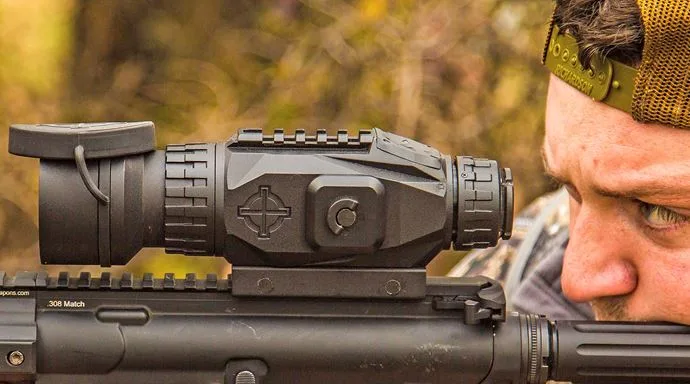
Night hunting has gotten considerably more accessible over the past decade. Whether you’re working feral hogs on a neighbor’s cropland or running coyotes along a property line at 3 a.m., equipment options have expanded – and so has the quality of honest information about what those options actually do under field conditions. The team at USANightVision.com carries most of what serious hunters are currently debating, which helps when you need to compare published specs against realistic performance expectations before committing real money.
The core question remains the same: night vision or thermal? The answer depends on terrain, typical shot distances, and how much weight you’re prepared to carry for how long.
When IR Illumination Works Against You
Traditional image-intensified night vision with an IR illuminator performs reliably in open country. At distances beyond 100 yards across clear terrain, the combination of image intensification and supplemental IR light delivers the contrast needed to identify targets and place accurate shots. That’s the scenario these systems were designed for, and they handle it well.
The limitation appears in vegetation. In dense grass, tall weeds, or thick brush, the IR illuminator reflects off foliage in the foreground. That reflected light creates a brightness wall that kills contrast on your actual target. The animal you’re after disappears into the noise of the lit-up foreground. Thermal imaging sidesteps this by reading heat differential rather than reflected light – the target’s body temperature stands out regardless of what’s growing between you and it.
This is a genuine performance difference, not a theoretical edge case. Hunters working thick-cover environments, or making most shots under 50 yards in brushy terrain, have solid reasons to favor thermal. The tradeoff is cost and weight. Both increase significantly, and those aren’t abstract concerns for practical hunting.
Weight on the Rifle
InfiRay thermal scopes have built a following among hog hunters for image quality and reliable target separation in difficult conditions. The optic itself runs roughly 890 to 940 grams depending on model (per InfiRay manufacturer specifications) – and that’s before rail hardware, battery systems, or mounting components. The total rifle assembly gets heavy. For a fixed-position setup over a feeder, that’s completely manageable; you’re not carrying it across ground. For active scanning across open terrain, tracking moving animals over an extended evening, the weight accumulates in ways that affect both accuracy and endurance.
Know what kind of hunting you’re actually doing before building toward thermal.
The Budget Digital Entry Point
Not every hunting situation calls for a premium thermal setup. For coyote work at predictable distances, or hog hunting over a baited feeder at under 100 yards, digital night vision at a lower price point performs adequately – with known limitations worth understanding before purchase.
The Sightmark Wraith HD 4-32×50 comes up consistently as a practical entry point. The Sightmark spec sheet lists a field of view of 21 feet at 100 yards on 4x magnification. That’s narrow, and you feel it when tracking an animal toward the frame edge. Per the same spec sheet, the scope runs on 4 AA batteries with approximately 4.5 hours in standard preview mode. The included IR illuminator draws from 2 CR123A batteries – roughly 2 hours on high power output (per Sightmark spec sheet). Pack spares for anything beyond a short sit.
For a feeder setup with consistent shots at 25 to 75 yards on familiar ground, those specs work. For covering open terrain while calling coyotes, the narrow field of view becomes a real constraint. The Wraith 4K Mini addresses this with a wider field of view and lighter build, which explains why hunters who start with the HD often move to it after a season.
What Night Vision Actually Changes
The practical shift when you can see in the dark goes beyond hit-to-miss ratios. You stop hunting by sound and instinct and start reading what’s in front of you – movement at the treeline, an animal’s posture before it decides to bolt, the difference between a hog rooting casually and one that’s already caught your scent. That situational awareness changes how you make decisions during a hunt.
The bi-ocular setup is often recommended by hunters with real field time: a NV or thermal scope on the rifle, a separate monocular on the off eye for scanning. It keeps general awareness intact while the shooting eye stays on the mounted optic. At hog hunting distances of 25 to 100 yards, knowing where the group is and which direction they’re moving is as important as the shot itself.
Matching Setup to Conditions
Open fields with shots past 100 yards: intensified NV or capable digital, keep the IR aimed at the target zone rather than nearby vegetation. Dense cover or brush: thermal earns its premium by separating heat from background. Fixed feeder work: almost any reasonable setup handles controlled variables at short range. Active scanning across unfamiliar ground: weight and battery life both matter more than on a feeder sit, and a capable system you’re fighting is worse than a simpler one that works cleanly.
Start with a specific picture of your actual hunting conditions – terrain, typical shot distances, the ratio of scanning to shooting – and narrow from there. Equipment matched to those variables outperforms technically superior gear that doesn’t fit them.