10 Must-Have Gourmet Kitchenware Tools Every Home Chef Needs
Every home cook hits a plateau eventually. You’ve mastered the recipes, you buy the organic produce, and you follow the instructions to the letter-yet your steak doesn’t have that restaurant crust, and your sauces feel “flat.”
Usually, the culprit isn’t your talent; it’s your kit.
There is a massive difference between “tools that work” and kitchenware tools that perform. A gourmet kitchen isn’t about having a drawer full of strawberry hullers and avocado slicers; it’s about a few high-caliber, multi-functional workhorses that respond to heat and pressure exactly how you expect them to.
If you’re ready to stop “making do” and start truly cooking, these are the ten essentials that deserve a permanent spot on your counter.
1. The Edge: A Properly Balanced Chef’s Knife
If you’re sawing through a tomato, you aren’t just wasting time-you’re bruising the food. A gourmet chef’s knife should feel like a natural extension of your hand, not a heavy piece of hardware. Look for high-carbon steel; it holds an edge longer than cheap “never-needs-sharpening” blades. When you find the right balance point where the blade meets the handle, your prep work stops being a chore and starts being a rhythm.
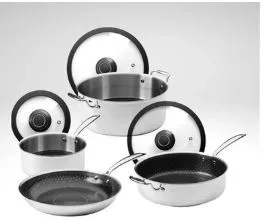
2. The Searing Essential: Stainless Steel Cookware Pan
If you only own non-stick pans, you’re missing out on half the flavor of your meat. A high-quality stainless steel cookware pan is designed to let food stick-just a little. That sticking creates fond, those caramelized brown bits that form the base of every world-class pan sauce.
A 12-inch tri-ply skillet is the industry standard. It handles high heat without warping and moves from the stovetop to a 450°F oven without breaking a sweat. It’s the tool that finally gives you that deep, mahogany crust on a scallop or a ribeye.
3. The “Secret Ingredient” Tool: The Microplane
Professional chefs don’t use those boxy cheese graters for fine work. They use a Microplane. This tool creates a “snow” of Parmesan, zest that is purely fragrant oil without the bitter white pith, and garlic paste so fine it dissolves instantly into a dressing. It’s a small investment that provides an immediate “glow up” to your plating.
4. Temperature Over Intuition: Instant-Read Thermometers
I’ve seen 20-year veteran cooks still ruin a roast because they “felt” it was done. Don’t guess. An instant-read digital thermometer removes the anxiety of slicing into a chicken breast only to find it’s raw at the bone. In gourmet cooking, 5 degrees is the difference between juicy perfection and “pass the gravy.”
5. Velvet Textures: The Immersion Blender
The best soups in the world aren’t chunky; they’re aerated and silky. A high-speed immersion blender allows you to emulsify fats into liquids right in the pot. Whether you’re making a Hollandaise that won’t break or a creamy butternut squash soup, this tool provides a texture that a whisk simply can’t achieve.
6. Why Heritage Matters: American Made Kitchen Tools
There is a tactile satisfaction in using american made kitchen tools. Beyond the “shop local” sentiment, there’s a functional advantage: weight and durability. Domestic manufacturers like those found at a specialized cookware shop often use thicker gauges of steel and sustainably sourced hardwoods that aren’t prone to cracking.
When you hold a heavy-duty turner or a solid walnut rolling pin made in the USA, you can feel the intention behind the design. Places like Cooks on Main specialize in these types of heritage pieces-tools that aren’t meant to be replaced every three years, but rather handed down to your kids.
7. The Low-and-Slow King: Enameled Cast Iron
For braising, you need thermal mass. An enameled cast iron Dutch oven holds heat better than any other material. It’s the only way to get that perfectly even, low-temperature simmer required for a 6-hour Bolognese or a fall-off-the-bone pot roast. Plus, the white enamel interior makes it easy to monitor your butter as it browns.
8. The Baker’s Truth: Digital Scales
“A cup of flour” is a lie. Depending on how you scoop it, a cup can weigh anywhere from 120 to 160 grams. That 25% margin of error is why your cakes sometimes come out dry. Gourmet cooking is about consistency. Switching to a digital scale allows you to replicate your best results every single time with mathematical precision.
9. The Chef’s Extra Hand: Locking Tongs
Tongs are essentially an extension of your fingers. Forget the flimsy ones with the giant “claws.” You want sleek, stainless steel tongs with high-tension springs and a reliable locking mechanism. They give you the dexterity to flip a delicate piece of fish or rearrange coals under a grill without losing your grip.
10. The Foundation: End-Grain Wood Boards
A plastic cutting board is fine for raw chicken, but for everything else, you need end-grain wood. Because the wood fibers stand vertically, your knife edge sinks between them rather than hitting a hard, flat surface. This keeps your expensive knives sharp for months longer and provides a stable, non-slip surface for heavy-duty chopping.
Final Thoughts
Gourmet cooking isn’t about snobbery; it’s about removing the obstacles between you and a great meal. When you stop fighting with a dull knife or a thin, burning pan, you’re free to actually enjoy the process.
Start with the basics. Get yourself a proper stainless steel cookware pan, invest in a few american made kitchen tools that feel right in your hand, and visit a trusted resource like Cookson Main to see the difference quality makes. Once you have the right kitchenware tools, the recipes finally start working the way they’re supposed to.
Common Kitchen Questions
- Does stainless steel require a lot of oil? Not necessarily. The trick to a stainless steel cookware pan is the “Leidenfrost effect”-heat the pan first, then add the oil, and wait for it to shimmer. If the pan is at the right temperature, your food will naturally release once a crust has formed.
- Why are American made kitchen tools usually more expensive? You’re paying for better materials and fair labor. A $10 spatula from a big-box store will likely melt or snap within a year. A domestic, high-heat turner is often a “buy it once” purchase that performs better daily.
- Is a Dutch oven better than a slow cooker? For flavor? Absolutely. A slow cooker can’t sear meat or reduce a sauce effectively. A Dutch oven allows for browning and evaporation, which concentrates flavors in a way a plug-in appliance can’t match.
- How do I keep my wooden cutting board from warping? Never soak it in the sink. Hand wash it, dry it upright so air hits both sides, and rub it with food-grade mineral oil once a month. It’ll last decades.
- What is the one tool I should upgrade first? Your knife. It is the tool you use for every single meal. A sharp, high-quality chef’s knife is the most significant safety and efficiency upgrade you can make.