Debunking Common AC Myths for Visalia, CA Homeowners
Air conditioning is not a luxury in Visalia for most households. It is part of daily life for families trying to stay comfortable during long stretches of serious heat. When an AC system is working properly, people barely think about it. They set the thermostat, expect cool air, and move on with the rest of the day. That is exactly why so many myths about air conditioning continue to spread from neighbor to neighbor, online post to online post, and from one generation of homeowners to the next. A lot of these ideas sound reasonable at first, especially when they seem to save money or reduce wear on the system. The problem is that a bad assumption about how an AC system works can lead to higher utility bills, reduced comfort, more repairs, and a shorter equipment lifespan. Many homeowners do not realize they are making the system work harder until the signs are impossible to ignore. By then, the home may already be less comfortable, the indoor air may feel stuffy, and the equipment may be under more stress than necessary.
Part of the confusion comes from the fact that an air conditioning system is more complex than it looks from the outside. Homeowners see the thermostat on the wall, the vents in each room, and the outdoor unit running in the yard, but most of the actual operation remains hidden. Refrigerant movement, airflow balance, electrical controls, duct condition, filter restrictions, thermostat calibration, and system sizing all affect performance. When people do not see what is happening behind the scenes, they tend to rely on rules of thumb. Some of those rules are outdated. Some were never accurate to begin with. Others may have been half true years ago with older equipment, but do not apply the same way to modern systems in today’s homes. That is why it is so important to separate practical advice from bad information. In a place like Visalia, where cooling performance matters for a large part of the year, getting the basics wrong is not a small issue. It affects comfort, operating cost, and trust in the system every single day.
The good news is that most AC myths can be cleared up once homeowners understand how a system is actually designed to operate. Air conditioners are built to remove heat steadily, move conditioned air through the house, and maintain a target temperature as efficiently as the home and equipment allow. They are not designed to perform miracles, and they are not improved by guesswork. Good results usually come from correct installation, proper maintenance, realistic thermostat use, clean airflow, and timely repairs when symptoms appear. That means homeowners in Visalia do not need tricks or shortcuts. They need accurate information and a reliable HVAC company that can explain what is happening without overselling anything. Breezio AC & Heating serves homeowners and property owners across Visalia and surrounding communities with honest recommendations, fair pricing, and dependable workmanship. When common myths are replaced with plain facts, it becomes much easier to protect the system, lower stress, and make smarter decisions about cooling your home.
Why So Many Air Conditioning Myths Persist in Visalia Homes
Air conditioning myths usually survive because they are easy to repeat and hard to test without actual HVAC Visalia CA experience. A homeowner may try something once, feel like it worked, and keep doing it for years without realizing the long term downside. In other cases, people compare one home to another without considering differences in insulation, duct layout, square footage, sun exposure, windows, or equipment condition. In Visalia, where temperatures can stay high for extended periods, even small misunderstandings about AC use can become expensive habits. What sounds like common sense is not always technically correct. The result is a lot of confident advice that does not hold up under real HVAC inspection.
Bigger Air Conditioners Always Cool a Home Better
One of the most common myths is that a bigger air conditioner automatically means better comfort. That sounds logical on the surface because people assume more cooling power should solve every problem faster. In reality, an oversized AC system can create a long list of issues inside the home. Air conditioners are designed to run in cycles that remove both heat and humidity from indoor air. When a system is too large, it may cool the thermostat area too quickly and shut off before the rest of the house is properly conditioned. That leads to short cycling, uneven room temperatures, and less effective moisture removal. The home may feel cool for a moment, then clammy, stuffy, or inconsistent as temperatures drift back up. Homeowners often mistake this for strong performance when it is actually poor system matching.
Oversizing also puts extra strain on system components. Starting and stopping too often is harder on motors, electrical parts, and compressors than longer, steadier run times. Short cycling reduces efficiency because the system uses more energy ramping up repeatedly instead of operating in a stable rhythm. That can drive bills higher without improving comfort in a meaningful way. It can also shorten the life of the equipment. Homeowners sometimes install a larger unit after living with a weak or failing older system, believing more capacity is the answer. In many cases, the real issue was poor maintenance, duct leakage, dirty coils, airflow restrictions, or an improperly evaluated load calculation. A bigger machine does not automatically correct those underlying problems.
Proper AC sizing should be based on the actual needs of the home, not guesswork or fear of summer heat. Square footage matters, but it is only part of the calculation. Window area, ceiling height, insulation levels, duct condition, occupancy patterns, and sun exposure all influence how much cooling capacity the house really needs. In Visalia, these details matter because homes can experience heavy heat gain during the day, especially if they have older windows or attic issues. A licensed HVAC contractor should size equipment using accepted methods rather than rough estimates. When the system is correctly matched to the home, it runs more consistently, controls indoor conditions better, and usually delivers stronger comfort than an oversized unit ever could. Bigger is not always better. Better is better.
Closing Vents in Unused Rooms Saves Money
A lot of homeowners assume they can lower cooling costs by closing vents in rooms they are not using. It seems practical because fewer open vents sounds like less space to cool. Unfortunately, most residential duct systems are not designed to operate that way. When supply vents are closed, static pressure inside the ductwork can increase. That added pressure can reduce airflow across the system, make the blower work harder, and create imbalances throughout the house. Rooms that remain open may not cool as evenly as expected. Some areas may receive too much air, while others begin to struggle. Instead of helping the equipment, the homeowner may be forcing it to operate outside the conditions it was meant to handle.
Restricted airflow can lead to more than comfort issues. It can contribute to coil problems, longer run times, and unnecessary wear on the system. In severe cases, low airflow can cause the evaporator coil to get too cold and begin freezing. When that happens, cooling performance drops even further, and the homeowner may think the unit has suddenly failed. Closed vents can also worsen duct leakage if weak connections are already present. Pressure changes inside the duct system can push conditioned air into attics, wall cavities, or crawlspaces instead of into living areas. The result is wasted energy, not savings. Many homeowners never connect these performance issues back to the habit of shutting vents.
If certain rooms are always too warm, too cold, or rarely used, the better answer is to have the system evaluated. There may be duct design issues, return air limitations, insulation problems, or zoning opportunities that make more sense than manually closing vents. A technician can also check whether dampers, balancing, or duct repairs would improve whole home performance. In some homes, mini split systems or dedicated zoning strategies are better solutions for spaces with unique use patterns. The important point is this: randomly closing vents is rarely the smart shortcut people think it is. In most homes around Visalia, keeping vents open and addressing the real airflow issue is the safer and more effective approach.
The Outdoor Unit Only Matters if It Turns On
Many homeowners assume the outdoor unit is fine as long as it is running and making cool air happen somewhere in the house. That is a dangerous myth because outdoor unit condition has a direct effect on system efficiency and reliability. The condenser coil in the outdoor section is responsible for rejecting heat pulled from inside the home. If that coil is dirty, blocked by debris, or surrounded by poor airflow conditions, the system has to work harder to perform the same job. Grass clippings, leaves, dust, cottonwood, weeds, and general grime can all reduce heat transfer. The unit may still turn on, but it may be operating far less efficiently than it should.
A struggling outdoor unit can raise head pressure, lengthen cooling cycles, and increase electrical demand. The compressor may run hotter, parts may wear faster, and the entire system may lose capacity during the exact weather conditions when you need it most. Homeowners often miss the early signs because the decline is gradual. The house cools a little slower. The utility bill creeps up. The outdoor unit sounds a little harsher on hot afternoons. The home never quite feels as cool as it used to, but nothing seems dramatic enough to call for service. Then a heat wave arrives and the unit cannot keep up. What seemed like a cosmetic issue turns into a major performance problem.
The area around the condenser matters too. Shrubs packed too tightly around the unit, fencing that blocks airflow, or storage items stacked nearby can all interfere with operation. The outdoor section needs room to breathe. It also needs periodic inspection for electrical issues, contactor wear, capacitor weakness, damaged insulation on wiring, and coil cleanliness. Homeowners in Visalia should think of the outdoor unit as an active working component, not just a box that hums outside. If it is neglected, the whole system suffers. Good cooling starts with proper heat rejection, and proper heat rejection starts with a clean, unobstructed, professionally maintained outdoor unit.
Newer Homes Do Not Need AC Attention as Often
There is a common belief that newer homes are almost immune to HVAC problems because everything is newer. While a newer house may have advantages, it is not protected from airflow issues, installation errors, duct leakage, thermostat misplacement, filter neglect, or equipment wear. In fact, many comfort complaints start in homes that are only a few years old because people assume the system could not possibly have a problem. A poor installation on day one can stay hidden until weather extremes expose it. A kinked flex duct, undersized return, badly sealed plenum, or poorly charged system can affect comfort long before the equipment is considered old. New construction does not guarantee perfect HVAC results.
Modern homes are often tighter than older homes, which can be beneficial for efficiency. But tighter homes also place greater importance on ventilation, airflow balance, and correct system design. If return air is limited, filters are neglected, or ducts were never properly balanced, homeowners may notice temperature swings, stale rooms, pressure problems around doors, or weak cooling in certain parts of the house. Because the home is newer, they may blame themselves or assume the issue is normal. It often is not. New equipment still needs maintenance, inspection, and professional evaluation when symptoms appear. Being newer only reduces the number of possible age related failures. It does not eliminate system problems.
Homeowners should avoid assuming that age alone tells the whole story. A five year old system can perform worse than a well maintained twelve year old system if it was installed poorly or neglected. On the other hand, a newer properly installed system can give excellent results when maintained correctly. What matters is condition, installation quality, airflow, refrigerant accuracy, and routine care. In Visalia, where AC systems often work hard for much of the year, even newer equipment benefits from regular attention. Waiting until a problem becomes obvious is not a strategy. It is just delayed maintenance disguised as optimism.
If the House Feels Cool Enough, the System Must Be Healthy
Comfort by itself does not always mean the AC system is healthy. A home may still reach the desired thermostat setting while quietly developing problems that become much more expensive later. Refrigerant issues, weak electrical parts, dirty coils, partial airflow restrictions, and duct leakage can all exist before the homeowner feels a dramatic difference. Many systems continue operating in a compromised state for weeks or months. During that time, the equipment may be using more energy, putting more wear on major components, and delivering weaker airflow than normal. The house feels cool enough, so the homeowner assumes everything is fine. That assumption can be costly.
A system can also cool the main thermostat area while leaving other areas uncomfortable. Homeowners sometimes overlook weak airflow in one bedroom, longer run times in the afternoon, or a strange odor at startup because the living room still feels decent. Small clues matter. A healthy system should not need excessive run times to maintain comfort under normal conditions. It should not make unusual noises, trip breakers, develop ice, or blow noticeably weaker air than before. It should not produce a major jump in utility cost without a reason. If those things are happening, the fact that the house still reaches the set temperature does not mean the system is in good shape.
Routine inspection helps catch these issues before they become full failures. That is especially important in Visalia because once severe heat arrives, even a small loss in performance can become a major comfort problem. Homeowners are better off treating consistent cooling as one sign of system health, not the only sign. Performance, airflow, sound, efficiency, and component condition all matter. A system that is barely getting by is not the same as a system that is operating the way it should. Waiting for total failure is rarely the cheapest path.
Common Thermostat Myths That Cost Visalia Homeowners Money
Thermostats are simple to use, which is one reason so many myths center around them. People interact with the thermostat every day, so it feels like the control point for everything. In reality, the thermostat sends instructions, but it does not change the physical limits of the equipment or the condition of the home. A lot of costly habits start with the assumption that the thermostat can force the air conditioner to work faster, smarter, or more efficiently just because the setting changed. In Visalia, where homeowners depend heavily on cooling, thermostat mistakes can have a bigger impact than many people realize. Understanding what the thermostat actually does can prevent wasted energy and frustration.
Setting the Thermostat Much Lower Cools the House Faster
This is one of the most common AC myths anywhere, and it shows up constantly during heat waves. A homeowner walks into a hot house and sets the thermostat much lower than the actual target temperature because they want the home to cool faster. The thinking is understandable. If seventy five sounds comfortable, maybe sixty five will make the system hurry up. But a standard residential air conditioner does not work that way. It cools at the rate the system is capable of producing under the current indoor and outdoor conditions. Setting the thermostat drastically lower does not make the fan stronger, the refrigerant colder, or the system smarter. It simply tells the unit to keep running longer until that lower number is reached, if it can reach it at all.
The real problem with this myth is what happens next. Homeowners may forget to raise the thermostat once the house becomes comfortable, so the system continues running longer than necessary. That drives up energy use and can overcool parts of the home. In houses with airflow imbalance, some rooms may become uncomfortably cold while others still lag behind. During extremely hot Visalia afternoons, the system may never reach that aggressive setting, which means it runs continuously for extended periods. Continuous run time under harsh conditions is not automatically bad if the system is designed for it, but forcing it toward an unrealistic target does not provide any real advantage. It just adds wear and utility cost.
A better approach is to set the thermostat to the temperature you actually want and allow the system to do its job. If the house is taking too long to cool, that points to a different issue. It may be outdoor heat gain, poor insulation, dirty filters, low refrigerant, duct leakage, or a system that needs service. The thermostat is not a speed pedal. It is just a target. Homeowners who understand that simple fact usually operate their systems more efficiently and with less frustration.
Turning the AC Off Completely Every Day Always Saves More
Some homeowners believe the best way to save money is to shut the AC off completely whenever they leave the house, no matter how hot it gets indoors. In some situations, reducing cooling while the home is empty can help lower energy use. But shutting the system off entirely during hot Visalia conditions is not always the smartest choice. When indoor temperatures rise significantly, the AC has to remove a much larger amount of heat once someone returns home and turns it back on. Walls, floors, furniture, and contents all store heat. That stored heat does not disappear just because the thermostat was off for a few hours. The system may then run for a long time trying to pull the house back down to a comfortable level.
The result can be a home that feels miserable when people return, especially in late afternoon or early evening. The system may also face heavier demand during the hottest part of the day because the indoor temperature was allowed to climb so far. In some homes, that can reduce comfort and put more strain on aging equipment. The situation becomes even more noticeable in homes with poor insulation, significant sun exposure, or large west facing windows. It is not always the off period that determines savings. It is the total load the system has to overcome later.
A more balanced approach is often better. Programmable thermostats or smart thermostats can allow the home to drift upward while empty without letting indoor conditions become extreme. Then the system can begin cooling again before the household returns. That strategy usually supports comfort and efficiency better than a full shutdown. The right setback depends on the home, the system, and the household schedule. Homeowners in Visalia should think in terms of controlled temperature management, not all or nothing thermostat decisions.
Leaving the Fan On All the Time Always Improves Comfort
Many people assume leaving the thermostat fan in the on position all the time is automatically better for comfort. Sometimes continuous fan operation can help even out temperatures in certain homes, but it is not a universal improvement. When the cooling cycle is off and the fan keeps running, air continues moving through the ductwork and across system components. That may sound harmless, but it can create side effects. In some cases, the fan can circulate warmer air from attic influenced ducts or move residual moisture back into the living space. Homeowners may notice the house feels less crisp, especially after the compressor shuts off. The air is moving, but it does not necessarily feel better.
Continuous fan operation also adds electrical use because the blower motor runs far more hours. With some modern systems, that extra energy may be modest, but it is still an added cost. In older systems, the difference can be more noticeable. Some homeowners use the fan on setting hoping it will fix hot and cold spots, but if the house has duct balance problems, insulation issues, or poor returns, the fan alone will not solve the root cause. It may partially mask the issue while adding operating cost. In homes with dirty ducts or weak filtration, continuous fan use may also move more airborne dust around the house.
The auto setting is often the better default because it lets the blower run when the system is actively cooling and stop when the cooling call ends. That is how many systems are intended to operate for typical residential comfort. If a homeowner has specific comfort concerns, there may be times when custom fan settings, variable speed equipment, or circulation modes make sense. But leaving the fan on constantly should be a deliberate choice based on actual system behavior, not a blanket assumption that more air movement is always better.
A Smart Thermostat Fixes All Cooling Problems
Smart thermostats are useful tools, but they are not magic solutions. A homeowner may install one expecting lower bills, better comfort, and perfect system performance overnight. While good thermostat technology can absolutely help with scheduling, remote access, alerts, and routine efficiency habits, it cannot correct mechanical or design problems in the system. A smart thermostat cannot fix leaking ducts, dirty evaporator coils, low refrigerant, weak capacitors, bad airflow, or improper equipment sizing. If those issues already exist, the new thermostat may only make the homeowner more aware of the problem.
There is also a misconception that every smart thermostat is automatically compatible with every HVAC system. That is not always true. Some systems require specific wiring setups, accessory control, or configuration to operate correctly. If the thermostat is installed incorrectly or programmed poorly, comfort can actually get worse. Short cycling, fan issues, staging errors, or temperature inconsistencies may start showing up after installation. Homeowners then blame the thermostat brand when the real issue was compatibility or setup. In homes with heat pumps, zoning equipment, or specialized control boards, proper selection matters even more.
When used correctly, a smart thermostat can be a valuable part of a good cooling strategy. It can help maintain consistent schedules, reduce unnecessary run time, and make it easier to adjust settings without guessing. It can also provide reminders that encourage better maintenance habits. But it is still only a control device. If the system itself has underlying issues, those need actual HVAC service. Homeowners in Visalia should see smart thermostats as helpful tools, not as replacements for proper installation, maintenance, and repair.
The Thermostat Reading Is Always Perfectly Accurate
Many homeowners assume the temperature on the thermostat is an exact reflection of the whole house. In reality, the thermostat measures conditions at its specific location, and that location may not represent the comfort of every room. If the thermostat is near a return, close to a kitchen, exposed to direct sunlight, installed on an exterior wall, or influenced by a nearby hallway, the reading can be misleading. One part of the house may feel comfortable while another room is still warm. Homeowners often blame the AC system itself when the real problem begins with what the thermostat is sensing.
Even a small temperature difference at the thermostat can affect system behavior. If the sensor reads warmer than the true average indoor temperature, the system may run longer than needed. If it reads cooler, the system may shut off too soon and leave part of the home uncomfortable. Calibration issues can also happen. Most thermostats are reasonably accurate, but sensors and installation conditions still matter. In larger homes, two story homes, or homes with additions, a single thermostat may not reflect the full cooling picture at all times. That does not mean the thermostat is broken. It means the home may need better placement, zoning, airflow balancing, or a more strategic control setup.
When comfort complaints keep showing up despite normal thermostat settings, it is worth evaluating whether the control location makes sense. A technician can compare the thermostat reading against actual room conditions, inspect placement, and determine whether system performance or thermostat location is the true issue. In Visalia homes dealing with intense afternoon heat, small sensor differences can become much more noticeable. The thermostat matters, but it is only as useful as the location and system around it.
Air Filter and Maintenance Myths That Hurt Cooling Performance
A lot of homeowners know that maintenance matters, but many still misunderstand what maintenance actually does. Some people believe filters are minor accessories. Others think yearly service is optional unless the system obviously stops working. In reality, airflow and maintenance are central to AC performance. Small neglect in this area can lead to bigger efficiency losses than many homeowners expect. In a hot climate like Visalia, maintenance myths can cost real money and shorten system life far sooner than expected.
Air Filters Only Matter for Indoor Air Quality
Many people think air filters exist mainly to catch dust for cleaner indoor air. While filters absolutely play a role in air quality, they are also essential to system protection and airflow. The HVAC system depends on adequate air moving across the evaporator coil. When a filter becomes clogged, airflow drops. That restriction can reduce cooling capacity, extend run times, lower efficiency, and increase stress on blower components. If airflow drops enough, the coil can become too cold and start freezing. Homeowners then end up with poor cooling, water issues, or complete loss of airflow once ice buildup becomes severe.
A dirty filter can also change how the house feels before the homeowner realizes what happened. Some rooms may cool poorly. The system may sound different. The return air may seem louder. The thermostat may be satisfied more slowly, especially during hotter weather. Because these changes often happen gradually, people adjust to them. They assume the heat is simply harder on the house this year. Sometimes the real issue is just a filter that has been ignored for too long. In homes with pets, ongoing dust, construction residue, or heavy AC use, filters can load up quickly.
The right filter change schedule depends on the home, the filter type, and actual living conditions. There is no single rule that fits every house. What matters is inspection and consistency. Homeowners in Visalia should treat filters as active performance components, not just air quality accessories. A clean filter supports airflow, protects equipment, and helps the system cool the home the way it was designed to. Ignoring it is one of the easiest ways to create avoidable AC problems.
The Most Expensive Filter Is Always the Best Choice
It is easy to assume that the most expensive or most restrictive filter must be the best option. After all, if it catches more particles, it should improve the house and protect the system more, right. Not always. Filters with very high particle capture ratings can also create more airflow resistance, especially if the system was not designed for that level of restriction. If the return system is marginal, the filter rack is poorly sized, or the blower is already working against duct limitations, a very restrictive filter can make performance worse. The system may struggle to pull enough air, and cooling results can suffer.
That does not mean high quality filters are bad. It means filter choice should match the system and household needs. A homeowner with severe allergy concerns may benefit from a different strategy than a homeowner mainly concerned with standard dust control. In some cases, better filtration should be paired with duct improvements, media cabinet upgrades, or professional recommendations about what the system can handle. Simply buying the highest rated filter on the shelf is not always the smart move. Without enough airflow, even good intentions can harm comfort and efficiency.
The best filter is usually one that balances proper filtration with proper airflow for that specific system. A technician can help determine what level makes sense based on equipment, return design, and home conditions. Homeowners should focus on consistent filter changes and correct fit, not just the highest price tag or most aggressive marketing claims. In Visalia, where systems often run hard for long periods, the wrong filter can create more trouble than people expect.
Annual AC Maintenance Is Optional Unless Something Breaks
A surprising number of homeowners treat AC maintenance like an oil change they can skip until a warning sign appears. If the system is still cooling, they assume a tune up is unnecessary. That mindset often leads to repairs that could have been reduced or delayed with earlier service. Air conditioners accumulate wear during normal use. Capacitors weaken. Electrical connections loosen. Contactors pit over time. Coils get dirty. Drain lines accumulate buildup. Refrigerant issues can begin small. Each of these problems may develop quietly while the home still feels mostly comfortable. Preventive maintenance is meant to catch this drift before it turns into a service call in the middle of extreme heat.
Skipping maintenance also makes it harder to evaluate changes from year to year. A technician who sees the system regularly can identify declining performance, unusual amp draws, airflow concerns, or coil cleanliness issues before the homeowner notices a major comfort problem. Without that baseline, the first time a professional sees the system may be when the unit is already struggling badly. Emergency conditions tend to be more stressful, less convenient, and sometimes more expensive. They also happen when appointment demand is highest, which is exactly what many homeowners want to avoid during a Visalia heat wave.
Maintenance is not about paying someone to glance at the unit and leave. Good maintenance involves inspection, cleaning, performance checks, safety review, and system condition awareness. It helps the homeowner make better decisions about repair versus replacement timing. It also helps protect warranty value and overall system lifespan. Waiting for a breakdown may feel like saving money in the short term, but it often increases risk and long term cost. AC systems do not have to completely fail before they need attention.
Ductwork Does Not Need Inspection Unless There Is a Major Tear
Because ductwork is hidden, many homeowners forget about it entirely. They assume if air is coming out of the vents, the ducts must be fine. In reality, duct problems are often subtle and cumulative. Leaks at joints, disconnected sections, crushed flex runs, poor sealing, insulation damage, or restricted returns can all hurt cooling performance without creating one obvious dramatic symptom. A home may still cool, but not evenly. Certain rooms may lag. The system may run longer. Dust may increase. The attic may be stealing conditioned air while the homeowner pays to cool it. None of that requires a major visible tear in the duct to be happening.
Duct issues are especially important because they affect how the entire system distributes air. Even a well maintained AC unit cannot perform correctly if the airflow path is compromised. Homeowners may spend money on repairs to the outdoor unit, replace thermostats, or change filters repeatedly while the real problem lives in the duct system. Supply leaks waste conditioned air. Return leaks can pull hot, dusty, or unconditioned air into the system. Poor duct insulation can allow conditioned air to gain heat before reaching living spaces. These are not rare problems. They are common in real homes.
Periodic duct inspection makes sense when comfort issues, high bills, excessive dust, or room to room temperature differences keep showing up. It also makes sense when a home is older, has had remodeling work, or has never had its ductwork evaluated. In Visalia, where AC performance matters for long periods of the year, duct losses can have a meaningful impact on household comfort and monthly cost. Hidden does not mean harmless. Ductwork is part of the cooling system, not separate from it.
If Cool Air Is Coming Out, Maintenance Can Wait
Homeowners often use cool supply air as their only measure of system condition. If the vents are blowing cold enough, they assume maintenance can wait a little longer. The problem is that cool supply air does not tell the whole story. A system can still produce cool air while dealing with dirty coils, weak electrical parts, refrigerant imbalance, drain problems, or restricted airflow. By the time the air no longer feels cool, the issue may already be much larger. Relying only on supply air temperature is a bit like judging a car solely by whether it still starts. Useful, yes, but far from complete.
Cooling performance is about more than air temperature alone. It includes airflow volume, run time, humidity control, electrical health, coil cleanliness, drainage, and load handling during peak outdoor temperatures. A unit may blow cool air but still take too long to cool the house. It may cool reasonably in the morning but struggle badly in late afternoon. It may be using much more electricity than it should to achieve the same result. These warning signs matter even if the vents still feel cool to the hand. Homeowners who wait for air temperature alone to change may miss months of gradual performance decline.
Maintenance should be based on system care, not just emergency symptoms. In Visalia, the cooling season is demanding enough that waiting until performance becomes obviously poor is often too late for the cheapest fix. Catching the smaller issues early helps preserve comfort, reduces stress on the system, and improves the odds of avoiding a midsummer breakdown. Cool air is good, but it is not the whole health report.
Repair and Replacement Myths That Confuse Visalia Homeowners
Homeowners often struggle most when deciding whether to repair, keep, or replace their AC system. That is where myths can cause the biggest financial mistakes. Some people replace too early because they assume one repair means the end is near. Others keep a failing unit too long because they are afraid of installation cost or because the system still limps through each summer. Good decisions come from system condition, repair history, age, efficiency, comfort, and overall cost of ownership. Bad decisions usually come from myths.
Any Repair Means the Entire AC System Is About to Fail
A lot of homeowners panic after the first meaningful repair because they assume the system is now unreliable forever. That is not always true. Air conditioners are mechanical systems with parts that wear over time. Capacitors fail, contactors wear down, fan motors weaken, and drain lines clog. Some repairs are relatively minor and do not automatically mean the entire system is on its last leg. A well maintained system with one manageable repair may still have useful life left. Replacing everything after every repair would not be practical or necessary for most households.
The better question is not whether a repair happened. The better question is what the repair says about the overall condition of the system. Age matters. Frequency matters. Efficiency loss matters. Comfort problems matter. A ten year old system with one isolated capacitor issue is different from an older system with repeated refrigerant leaks, coil problems, electrical failures, and poor cooling performance. Context is everything. Homeowners should avoid making a major replacement decision based on fear alone. At the same time, they should also avoid assuming every repair is no big deal. The pattern tells the story.
An honest HVAC contractor should be able to explain where the repair falls on that spectrum. Homeowners in Visalia benefit most when they ask direct questions. Is this a common wear item. Is the system otherwise in good shape. Are we seeing a pattern. What should I expect over the next year or two. Those answers matter more than the repair itself. A single repair is information, not a verdict.
If the AC Is Old but Still Running, Replacement Is Never Urgent
Some homeowners believe replacement is unnecessary until the unit completely quits. If it still runs, they keep pushing the decision further out. While that can work in some cases, it can also create avoidable stress and expense. Older systems often lose efficiency gradually. They may still cool, but they run longer, cool less evenly, and require more maintenance. They may also use older refrigerant standards, have weaker airflow, or operate with more wear on major components than the homeowner realizes. Waiting for complete failure can turn what could have been a planned replacement into an emergency decision made during dangerous heat.
There is also a comfort and budget angle to think about. A very old system may continue running, but at what cost. If the utility bill remains high, repair calls increase, and certain rooms stay uncomfortable, the system may already be expensive to keep. Homeowners sometimes become so focused on squeezing out one more summer that they ignore how much hassle the unit is already creating. They also lose the advantage of choosing timing. Emergency replacement during the hottest period of the year is rarely the most relaxed way to make a major home decision.
That does not mean every older system must be replaced immediately. It means age should be considered alongside performance, repair history, refrigerant type, and household priorities. In Visalia, where dependable cooling is a serious quality of life issue, planning ahead matters. A system that is old and declining but still technically running is not the same as a system that is healthy. Homeowners should think beyond the question of whether it turns on.
Refrigerant Just Gets Used Up Over Time
A lot of people describe refrigerant like gasoline in a car, as if the AC system slowly consumes it during normal operation. That is not how residential air conditioning works. Refrigerant circulates in a sealed system. It does not get burned off or used up under normal conditions. If refrigerant is low, that typically means there is a leak or there was an improper charge issue from installation or prior service. Simply adding refrigerant without addressing why it was low is not a complete fix. The system may cool again for a while, but the root problem is still there.
Low refrigerant can hurt performance in several ways. Cooling capacity drops. The system may run longer. The evaporator coil may freeze. The compressor may face operating conditions that increase wear. Homeowners often notice the home is not cooling well, but they may not understand why. Because refrigerant myths are so common, some people think topping off the system every year is normal maintenance. It is not. Refrigerant loss is a symptom. It needs proper diagnosis, not just repeated refills.
A qualified technician should identify whether a leak exists, where it is, and what repair options make sense based on system age and condition. In some cases, repair is reasonable. In others, especially with older systems, larger coil or refrigerant related decisions may need to be weighed against replacement. The key point is that refrigerant is not supposed to disappear on its own. Homeowners in Visalia should be cautious of any mindset that treats repeated refrigerant addition as routine upkeep. It is usually evidence of an unresolved problem.
Repairs Should Always Be Delayed Until the Off Season
It is true that homeowners sometimes think more clearly about HVAC work when the weather is mild. But delaying needed repairs just because it is not convenient can backfire badly. Small issues often worsen under continued heat and run time. A weak capacitor can fail fully. A drain issue can turn into water damage. Low refrigerant can hurt compressor health. Airflow restriction can become coil icing. If the system is already showing symptoms during active cooling season, hoping it will somehow survive until the off season is a gamble. Sometimes people win that gamble. Often they do not.
Waiting can also mean living with worse comfort and higher utility costs for weeks or months. An underperforming AC system that runs longer to deliver less cooling is already costing the homeowner something, even if it has not stopped completely. In Visalia, delaying repair during hot periods can quickly affect sleep, indoor livability, and household stress. Families with children, older adults, pets, or people working from home feel that strain even more. What seems like a money saving delay can end up being the opposite if the problem grows.
The better approach is to prioritize based on severity and risk. Not every issue is an emergency, but not every issue can wait either. A professional assessment can help separate minor planning items from urgent repair needs. Homeowners should not feel pressured into unnecessary work, but they also should not assume that delay is always the smart play. Sometimes fast action is what prevents the major expense.
Replacement Always Means a Massive Jump in Energy Savings
When homeowners start considering replacement, they often hear promises about better efficiency. Higher efficiency equipment can absolutely reduce operating costs, but there is a myth that every new system automatically delivers huge savings no matter what. Real savings depend on several factors. Equipment efficiency ratings matter, but so do duct condition, home insulation, installation quality, thermostat habits, filter maintenance, and actual run time patterns. If a new unit is installed on leaky ducts in a poorly balanced system, the homeowner may not see the dramatic improvement they expected. If the old unit was not especially inefficient to begin with, the payback may be more moderate.
This matters because homeowners sometimes make replacement decisions based on inflated expectations. Then they feel disappointed when the utility bill does not drop by the amount they imagined. A better system should improve performance, reliability, and comfort when properly installed, but the savings conversation should be realistic. Installation quality plays a huge role. Correct sizing, refrigerant charge, airflow setup, duct condition, and control configuration all affect whether the homeowner gets the performance they paid for. Equipment alone is not the whole story.
That said, efficiency improvements are still real and important. The point is simply that replacement should be viewed as a total system improvement opportunity, not just a magic bill cutting event. In Visalia, a properly installed modern system can support better control, stronger comfort, and lower operating cost, especially when replacing severely outdated equipment. But honest expectations matter. Homeowners deserve a straight explanation, not a sales pitch built on exaggerated energy savings.
Why Professional AC Service Matters for Visalia Homeowners
Air conditioning systems are too important, too technical, and too exposed to heavy seasonal demand to be managed by guesswork. Professional service matters because it replaces assumptions with actual diagnosis. In Visalia, where AC performance has a direct impact on household comfort and livability, a qualified HVAC Visalia CA technician can help homeowners avoid wasted money, prevent unnecessary strain on the equipment, and solve the real issue instead of the imagined one. Myths tend to fade quickly when the system is properly inspected. Good service is not about selling fear. It is about finding facts.
Proper Diagnosis Prevents Expensive Guesswork
A lot of homeowners spend money in the wrong places before they ever call a professional. They buy new thermostats, premium filters, vent fans, blackout curtains, portable units, and other workarounds hoping one of them will solve the problem. Sometimes those items help slightly. Many times, they do not address the true issue at all. Professional diagnosis matters because HVAC systems are interconnected. A warm bedroom might be a duct problem, a return air issue, an insulation problem, a refrigerant issue, or even a thermostat location problem. Guessing wastes time and often sends the homeowner further away from the real fix.
A trained technician can measure performance instead of relying on assumptions. That includes airflow, temperature split, electrical condition, component behavior, thermostat response, coil cleanliness, duct observations, and overall system condition. Once the actual cause is identified, the homeowner can make a decision based on evidence. That is far better than replacing random parts or repeating bad habits because an online comment sounded convincing. In Visalia, where high heat can expose every small cooling weakness, accurate diagnosis matters even more because system stress is less forgiving.
Professional diagnosis also protects homeowners from overreacting. Not every symptom means the system is dying. Not every noise means replacement. Not every hot room means the unit is too small. A professional evaluation can reduce panic, clarify priorities, and often save money by focusing efforts where they count. That is one of the biggest values of hiring a qualified HVAC company instead of trying to troubleshoot everything by rumor.
Correct Maintenance Extends Equipment Life and Protects Comfort
Professional maintenance is not just a formality. It is one of the best ways to keep the system operating as intended. During maintenance, a technician can inspect and clean important components, verify safe operation, catch early wear, and identify problems before they become breakdowns. That supports better comfort because the system can move air more effectively, reject heat more efficiently, and handle demand with less strain. Homeowners often notice smoother operation and more consistent cooling after proper service, even if they had not realized how much performance had gradually drifted.
Maintenance also helps protect lifespan. AC systems in Visalia face real work during the cooling season. Long run times, high outdoor temperatures, and dust exposure all create wear. If coils stay dirty, filters are ignored, and electrical parts weaken without inspection, the system loses its margin for handling extreme weather. That is when failures tend to happen. Proper maintenance keeps the system from fighting through avoidable problems while trying to cool the home. It supports steadier operation, which is exactly what homeowners want during the hottest months.
There is also value in having a professional record of system condition over time. That helps homeowners plan repairs and replacement more intelligently. Instead of being blindsided by sudden advice, they can see patterns, ask questions, and understand where the system stands. Comfort should not depend on luck. It should depend on care, inspection, and realistic planning. Professional maintenance makes that possible.
Professional Recommendations Help Homeowners Spend Money in the Right Order
Many households do not need everything at once. They need clarity about what matters most right now, what can wait, and what will actually improve comfort. That is another reason professional AC service matters. A good HVAC contractor can help homeowners prioritize. Maybe the system does not need replacement yet, but the ducts need sealing. Maybe the unit is fine, but the thermostat placement is poor. Maybe the return air setup is hurting airflow. Maybe the homeowner is spending money on filters when the bigger problem is a dirty evaporator coil. Good recommendations are not just technical. They are practical.
This is especially important when budgets are tight. Homeowners deserve to know which step provides the most benefit. They also deserve to know when a lower cost repair makes sense and when it is time to stop throwing money at an aging system. Honest HVAC guidance should reduce confusion, not create more of it. In Visalia, where households depend heavily on cooling, wrong spending priorities can be frustrating and expensive. It helps to work with a company that can explain the difference between urgent, helpful, optional, and unnecessary.
Professional recommendations are most valuable when they are based on the actual home and actual system, not generic advice. Every house has its own layout, sun exposure, insulation history, equipment age, duct design, and comfort expectations. What is right for one Visalia homeowner may not be right for another. That is why personalized, experience based guidance matters so much. It helps homeowners make smarter decisions and avoid getting pulled around by myths.
Why Breezio AC & Heating Is a Trusted Choice for AC Service in Visalia, CA
When homeowners are trying to separate fact from fiction about their cooling system, the company they choose matters. They need real answers, not pressure. They need clear explanations, dependable workmanship, and service that respects both the home and the budget. Breezio AC & Heating provides heating and cooling services throughout Visalia and surrounding communities with an approach built on honest recommendations, fair pricing, and reliable workmanship. That matters when homeowners are dealing with air conditioning myths, confusing symptoms, or major system decisions.
Honest Recommendations Without the Guesswork
One of the biggest frustrations homeowners face is not knowing whether they are getting the full truth about their AC system. Some have been told everything needs replacement. Others have been told to keep repairing a system that clearly should have been reevaluated sooner. Breezio AC & Heating focuses on straightforward recommendations based on what the equipment and home actually need. That means explaining the issue clearly, outlining realistic options, and helping homeowners understand what will solve the problem versus what will only delay it.
This kind of honesty matters because cooling decisions are rarely small. Whether the issue is a repair, maintenance concern, thermostat problem, airflow complaint, or installation question, homeowners want to understand what they are paying for. They also want to know why it matters. Clear communication reduces stress and helps people make decisions with confidence instead of fear. In a climate like Visalia, that confidence matters because cooling service is not optional for very long. Reliable advice has real value.
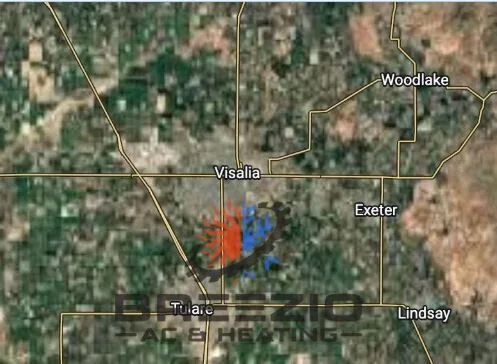
Breezio AC & Heating serves residential and commercial customers across communities including Visalia, Tulare, Exeter, Farmersville, Dinuba, Porterville, Hanford, Lindsay, Reedley, Selma, Kingsburg, Orosi, Woodlake, Goshen, Parlier, Lemoore, Strathmore, Ivanhoe, and Fresno. Local experience matters because service should reflect how these systems are actually used in Central California heat, not just how they look in a brochure. Honest guidance starts with understanding the real demands homeowners face.
Reliable HVAC Workmanship That Supports Long Term Comfort
Good HVAC service is not just about showing up. It is about doing the work correctly so the system performs the way it should after the technician leaves. Breezio AC & Heating is licensed and insured in California under License #1137602 and provides heating and cooling service backed by dependable workmanship. That includes air conditioning installation, maintenance, repair, duct services, mini split service, furnace work, heat pump service, and thermostat solutions. The company also offers 24 7 emergency HVAC services when problems cannot wait.
Reliable workmanship matters because shortcuts are expensive. A poor repair can fail early. A rushed installation can create years of comfort problems. A misdiagnosed issue can waste money and leave the homeowner right where they started. Homeowners in Visalia need cooling systems that can hold up under real demand, and that starts with technical care during every visit. When the work is done right, the system has a better chance of delivering steady comfort, predictable performance, and a longer useful life.
Breezio AC & Heating also backs installations with a 2 year labor warranty and a 2 year maintenance plan with install. Financing is available through Wisetack and GoodLeap, and free installation quotes are available for homeowners considering new equipment. Those details matter because homeowners should not have to choose between clarity, reliability, and financial flexibility. They should be able to plan cooling improvements with realistic options in front of them.
Local Service Built for Visalia Area Homeowners and Businesses
There is a difference between a company that technically serves an area and one that actually understands how local customers live with their HVAC systems. Breezio AC & Heating is locally owned and operated, and that local perspective matters. Homeowners in Visalia and nearby cities deal with serious summer heat, long system run times, dust exposure, and the need for dependable cooling when outdoor conditions are demanding. Service should reflect those realities. Advice should be practical for this area. Recommendations should be grounded in how homes and businesses actually perform here.
That local understanding helps with everything from maintenance timing to system selection to comfort troubleshooting. It also helps with service expectations. Homeowners want a company that respects their time, explains issues clearly, and helps them make good decisions without turning every visit into a sales event. Breezio AC & Heating has built its reputation around honest recommendations, fair pricing, and reliable workmanship because that is what local customers actually need. Whether the issue is an air conditioning myth, a repair concern, a replacement decision, or a maintenance question, homeowners deserve a company that treats the situation seriously and communicates in plain terms.
For Visalia area households trying to sort out what is true and what is not about their AC system, the best next step is often a direct conversation with a qualified local professional. Breezio AC & Heating is located in Visalia, CA and can be reached at (559) 202 0224 for cooling service, installation quotes, maintenance, and emergency HVAC help. When myths are replaced with facts and the work is done right, comfort gets a lot easier to manage.
Jonathen Rodrigues
Breezio AC & Heating
7730 W Sunnyview Ave #5 Visalia, CA 93291
(559) 202-0224
https://breezioac.com