Precision at Its Peak: FastTurn PCB’s High-Frequency Manufacturing
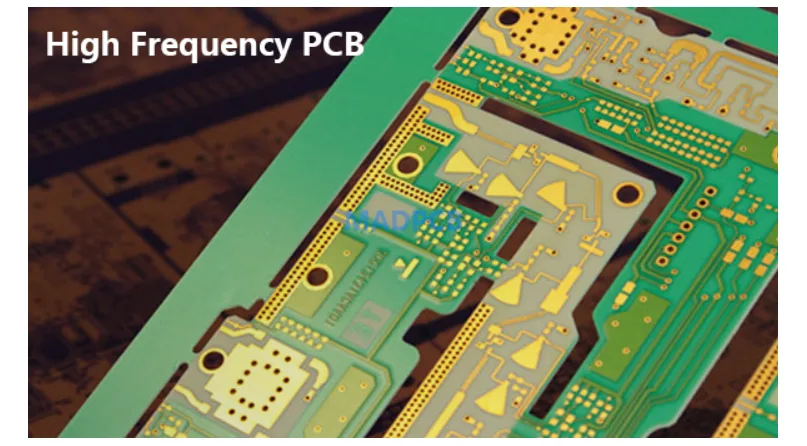
High-frequency PCB preparation has become the foundation of advanced technology in the constantly evolving electronics world. The need for high-speed, reliable, and precise PCBs is higher than ever due to applications in 5G communication devices and aerospace electronics. Having collaborated with PCB designers and manufacturers over the years, I can testify that choosing the right partner for the production process is paramount. FastTurn PCB has emerged as a reliable solution for companies demanding both high quality and fast delivery.
High-frequency printed circuit boards (PCBs) operate at frequencies above 1 GHz and are especially sensitive to signal integrity, dielectric material, and impedance control. Personally, I have witnessed project failures or poor performance when manufacturers skimped on materials or accuracy. Selecting a proven partner for high frequency pcb manufacturing, such as FastTurn PCB, ensures that all factors, including substrate selection and final testing, are optimized for high-frequency performance.
Knowledge on High-Frequency PCB Manufacturing
High-frequency PCB manufacturing differs significantly from standard PCB production. While FR4 material can be used for traditional boards, high-frequency applications require special substrate materials like Rogers, Taconic, or PTFE laminates. These materials minimize signal loss and stabilize operation at gigahertz frequencies. In my experience, partnering with a manufacturer familiar with these advanced materials can make the difference between launching a product on time or experiencing costly setbacks.
Accuracy is crucial. High-frequency signals are highly sensitive to crosstalk, reflections, and EMI interference. High frequency PCB manufacturing at FastTurn PCB addresses these challenges by maintaining tight tolerances, strict impedance control, and careful layer stacking. The result is high-integrity boards, even for complex multilayer designs.
The Benefits of FastTurn PCB
One of the primary benefits I have experienced working with FastTurn PCB is the ability to accelerate production without sacrificing quality. Their high-speed services meet the urgent demands of modern electronics manufacturing, which is particularly significant for startups or prototyping companies where time-to-market is a decisive competitive factor.
Advanced manufacturing technologies such as laser drilling, microvias, and controlled-depth routing are incorporated by FastTurn PCB. These techniques are essential in high frequency PCB manufacturing for dense designs common in RF modules, satellite communications, and high-speed data systems. I have personally overseen projects where FastTurn PCB’s expertise saved weeks of development time and prevented costly errors during assembly.
Another important advantage is thorough quality control. Every board undergoes automated optical inspection (AOI) and impedance testing to ensure compliance with strict specifications. In high-frequency applications, even minimal deviations can degrade signal performance. FastTurn PCB’s precision ensures uniform performance across all batches.
High-Frequency PCBs Usage
High-frequency PCBs are used across a wide range of industries. They are critical in telecommunications devices such as 5G smartphones and routers for fast data transmission. Aerospace and defense applications rely on these PCBs for their reliability in extreme conditions. Emerging fields such as IoT and automotive radar systems are increasingly dependent on high-frequency designs.
From my experience, companies that adopt high-frequency PCBs early in product development gain a technological advantage. Partnering with an expert manufacturer allows engineers to focus on product development rather than troubleshooting manufacturing issues.
Conclusion
High-frequency PCB production is a specialized field requiring advanced knowledge, materials, and precise procedures. In my practical experience, the distinction between a high-performing product and a faulty design is often determined by the professionalism of the PCB manufacturer. FastTurn PCB combines expertise with fast production, making it a leading provider in the industry. Whether producing state-of-the-art communication equipment or high-performance aerospace electronics, having a reliable high-frequency PCB supplier ensures quality, performance, and peace of mind.
FAQS
What materials are used in high-frequency PCBs?
High-frequency boards typically use advanced laminates like Rogers, Taconic, or PTFE-based substrates. These materials have low dielectric loss and stabilize signal transmission at gigahertz frequencies.
Why is impedance control important?
Variations in impedance can cause signal reflections, crosstalk, and loss. Accurate impedance control is essential for maintaining signal integrity, especially in RF and high-speed digital applications.
How does FastTurn PCB offer quick turnaround?
FastTurn PCB integrates streamlined operations with advanced machinery to enable rapid prototyping and production without compromising quality.
Are high-frequency PCBs multilayered?
Yes. Multilayer designs use advanced techniques like microvias and laser drilling to route complex patterns while preserving signal integrity.
Are these PCBs suitable for consumer electronics?
Absolutely. High-frequency PCBs are widely used in smartphones, wireless routers, gaming devices, and other electronics that require fast and reliable signal transmission.