Building a Transparent Workforce for Scaling Contractors
In the US construction industry, the most dangerous phrase a business owner can hear is “I think we’re on budget.” In an environment where material costs are volatile and labor is at a premium, “thinking” is a fast track to insolvency. Precision is the only currency that matters.
The industry is currently facing a silent crisis of “profit bleed”- the slow, invisible loss of capital caused by inaccurate field reporting. To survive, contractors are moving away from manual estimates toward a data-driven model where every minute on the clock is verified. As the saying goes in the trade:
“In construction, if you can’t verify the hours, you can’t defend the profit.”
The Hidden Costs of the “Ten-Minute Leak”
Most site supervisors don’t worry about a technician being ten minutes late or leaving fifteen minutes early. However, when multiplied across a crew of twenty over a fiscal year, these “micro-leaks” transform into a massive financial drain.
Common sources of profit bleed in construction:
- The Travel Buffer: Crews logging their morning commute as active site hours.
- Unverified Overtime: Time-and-a-half pay triggered by “rounded-up” manual logs rather than actual production.
- The Verification Delay: Project managers spending hours manually reconciling paper timesheets with progress reports.
- Compliance Liabilities: The risk of heavy fines during a Department of Labor audit due to incomplete or altered time records.
Every unverified hour is not just a payroll expense; it is a liability that distorts the bidding process for future jobs. If the data is wrong today, the estimates for tomorrow’s contracts will be fatally flawed.
Real Scenario: The Disappearing Margin
Consider a mid-sized residential framing project in the Northeast. The project is bid based on a 400-hour labor estimate.
- The Manual Process: The crew logs their hours on a shared spreadsheet at the end of the week. Because it’s Friday, everyone rounds their time to the nearest hour.
- The Discrepancy: The office pays out 425 hours based on these logs. However, the project isn’t actually finished; a sub-crew needs to return for two days of re-work.
- The Conflict: The client refuses to pay for the “extra” hours because they claim the crew was frequently seen leaving the site early.
- The Fallout: Without GPS-verified check-ins or photo evidence of progress, the contractor has no way to prove the hours were worked. They must eat the cost of the 25 “ghost hours” plus the re-work, turning a 10% profit margin into a 2% loss.
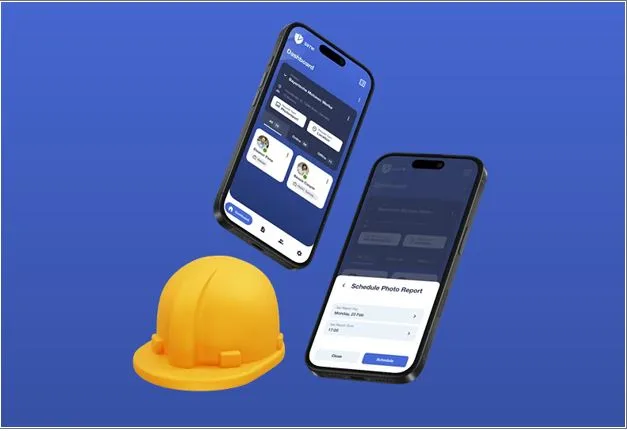
By implementing professional construction time tracking software, this entire scenario is avoided. The system catches the discrepancy in real-time, provides the geofenced data to the client as proof, and ensures that the “rounding” habit is eliminated from the start.
Before vs. After: The Impact of Digital Verification
| Operational Metric | Manual Reporting (Paper/Excel) | Automated Verification |
| Data Integrity | Prone to “rounding” and memory bias | GPS-verified and timestamped |
| Payroll Accuracy | 5-8% estimated leakage | 99.9% accuracy |
| Audit Defense | High risk (incomplete records) | Low risk (permanent digital audit trail) |
| Billing Speed | Delayed by manual reconciliation | Instant, evidence-backed invoicing |
| Field Transparency | “Black box” until the end of the week | Real-time visibility of all crews |
Building a “Digital Audit Trail”
In the United States, “Cover Your Assets” (CYA) is more than a cliché; it is a survival strategy. Whether it is an OSHA inspection or a dispute with a General Contractor, having a permanent, unalterable record of who was on-site and what was accomplished is the best defense.
Digital frameworks do more than track time; they create a narrative of the job site. When a worker clocks in, the system verifies their location. When they finish a phase, they upload a photo. This creates a “Digital Audit Trail” that protects the business from frivolous claims and ensures that payroll is an investment in production, not a donation to inefficiency.
Why Complexity is the Enemy of Adoption
The greatest barrier to technology on a job site is complexity. Construction crews are there to build, not to navigate complicated apps. The shift toward modern field service time tracking has succeeded because the interfaces have become frictionless. A simple “one-tap” check-in that works in the background allows the crew to focus on their craft while the office gets the data it needs to protect the company’s financial health.
The New Standard of Professionalism
The era of the “scribbled timesheet” is over. In a market where every cent counts, the ability to provide transparent, verified labor data is a massive competitive advantage. It builds trust with clients, protects the company from legal risks, and ensures that the profit worked for is the profit kept.
As labor laws become more stringent and competition for contracts intensifies, the adoption of automated verification is no longer a luxury for the “big players.” It is a foundational requirement for any service business that intends to scale without losing its margins to the “ghosts” in the payroll. Transparency is the new gold standard, and in construction, verified data is the foundation of success.