5 Costly Mistakes US Manufacturers Make When Specifying rectangular connector contacts
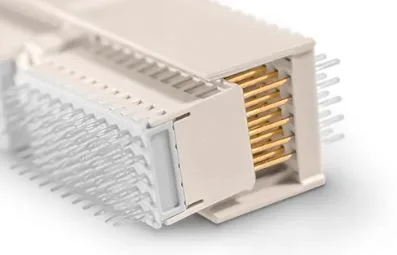
Across American manufacturing floors, connector failures rarely announce themselves in advance. They show up as unexplained signal loss, intermittent faults that take hours to diagnose, or assembly line stoppages that cost far more to recover from than anyone anticipated during the design phase. In many cases, the root cause traces back not to a dramatic component failure but to a quiet specification error made weeks or months earlier.
Rectangular connectors are used extensively across industrial automation, defense electronics, transportation systems, and heavy machinery. They are workhorses. But the contacts inside those connectors — the elements responsible for maintaining electrical continuity under mechanical stress, temperature variation, and repeated mating cycles — are often specified with less rigor than the connector housings themselves. That imbalance creates real operational risk.
What follows is an examination of five specification mistakes that cost US manufacturers time, money, and reliability — not in theory, but in practice.
Mistake 1: Treating Contact Material as a Secondary Decision
When engineers specify rectangular connector contacts, material selection is frequently left to the tail end of the procurement process or defaulted to whatever a catalog lists as standard. This approach creates problems because contact material governs more than conductivity. It determines how the contact behaves over time, under load, and across thermal cycles.
Copper alloys dominate the contact market for good reason — they offer a practical balance of conductivity and formability. But copper on its own is susceptible to oxidation, and oxidation at a contact interface increases resistance in ways that are gradual and difficult to detect until a system begins behaving erratically. Plating materials — gold, tin, silver — exist to address this, but each carries trade-offs that depend entirely on the operating environment.
Why Plating Selection Requires Application Context
Gold plating maintains low contact resistance over time and resists oxidation well, making it a reliable choice for low-current signal applications. But it is soft. In applications involving high insertion cycles or environments with abrasive particulates, gold plating wears unevenly, exposing the base material and degrading contact performance incrementally.
Tin plating is more durable mechanically and more economical, but it is prone to fretting corrosion — a specific failure mode that occurs when micro-motion between mated contacts, caused by vibration or thermal expansion, breaks down the tin oxide layer and generates debris at the interface. In vibration-heavy environments like factory automation or vehicle-mounted electronics, fretting corrosion is a recurring and underappreciated failure mechanism.
Specifying the wrong plating for the environment often means replacing contacts — and diagnosing the failure — far earlier than anyone planned.
Mistake 2: Over-Relying on Connector Housing Ratings
A connector’s published environmental and electrical ratings describe the housing assembly as a whole. They do not necessarily describe the performance of the contacts under all conditions, particularly when contacts are sourced separately or when the assembly is built from components across multiple vendors.
This distinction matters more than it might appear. Manufacturers sometimes source a high-rated connector housing and pair it with contacts that meet only the minimum performance threshold. The housing rating provides a sense of confidence that does not fully extend to what is happening at the electrical interface.
The Gap Between Assembly Rating and Contact Performance
Contact retention force, mating force, and resistance values can all be within acceptable ranges individually while still combining in ways that create marginal performance in the field. A contact that mates within spec under controlled conditions may perform differently after repeated insertion cycles, after exposure to cleaning solvents, or after operating at the upper end of the temperature range.
The assumption that a high-quality housing guarantees high-quality contact performance has led to field failures that engineers attribute incorrectly to other system components — wiring, PCB design, or software — before eventually tracing the issue back to contact behavior. This delays resolution and adds diagnostic cost that a more thorough specification process would have avoided.
Mistake 3: Ignoring Mating Cycle Requirements During Initial Specification
Every contact is designed to perform reliably through a defined number of mating cycles. Exceeding that number does not always produce immediate or dramatic failure. Instead, performance degrades gradually — contact resistance increases, retention force weakens, and what was once a secure electrical connection becomes intermittent under mechanical stress.
The mistake most commonly made here is specifying contacts based on static installation use cases when the real application involves frequent disconnection. Maintenance intervals, field servicing schedules, and modular equipment designs all affect how often a contact is mated and unmated over the course of a product’s service life.
How Mating Cycle Mismatches Create Maintenance Overhead
In production environments where connectors are accessed during scheduled maintenance, the cumulative mating cycle count can reach multiples of what was assumed at the design stage. A contact specified for infrequent disconnection, when subjected to monthly or quarterly service access over several years, may reach its operational limit well before the surrounding equipment does.
The result is a maintenance burden that appears unrelated to design decisions. Technicians replace contacts reactively rather than as part of a planned cycle, which increases unplanned downtime and consumes more labor than a correctly specified contact would have required over the same service period.
Mistake 4: Applying Single-Source Specifications Across Varied Production Environments
US manufacturers operating multiple facilities, or those supplying products into diverse end markets, sometimes standardize contact specifications across all applications to simplify procurement and inventory management. The logic is sound from a supply chain perspective but creates technical risk when environmental conditions at different sites — or within different end products — vary significantly.
A contact specification developed for a climate-controlled assembly environment in the Midwest may be entirely unsuitable for a product deployed in high-humidity coastal regions, or in outdoor industrial environments in the Gulf South where temperature swings and airborne contaminants are more severe. The contact itself is unchanged, but what it is being asked to do is fundamentally different.
The Hidden Cost of Blanket Standardization
When a single contact specification fails in the field, identifying the cause requires ruling out the many other variables in the system. In multi-site or multi-application deployments, that diagnostic process is time-consuming and rarely produces a clean answer quickly. Engineering teams spend time chasing failure modes that are, at their core, the result of a specification mismatch that was introduced before the product ever left the facility.
Blanket standardization also complicates root cause analysis because the same specification may perform well in eighty percent of applications while consistently underperforming in twenty percent. That inconsistency is hard to isolate when procurement, engineering, and field service teams are not coordinating around application-specific performance data.
Mistake 5: Underestimating the Impact of Contact Geometry on Signal Integrity
Contact geometry — the physical shape, spring deflection design, and contact interface geometry — determines how consistent the electrical connection remains across the operational life of the connector. This is particularly relevant in signal-carrying applications where resistance variation has functional consequences beyond simple power delivery.
In data acquisition systems, automation controls, and instrumentation, even small fluctuations in contact resistance can introduce noise, affect measurement accuracy, or trigger false fault conditions. These effects are not always obvious during bench testing but become apparent under real operating conditions where thermal cycling, vibration, and connection age combine to stress the contact interface.
Why Geometry Matters More in High-Cycle and High-Precision Applications
Contacts designed with tighter geometric tolerances maintain more consistent wiping action during mating — the mechanical movement that clears surface contamination from the contact interface and establishes a clean electrical path. Contacts with looser geometry produce less consistent wiping, which means the quality of the electrical connection can vary from one mating event to the next.
According to guidance published by standards bodies such as the International Electrotechnical Commission, contact design parameters directly influence long-term reliability in connector assemblies, particularly in environments where signal fidelity and mechanical endurance are both critical requirements. US manufacturers specifying contacts for precision applications without accounting for geometry tolerances often discover the consequences only after products are deployed — at which point corrective action is significantly more expensive than proper upfront specification would have been.
Closing Thoughts
Specification errors in connector contacts are not unusual, and they are not the result of carelessness. They happen because contacts are often treated as commodity components when they are, in practice, precision interfaces that need to be matched carefully to their operating environment, service conditions, and performance requirements.
The five mistakes outlined here share a common thread: they each stem from a decision made earlier in the design or procurement process that did not fully account for how the contact would actually behave in use. Material selection without environmental context, over-reliance on housing ratings, mating cycle assumptions that do not reflect real service patterns, blanket standardization across varied conditions, and geometry choices that ignore signal integrity requirements — each of these creates downstream costs that are predictable and preventable.
For manufacturers looking to reduce field failures and unplanned maintenance, the most productive place to start is a structured review of how contacts are currently being specified. Not every application requires a premium contact, but every application deserves a specification process that asks the right questions about environment, load, cycle life, and performance expectations before components are sourced.
The connector housing may define the form. The contact defines the function. Treating them with equal rigor during specification is one of the more straightforward ways US manufacturers can improve system reliability without increasing design complexity or significantly raising component costs.