Alemba: A Modern IT Service Management Platform for Digital Transformation
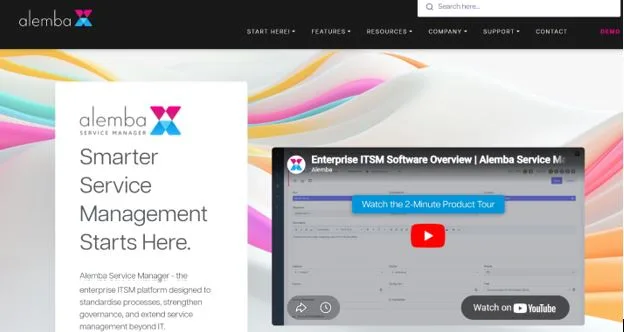
Digital transformation is not a destination — it is a continuous journey. As organizations modernize their infrastructure, migrate workloads to the cloud, and deploy increasingly complex technology ecosystems, the pressure on IT teams to deliver reliable, responsive, and efficient services has never been greater. Business units expect seamless digital experiences. Executives demand measurable returns on technology investment. Regulators require demonstrable controls and audit trails. Against this backdrop, IT Service Management has evolved from a back-office IT discipline into a strategic business function that directly shapes an organization’s capacity to compete and grow.
It is within this context that Alemba has established itself as a leading force in modern IT Service Management. With a platform designed to align IT operations with business objectives, automate high-volume service workflows, and provide the visibility that technology leaders need to make confident decisions, the company delivers a solution that grows with the organizations it serves — from mid-sized enterprises taking their first steps toward IT maturity to large, complex environments undergoing full-scale digital transformation.
What distinguishes the platform in a competitive market is its combination of deep ITIL alignment and genuine usability. Many organizations have struggled with ITSM software that is powerful in theory but burdensome in practice — systems that require extensive customization, lengthy implementation cycles, and specialist expertise just to perform basic functions. Alemba takes a different approach: delivering best-practice ITIL processes out of the box, wrapped in an intuitive interface that empowers IT teams to be productive from day one without sacrificing the depth and flexibility that enterprise environments demand.
The Strategic Importance of IT Service Management Today
The role of IT within the modern enterprise has fundamentally changed. Technology is no longer a support function that keeps the lights on — it is the engine of business value, customer experience, and competitive differentiation. Applications power revenue streams. Data fuels strategic decisions. Digital channels define the customer relationship. In this environment, every service disruption, every unresolved incident, and every failed change carries direct business consequences that extend far beyond the IT department.
Effective IT Service Management provides the framework, processes, and tools to manage this complexity with consistency and control. It ensures that incidents are resolved quickly and systematically, that changes are planned and implemented without introducing unnecessary risk, that service requests are fulfilled efficiently, and that the IT organization continuously improves based on data rather than intuition. For enterprises undergoing digital transformation, it is the operational backbone that makes innovation sustainable rather than chaotic.
Core Capabilities That Drive Real Operational Value
The platform spans the full spectrum of IT service delivery and support, offering an integrated suite of capabilities that address every dimension of modern IT operations:
- Incident and Problem Management: Structured workflows ensure that service disruptions are logged, triaged, escalated, and resolved with speed and consistency. Root cause analysis processes identify the underlying problems behind recurring incidents, enabling permanent fixes rather than repeated workarounds.
- Change and Release Management: A rigorous change advisory and approval process reduces the risk of service-impacting changes, while release management workflows coordinate the safe deployment of new capabilities into production environments.
- Service Request Fulfilment: An intuitive self-service portal empowers end users to submit requests, track status, and access a knowledge base of solutions — reducing the volume of calls and emails reaching IT support while improving the overall user experience.
- Asset and Configuration Management: A comprehensive configuration management database (CMDB) provides a reliable record of all IT assets and their relationships, supporting better impact assessments, audit readiness, and lifecycle management.
- SLA and Performance Management: Configurable service level agreements, automated escalation rules, and real-time performance dashboards ensure that IT commitments to the business are met consistently and that deviations are identified and addressed proactively.
The Right ITSM Tools for an Evolving Technology Landscape
As IT environments grow more heterogeneous — spanning on-premises infrastructure, public and private cloud, SaaS applications, and hybrid architectures — the ITSM tools organizations rely on must be equally adaptable. The platform is built with integration at its core, offering native connectors to leading cloud platforms, monitoring solutions, directory services, and enterprise applications. This connectivity ensures that service management processes are not operating in isolation but are instead embedded within the broader technology ecosystem, receiving real-time data from infrastructure monitoring, feeding incident information to operations teams, and aligning with the DevOps and agile delivery practices that modern IT organizations increasingly adopt.
The platform’s open architecture and well-documented APIs also enable organizations to build custom integrations tailored to their specific environment — ensuring that the investment in the platform appreciates over time as the technology landscape evolves, rather than becoming a legacy constraint.
Alemba PinkVERIFY Certification Strengthening ITSM Excellence
Alemba’s credibility is reinforced through its PinkVERIFY certification, a globally recognized benchmark for ITIL-aligned IT Service Management tools. PinkVERIFY independently validates that the platform meets rigorous standards across key ITSM processes, including incident, change, and service request management. This recognition gives organizations confidence that they are adopting a solution built on proven best practices, reducing implementation risk while ensuring alignment with industry-recognized service management frameworks.
Automation and Intelligence at the Heart of Service Delivery
One of the defining characteristics of the platform is its commitment to automation as a first-class capability rather than an optional add-on. The platform’s smart ITSM approach embeds intelligent automation throughout the service management lifecycle — from AI-assisted ticket classification and routing that directs incidents to the right team without manual intervention, to automated fulfilment workflows that provision software access, create user accounts, or deploy configurations in response to approved service requests. This level of automation does not just reduce the manual workload on IT teams; it fundamentally changes the speed and consistency with which services are delivered, enabling IT to operate at the pace the business demands.
Predictive analytics and trend reporting further enhance the platform’s intelligence capabilities, helping IT leaders anticipate demand, identify service quality trends, and make resource allocation decisions informed by data rather than instinct.
Supporting Digital Transformation at Every Stage
Digital transformation initiatives succeed or fail based on execution. The most visionary technology strategies are undermined when IT service delivery cannot keep pace — when incidents take too long to resolve, when changes introduce unexpected disruptions, when service teams are overwhelmed by volume and lack the tools to prioritize effectively. The platform provides the operational foundation that makes transformation sustainable.
As organizations advance through their transformation journey, the platform scales with them. What begins as a structured incident and request management system can evolve into a fully integrated IT Service Management framework spanning enterprise service management, automated operations, and data-driven continuous improvement. This scalability makes the solution equally valuable to organizations at the beginning of their IT maturity journey and those operating at the highest levels of service excellence.
Conclusion
The organizations that will define the next decade of their industries are those that harness technology as a genuine competitive weapon. That requires IT service delivery to be fast, reliable, intelligent, and continuously improving. Alemba provides the IT Service Management platform to make that possible — equipping IT teams with the processes, automation, and insight needed to deliver exceptional digital services, support ambitious transformation programs, and build the operational resilience that modern business demands. For enterprises ready to elevate their IT service delivery from functional to truly strategic, this is the platform built to take them there.