Common Causes of Allergies at Home and How to Fix Them
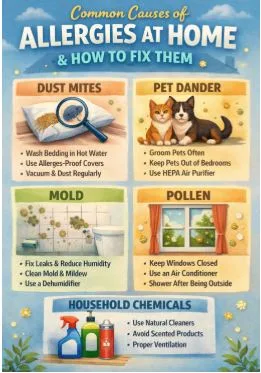
You walk into your home expecting comfort, but instead you start sneezing. Your eyes itch, your nose feels blocked, and you cannot figure out why.Most people blame the outside environment, but the reality is different. Many of the biggest allergy triggers are already inside your home, quietly building up over time.The good part is simple. Once you know what is causing the problem, fixing it becomes much easier.
Dust Mites in Your Home
Dust mites are one of the most common indoor allergy triggers. You cannot see them, but they live almost everywhere. Beds, pillows, carpets, and curtains are their favorite places.They grow in warm, humid conditions and feed on dead skin cells, which makes your bedroom the perfect environment for them.
What you can do
Instead of trying to eliminate them completely, focus on reducing their presence.
- Wash your bed sheets and pillow covers in hot water every week
• Use protective covers for pillows and mattresses
• Vacuum carpets and rugs often, preferably with a HEPA filter
• Remove unnecessary items that collect dust
• Keep humidity levels between 30 and 50 percent
Small improvements in your bedroom can make a noticeable difference in your symptoms.
Pet Dander That Stays in the Air
If you have pets, their dander is likely part of the problem. Dander is made up of tiny skin flakes that animals shed. These particles are very light, so they stay in the air and settle on furniture, clothes, and floors.
Simple ways to manage it
You do not need to give up your pet, but you do need better control.
- Keep pets away from your bedroom
• Avoid letting them sit or sleep on your bed
• Bathe and groom them regularly
• Clean sofas, carpets, and floors more frequently
• Use washable covers for furniture
The key here is consistency. Dander builds up slowly, so regular cleaning matters more than occasional deep cleaning.
Mold Growing in Hidden Corners
Mold is another major trigger, and it usually grows where you least expect it. Bathrooms, kitchens, basements, and even walls with hidden leaks can become problem areas.Mold spreads through tiny spores, which can easily affect breathing and trigger allergies.
How to control mold
The main focus should be moisture control.
- Fix leaks as soon as you notice them
• Use exhaust fans in kitchens and bathrooms
• Clean visible mold safely and quickly
• Avoid keeping spaces damp for long periods
• Ensure proper ventilation when drying clothes indoors
If mold spreads too much, it is better to call professionals instead of handling it yourself.
Pollen Sneaking Indoors
Even if you keep your doors closed, pollen still finds a way inside. It sticks to your clothes, shoes, hair, and even your pets. Over time, it builds up indoors and continues to trigger allergies.
Easy habits that help
A few daily changes can reduce pollen exposure significantly.
- Keep windows closed during high pollen days
• Change clothes after coming home
• Shower before going to bed
• Clean floors and surfaces regularly
• Place doormats at entrances and remove shoes inside
These small steps prevent pollen from spreading throughout your home.
Smoke and Indoor Air Pollution
Indoor air pollution is often ignored because it is not always visible. Smoke from cooking, candles, incense, or cigarettes can release tiny particles into the air that irritate your respiratory system.
Ways to improve air quality
Cleaner air leads to fewer allergy symptoms.
- Do not smoke indoors
• Use proper ventilation while cooking
• Limit candles and incense
• Choose mild, low-chemical cleaning products
• Open windows occasionally for fresh air
Even simple airflow changes can reduce irritation.
Poor Ventilation Making Things Worse
When air does not move properly, allergens stay trapped inside your home. This means you keep breathing the same polluted air again and again.
Improve airflow in your home
Think of airflow as a natural way to refresh your space.
- Open windows when outdoor air quality is good
• Use exhaust fans regularly
• Avoid overcrowding rooms
• Keep air vents clean and unblocked
• Consider ventilation systems if needed
Good airflow helps reduce the concentration of allergens indoors.
How Air Purifiers Help Reduce Allergens
Even with regular cleaning, some allergens remain in the air. This is where air purifiers become useful. They continuously filter indoor air and capture particles that are too small to remove manually.Air purifiers with HEPA filters are especially effective because they trap dust, pollen, pet dander, and even some mold spores.
If you are dealing with allergies in a small space like a bedroom, choosing the right device matters. You can explore guides that focus on selecting the best air purifier for allergies in small rooms.
Simple Daily Habits That Actually Work
You do not always need big changes. Daily habits play a huge role.
- Wipe surfaces with a damp cloth instead of dry dusting
• Wash curtains and soft fabrics from time to time
• Keep indoor plants clean
• Store items in closed containers
• Use a humidity monitor to stay within a healthy range
These small actions support everything else you do.
Conclusion
Allergies at home are more common than most people think, but they are manageable. Dust mites, pet dander, mold, pollen, and indoor pollution all play a role. Each has a practical solution. Regular cleaning, proper ventilation, and HEPA air purifiers make your home healthier. Small daily steps lead to lasting results. A clean home helps you breathe easier, sleep better, and feel more comfortable. For tips on choosing the right air purifier, visit Find My Air Purifier.