Understanding Dog Training Collars in 2026: A Complete Informational Guide for Pet Owners
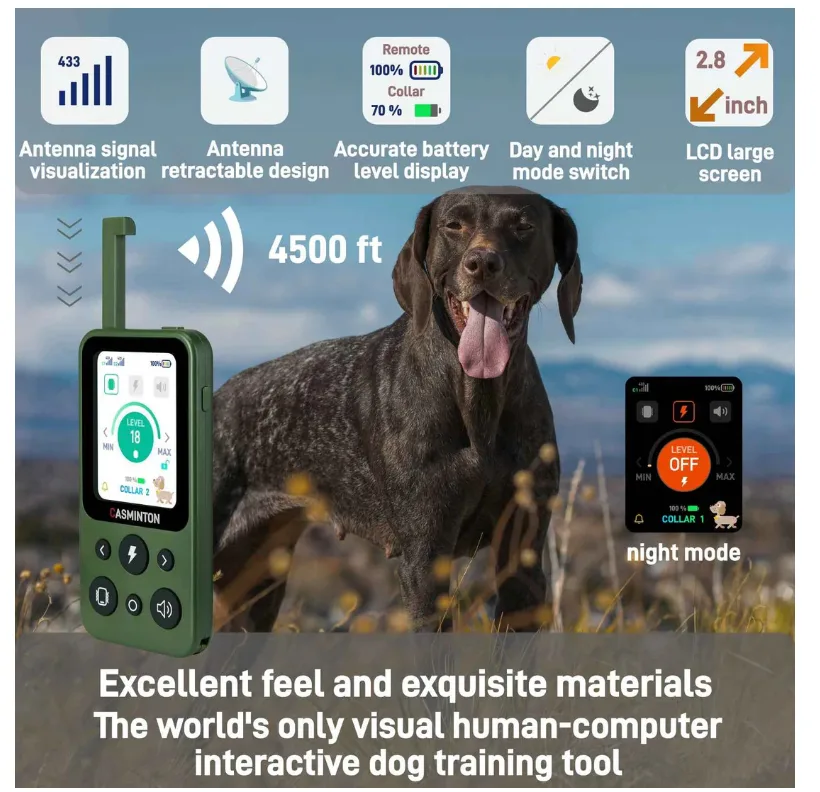
Training a dog is not just about teaching commands—it’s about building clear communication and trust. In recent years, dog training methods have shifted toward more structured and humane approaches, especially with the help of modern tools. Many pet owners searching for the Best dog training collar 2026 by CASMINTON now focus on solutions that improve behavior without causing stress to their pets.
These modern systems are designed to assist in training rather than replace it. When used correctly, they help owners guide their dogs more effectively, especially in situations where distractions are high and verbal commands alone may not be enough.
How Modern Training Collars Improve Communication
A dog training collar works by providing timely signals—such as vibration or sound—that help capture a dog’s attention. The goal is not punishment, but interruption and redirection.
For example, tools like the CRS01 remote dog training collar and other options in the effective dog training collar collection are designed to support real-time interaction between owner and pet.
This is especially useful because dogs respond best when feedback is immediate. If a correction or signal is delayed, the dog may not associate it with the behavior you are trying to change.
Why Dogs Often Ignore Commands Outdoors
One common frustration among dog owners is that their pet listens perfectly at home—but ignores commands outside.
This happens because:
- Outdoor environments are full of distractions
- Dogs become overstimulated by sounds, smells, and movement
- Excitement reduces their focus on the owner
In such cases, simply repeating commands may not be effective. Instead, a structured training approach that includes timely signals can help regain attention.
Real-Life Use Case: Managing an Excited Dog on an Open Lawn
Consider a realistic scenario:
You take your dog to an open lawn or park to let them enjoy some freedom. Everything is going well until your dog suddenly spots something interesting—a bird, another dog, or a moving object—and runs toward it.
You call your dog, but they don’t respond.
This situation is common and can quickly become stressful, especially if the dog moves too far away.
With the help of a remote training collar, you can send a gentle signal at the exact moment your dog becomes distracted. This breaks their focus and encourages them to look back at you.
Once you have their attention, you repeat your recall command. Over time, your dog learns to associate that signal with returning to you.
This method is effective because:
- It works in real time
- It avoids panic or chasing
- It reinforces consistent behavior
Key Features to Look for in a Training Collar
When choosing a training collar, it’s important to focus on features that support safe and effective training:
1. Adjustable Levels
Dogs vary in size and sensitivity, so adjustable settings allow better control.
2. Remote Functionality
A remote control helps you communicate with your dog from a distance, especially outdoors.
3. Multiple Signal Options
Vibration and sound modes provide alternatives to stronger corrections.
4. Durability
Waterproof and long-lasting designs are essential for active dogs.
Benefits of Using Training Collars in the Right Way
When used responsibly, training collars can support the learning process in several ways:
- Help reinforce commands quickly
- Improve recall in distracting environments
- Reduce the need for repeated shouting
- Provide consistency in training
These benefits make them particularly useful for dogs that are highly energetic or easily distracted.
Best Practices for Responsible Use
Using any training tool requires proper understanding. Here are some important guidelines:
- Always begin with the lowest setting
- Use signals only when needed
- Combine collar use with verbal commands
- Reward good behavior consistently
Training should always aim to guide the dog—not to create fear.
Are Training Collars Safe for Dogs?
Safety is one of the most important concerns for dog owners.
Modern training collars are designed with safety in mind and typically include adjustable levels to ensure the dog is not overwhelmed. When used properly, they serve as a communication tool rather than a punishment device.
However, misuse—such as using high levels unnecessarily—can lead to confusion. That’s why understanding the tool and applying it correctly is essential.
Final Thoughts
Dog training in 2026 is more about understanding behavior than enforcing control. While traditional training methods still play an important role, modern tools can enhance communication and make training more effective in real-world situations.
By combining proper techniques with the right tools, dog owners can create a balanced training system that works both indoors and outdoors.
The key is consistency, patience, and using tools in a way that supports your dog’s learning—not replaces it.