Popular Applications of Computer Vision in Retail
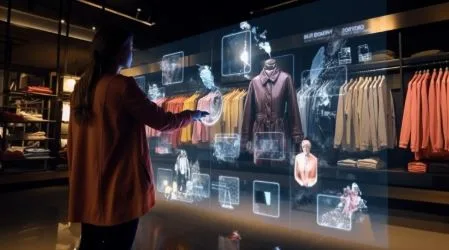
Retail has moved far beyond manual supervision and traditional surveillance systems. Visual information is now a source of operational decision-making both in physical and online shops. Applications of computer vision in retail are transforming business inventory management systems and customer behavior, shrinkage, and customer experiences in stores. Cameras have ceased to be inert instruments of recording. They have become smart systems that can be used to find patterns, detect anomalies, and assist in real-time business decisions.
Retailers face increasing pressure to enhance margins, minimize operational inefficiencies, and address increasing customer expectations. The computer technologies vision enables the stores to be digital, but still to have physical touch. Visual intelligence makes scalable efficiency possible, as well as automated checkout systems, predictive analytics based on movement patterns, and the rest. With the growing competition, the solutions will offer tangible benefits in terms of cost management, accuracy, and customer interaction.
Top Applications of Computer Vision in Retail
Smart automation is becoming the key to retail transformation. The applications of computer vision in retail offer visibility into the operations that traditional systems are not able to display. Visual AI generates quantifiable efficiency gains in store chains, as well as inventory precision and tracking customer traffic.
The retailers who decide to hire computer vision experts will have access to scalable solutions that ensure that technology is adjusted to the actual business priorities. Businesses no longer use manual audits and late reporting to enhance their responsiveness, profitability, and long-term competitiveness, but turn to real-time visual intelligence.
Cashierless Stores
One of the most sophisticated applications of computer vision in retail is Cashierless technology. These systems integrate cameras and sensors and AI monitoring to track products picked in real time. Customers verify themselves online, shop, and walk out without using conventional checkout lanes.
The vision algorithms of the computer recognize the goods picked up on the shelves and automatically bill them. This model does not need queues; staffing pressure is minimized, and customer convenience is improved. Retailers also have gains in terms of quicker transaction cycles and better operational throughput.
- Tracks product selection and shelf interaction using synchronized cameras and sensors, which provide proper cart mapping without the use of traditional barcode scanning or cashier involvement during the checkout process.
- Relates customer identity authentication to the automated billing system,,m where customers make their payments smoothly without stepping out of the shopping st, ore without the electronic payment kiosks.
- Cuts down on labor costs of operation in the sense that there is reduced cashier susceptibility, but on the other hand, in automated processing systems of transactions, there is transparency and accuracy.
- Enhances the shopping experience by avoiding queues in the checkout counter, particularly when the business is busy and also during high seasons.
- Produces behavioral information about handling patterns of products, allowing the maximization of merchandising and inventory location policies.
Shelf Monitoring
Automated shelf monitoring is one of the most viable applications of computer vision in retail. Cameras move about to check on displays to see the empty shelves, misplacement, or inaccurate pricing. The AI systems produce continuous verification, as opposed to manual audits that are done periodically.
When stock drops or planograms are broken, the retailers get instant notifications. This enhances the availability of the products, decreases the lost sales, and provides conformity in various locations in the stores.
- Real-time monitoring of low stock levels and sending replenishment warnings to the company before customers are faced with empty shelves.
- Finds the misplaced products by comparing live images on shelves to the prescribed merchandising layouts and standards of compliance.
- Flags without or with wrong price labels to avoid billing errors and customer dissatisfaction.
- Lessons rely on manual inspections, enabling store teams to concentrate on customer interaction and service.
- Offers product visibility frequency analytics, enhancing merchandising performance over the distributed retail outlets.
Customer Heat Maps
Customer heat mapping is still a potent element of the applications of computer vision in retail. AI is used to analyze movement patterns in order to identify which parts of the store are the most popular.
Retailers are able to modify layouts and promotional locations as well as aisle design using the actual data. Heat maps identify dwell time, browsing habits, and locations of congestion. These pieces of information enhance the store’s efficiency and conversion rates.
- Tracking the routes taken by customers inside the store to also determine high engagement and low visibility areas.
- Measures hang around promotional displays to determine campaign effectiveness and product attractiveness.
- Congestion lines are marked to indicate that adjustments need to be made to the layout to make shopping more comfortable and efficient.
- Places a premium product in an area with large foot traffic so that its placement will enhance conversion opportunities.
- Favors renovation planning with regard to repetitive behavioral patterns in a series of shopping activities.
Loss prevention
Security-driven Applications of Computer Vision in Retail significantly reduce shrinkage. AI systems detect unusual behaviors, unauthorized access, or concealment attempts.
These systems also compare real-time patterns, unlike traditional surveillance cameras, which would passively monitor the patterns. Automated notifications enable a faster intervention and non-intervention shopping experience.
- Detects suspicious activities around high-value merchandise or restricted areas of the stores automatically.
- Identifies anomalies in the levels of shelf inventory and billing systems.
- Provides real-time notification to the security personnel upon detection of anomaly thresholds.
- Has visual records that are searchable to be used in audit, compliance, and investigation.
- Lowers financial losses by detecting in a multi-camera feed using automation.
Virtual try-on
The Virtual try-on experiences are customer-centric. Applications of computer vision in retail. Shoppers can view clothing, make-up, or accessories in augmented reality and body mapping before buying an item.
This helps in lessening uncertainty and increases buying confidence. The retailers enjoy lower returns and enhanced online presence.
- Applies facial and body recognition mapping to simulate correct product placement in real-time.
- Lessens product returns by enabling customers to view the product in terms of its fit and appearance online.
- Omnichannel integrates with mobile apps and smart mirrors to be consistent.
- Increases interaction in terms of immersive digital visualization experiences.
- Gathers engagement data to improve product suggestions on the basis of behavioral trial in virtual trials.
Crowd analysis
Crowd monitoring strengthens operational planning within the applications of computer vision in retail. AI monitors occupancy rates, queue time, and congestion.
The retailers change staffing schedules and store layouts that way. This provides compliance with safety and easier customer experiences.
- Monitors are used to archive occupancy rates to ensure safe levels of capacity during busy times.
- Forecasts the development of queues at the counters of the billing so as to enable preemptive decision making in relation to staff allocation.
- Determines high-density areas that need the adjustment of layout or signage to enable easier movement.
- Helps prepare to respond to emergencies with real-time evacuation pattern analytics.
- Optimizes workforce planning based on observed footfall seasonally.
Personalized marketing
Personalization remains a strategic area within the Applications of Computer Vision in Retail. AI identifies demographic patterns and adjusts digital signage accordingly. Promotions align with audience composition in real time. This improves marketing efficiency and in-store engagement.
- Detects demographic indicators to tailor promotional messaging dynamically for specific audiences.
- Adjusts digital displays automatically based on real-time customer presence and behavior.
- Integrates loyalty program data to provide contextualized promotional offers instantly.
- Improves return on marketing investment through audience-targeted campaign optimization.
- Enables testing of promotional messaging effectiveness using live engagement metrics.
Inventory management
Inventory automation remains foundational among the applications of computer vision in Retail. AI conducts visual audits to detect discrepancies between recorded and actual stock. Continuous monitoring reduces overstock and stockout risks. This enhances supply chain accuracy and operational reliability.
- Performs automated cycle counts using image recognition instead of manual scanning processes.
- Detects inconsistencies between system records and physical shelf quantities quickly.
- Tracks product movement from warehouse storage to sales floors accurately.
- Minimizes overstock risks through real-time monitoring and predictive replenishment triggers.
- Improves warehouse efficiency with automated pallet and packaging recognition systems.
Customer Behavior Analytics
Understanding behavioral signals completes the advanced applications of computer vision in the retail landscape. It is not only the way customers behave with goods that is analyzed by AI.
Retailers get an insight into hesitation, comparison, and frequency of browsing. These analytics optimize promotion, placement, and pricing.
- Measures product interaction occurrences to determine concealed interests and engagement patterns.
- Measures hesitation time between touching products and buying accurately.
- Determines comparison habits that affect conversion behavior in retailing settings.
- Relates the browsing patterns with the purchase data at the end of journeys to analyze the full journey.
- Provides long-term development of merchandising strategy using retail intelligence of behaviour.
Conclusion
The applications of computer vision in retail are transforming the operation of stores, customer engagement, and inventory management with quantifiable accuracy. Smart visual systems have been used by retailers to minimize cases of shrinkage, maximize customization, and increase operational efficiency. Cashierless checkout to predictive analytics computer vision enhances decision-making in physical retail settings.
Partnering with a reliable AI development company ensures scalable implementation tailored to operational goals. With the retail competition progressing, the business with the implementation of computer vision strategy will develop smarter and more responsive stores that can ensure the possibility of long-term growth and customer satisfaction.