Promwad Engineering Launches AI Platform to Prevent Battery Storage Fires by Monitoring Root Causes
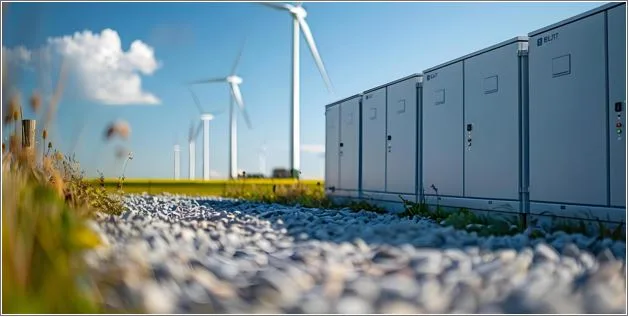
Edge-based safety intelligence targets cooling failures, environmental hazards, and gas detection gaps — the operational blind spots behind 72% of battery storage system-level defects
Essen, Germany — April, 2026 — Promwad, a European engineering company, has announced an edge AI predictive maintenance platform for battery energy storage systems (BESS). The platform monitors the thermal management, cooling, and environmental systems responsible for the majority of real-world battery storage failures — systems that existing monitoring technology largely ignores.
Battery energy storage is one of the fastest-growing segments of European energy infrastructure, with installed capacity projected to grow from 61 GWh in 2024 to 400 GWh by 2029, according to SolarPower Europe and Wood Mackenzie. As installations scale, so does the risk — and the quality gap is widening.
A 2025 audit by Clean Energy Associates (CEA), which conducted more than 680 inspections across over 70 factories — including Tier 1 manufacturers such as Panasonic, LG, and Samsung — found that 72% of battery storage defects occur at the system level: enclosure failures, improper integration, coolant leakage, malfunctioning smoke sensors, and grounding defects.
System-level findings rose 24% compared to previous audits, even as cell- and module-level defects decreased by at least 10% each. According to EPRI, only 11% of BESS failures originate from cell defects. The implication is clear: the systems surrounding the batteries — cooling, environmental controls, safety mechanisms — are now the primary source of failure, not the batteries themselves.
Yet the dominant approach to battery storage monitoring focuses almost exclusively on cell-level data. Battery management systems (BMS) track voltage, current, and temperature at the cell level. Cloud-based analytics platforms model electrochemical degradation. But the cooling systems, the humidity and condensation conditions inside containers, and the gas detection sensors that provide early fire warning receive little to no AI-driven monitoring.
The monitoring gap
The problem is well documented. DNV, the global energy risk advisory firm, has confirmed that condensation from faulty humidity control directly caused battery storage fires.
Investigations into South Korean ESS incidents found that condensation combined with dust caused insulation failure and short circuits. The 2021 Victorian Big Battery fire in Australia was traced to a cooling system fault.
Research shows humidity inside battery storage containers routinely exceeds 75% during normal HVAC cycling — a condition no standard battery management system is designed to detect.
Meanwhile, off-gas detection — the only proven method of providing early warning before thermal runaway — offers a critical 5 to 20-minute window. But without AI-driven analytics to filter environmental noise and sensor drift, raw gas alarms generate high false-positive rates, leading operators to either respond to every alert or, over time, to dismiss them.
What the predictive maintenance platform does
Promwad’s platform addresses these gaps with six detection engines running on a single edge computing unit installed at the battery storage site:
- Thermal anomaly detection identifies hotspots and temperature gradients across battery racks and enclosures, catching patterns that fixed-threshold alarms miss.
- HVAC power monitoring tracks cooling system energy consumption to detect efficiency degradation, mechanical strain, and abnormal cycling behavior.
- Gas detection analytics applies AI pattern recognition to off-gas sensor data, reducing false alarms while increasing confidence in genuine thermal runaway warnings.
- Environmental monitoring continuously measures humidity, dew point, and condensation probability on critical surfaces inside containers.
- Compressor health analysis uses vibration and current signature analysis to predict HVAC compressor failures weeks before they occur.
- Cooling efficiency (COP) tracking monitors the ratio of cooling output to electrical input over time, detecting the gradual decline that leads to chronic overheating and accelerated battery degradation.
All processing happens on site, on a Promwad-designed industrial computing unit with sub-second response time. The BESS platform does not depend on cloud connectivity for safety-critical detection and does not require integration with the existing battery management system or SCADA infrastructure.
Unlike cloud-based analytics platforms, which require data to travel to remote servers and back before generating alerts, the Promwad platform runs all anomaly detection locally. For safety-critical applications — where a 5-minute detection window can mean the difference between a controlled shutdown and a fire — latency matters.
Market context
The European battery storage market is under increasing pressure to address safety and reliability. Insurance providers including FM Global, Lockton, and Solarif now require enhanced monitoring protocols as a condition for competitive premiums. The NFPA 855 standard mandates specific safety monitoring for battery storage installations. A 2024 survey by TWAICE found that 73% of operations and maintenance staff report monthly technical issues with battery storage assets.
At the same time, the economics of battery storage make downtime expensive. European BESS assets earn between €60,000 and €200,000 per megawatt annually, meaning a single week-long outage from an undetected cooling failure can cost operators over €100,000 in lost revenue — before repair costs or insurance deductibles.
Pilot availability
Promwad is offering a 90-day pilot program for European battery storage operators managing assets of 10 MW or larger. The pilot deploys the full platform — sensors, edge hardware, and all six detection engines — on a single asset. No integration with existing battery management or control systems is required. Installation takes days, not months.
“We don’t ask operators to commit to a fleet-wide deployment,” said a Promwad representative. “We install on one asset, run for 90 days, and let the data speak for itself. At the end, the operator has a documented health assessment, an environmental risk profile, and a clear picture of what their current monitoring is missing.”
Operators interested in the pilot program can book a technical consultation at https://bess.promwad.com/
About Promwad
Promwad is a Germany-based engineering company with R&D and delivery centres across the EU. Founded in 2004, the company has completed more than 500 projects for over 250 clients. Promwad’s 100+ engineers specialize in custom hardware and FPGA design, embedded software, and edge AI — serving industries including energy, telecommunications, automotive, and industrial IoT. The company holds ISO 9001 certification and partners with NXP, NVIDIA, Qualcomm, Infineon, Lattice, and AMD/Xilinx.
For more information, visit https://promwad.com/
Contact
Promwad GmbH: Meisenburgstr. 39, 45133, Essen, Germany
Tel: +49 201 487 90 148
Contact Person: Stanislav Schulz, Head of Strategic Development
Email: [email protected]
*All statistics cited in this release are sourced from published research by Clean Energy Associates (CEA), EPRI, DNV, TWAICE, SolarPower Europe, Wood Mackenzie, and peer-reviewed academic publications.