Why Is My AC Blowing Warm Air: A Longview, TX Homeowners Guide
Your air conditioning system is the most vital appliance in your East Texas home, especially when the summer humidity begins to settle over the Piney Woods. In Longview, TX, a functional cooling system is not just a matter of luxury; it is a critical component of home safety and indoor air quality during the grueling triple digit heatwaves. When you place your hand over a supply vent and feel lukewarm or outright hot air blowing into the room, it can trigger immediate stress and concern for your household budget. This common mechanical failure disrupts the thermal equilibrium of your residence, leading to rising temperatures that can quickly become unbearable for children, the elderly, and pets. Understanding the underlying physics of your HVAC unit is the first step toward identifying why it has ceased to provide the crisp, refrigerated air you rely on. While some issues are simple enough for a homeowner to address, many causes of warm air are symptoms of deeper technical malfunctions within the refrigeration cycle or the electrical control system.
The sensation of warm air coming from your vents can be caused by a wide spectrum of failures, ranging from a tripped circuit breaker to a catastrophic compressor burnout. Because your air conditioner works by moving heat from the inside of your home to the outside, any break in this heat exchange process results in the system simply circulating ambient or heated indoor air. In communities like Hallsville, White Oak, and Kilgore, the environmental load on these systems is immense, leading to accelerated wear on components like capacitors, fan motors, and evaporator coils. Many homeowners in the Longview area mistakenly believe that “adding Freon” is the universal cure for warm air, but refrigerant loss is often just one piece of a much larger diagnostic puzzle. Modern HVAC Longview TX systems are complex, integrated machines that require precise airflow, calibrated electrical inputs, and specific chemical balances to operate at a five star level of efficiency. Ignoring the early signs of a struggling unit can lead to secondary damage, such as a frozen coil or a flooded drain pan, which significantly increases the final cost of restoration.
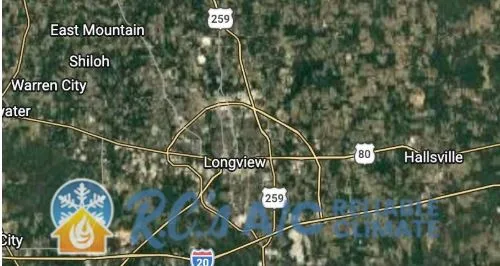
Navigating the transition from a malfunctioning AC to a fully restored cooling system requires a partnership with a professional who values honest diagnostics over quick fixes. As a locally operated contractor based in Longview, R.C.’s A/C Reliable Climate is dedicated to providing our neighbors with the technical rigor and clear communication needed to solve these frustrating issues. This comprehensive guide is designed to serve as a roadmap for homeowners in Gladewater, Gilmer, and across East Texas who are currently facing a cooling emergency. We will explore the common culprits behind warm airflow, the mechanical theory of the refrigeration cycle, and the critical importance of professional maintenance in preventing these failures. By the end of this article, you will possess the knowledge necessary to perform a basic assessment of your system and understand when it is time to call for a licensed technician to protect your property. Professionalism in the trades is defined by getting the job done right the first time, ensuring that your home remains a cool sanctuary throughout the harshest Texas summers.
Immediate Checks Every Longview Homeowner Should Perform
When your air conditioner begins blowing warm air, the natural instinct is to panic and call for emergency service immediately. While professional intervention is often necessary, there are several basic components that a homeowner can inspect safely to rule out simple user errors or external factors. In many cases, a “broken” AC unit is actually just the victim of a misconfigured setting or a localized power issue that does not require a complex mechanical repair. For residents in communities like Marshall and Liberty City, performing these preliminary checks can save you time and the cost of a service call for a non-mechanical problem. Understanding the basic interface of your HVAC system allows you to provide more accurate information to your technician if a professional diagnostic is eventually required.
Verifying Thermostat Settings and Power Status
The first and most obvious place to look when your AC is acting up is the thermostat interface. It sounds simplistic, but many service calls in Longview are resolved by simply switching the thermostat from “Heat” to “Cool” or ensuring the fan setting is on “Auto” instead of “On.” When the fan is set to “On,” the blower motor runs continuously even when the cooling cycle is not active, which can result in the system blowing unconditioned, room-temperature air. Additionally, if you have a digital or smart thermostat, check the battery display; low batteries can cause the unit to lose communication with the air handler, preventing the compressor from engaging.
After confirming the thermostat settings, you should check your home’s electrical panel to see if any breakers have tripped. Air conditioning systems draw a significant amount of amperage, especially during the high-demand afternoons common in East Texas. If the outdoor condenser breaker has tripped but the indoor air handler breaker is still on, the indoor fan will continue to blow air through the house, but since the outdoor unit is not running, no heat is being removed. If you find a tripped breaker, you can attempt to reset it once, but if it trips again immediately, it is a sign of a short circuit or a failing component that requires a professional electrical inspection from R.C.’s A/C Reliable Climate.
You should also verify the status of the outdoor disconnect box, which is typically located on the wall near your condenser unit. In older homes in Longview or Kilgore, these boxes can sometimes suffer from loose connections or blown fuses due to the vibration and heat of the unit. Ensure that the disconnect handle is firmly in the “On” position and that no visible damage has occurred to the conduit. If the indoor unit is making a humming sound but no air is moving, or if air is moving but it is not cold, these power-related discrepancies are often the root cause. Identifying whether the issue is electrical or mechanical helps streamline the repair process.
Inspecting the Condition of the Air Filter
Restricted airflow is perhaps the most frequent cause of warm air blowing from vents in the Longview area. The air filter is designed to protect your system’s internal components from dust, pollen, and the fine red clay particulates common in East Texas soil. When a filter becomes excessively dirty, it acts as a literal wall, preventing the blower motor from pulling enough air across the evaporator coil. Without sufficient airflow, the heat exchange process fails, and the system may eventually freeze over, which ironically leads to warm air being blown as the ice blocks the air passage.
Homeowners should pull the filter and inspect it for a gray, matted appearance or a heavy layer of dust. If you cannot see light through the filter when holding it up to a lamp, it is time for a replacement. In the humid climate of Longview, TX, high-efficiency MERV-rated filters can clog much faster than the manufacturer’s ninety-day estimate suggests. For families with pets or those living near construction zones in Hallsville and White Oak, checking the filter every thirty days is a standard professional recommendation. A fresh filter restores the “breathability” of your system and is often the only thing needed to get the cold air flowing again.
If the filter was extremely dirty, your evaporator coil may have already frozen. In this scenario, simply changing the filter won’t provide immediate relief; you must turn the cooling system off and run the fan only for several hours to melt the accumulated ice. You can check for ice by looking at the copper refrigerant lines leading into the indoor unit; if they are covered in white frost or ice, your system is “choked.” Once the ice has melted and a clean filter is in place, you can try the “Cool” setting again. If the air is still warm after this process, the restriction may be located deeper within the unit, requiring a professional cleaning of the evaporator coil blades.
Checking the Outdoor Condenser Unit for Obstructions
Your air conditioner works by rejecting heat from your home into the outside environment through the outdoor condenser coil. For this process to be effective, the outdoor unit must have a clear “breathable” zone around it. In the lush landscapes of Longview and Marshall, it is common for shrubs, tall grass, or wind-blown debris to crowd the condenser, trapping hot air around the unit. If the condenser cannot shed heat, the refrigerant will not cool down enough to absorb heat from inside the house, resulting in lukewarm air coming from your indoor registers.
Walk around the outdoor unit and ensure there is at least two feet of clearance on all sides and no obstructions on top of the fan. During the Texas spring, cottonwood seeds and grass clippings can get sucked into the delicate aluminum fins of the coil, creating a “blanket” of debris that is invisible from a distance. If the coil looks dirty or matted, you can gently rinse it with a garden hose on a low-pressure setting. Never use a high-pressure power washer, as the force of the water can permanently damage and flatten the aluminum fins, which would necessitate a much more expensive repair.
Furthermore, listen to the outdoor unit while it is trying to run. If you hear the fan spinning but the compressor is making a loud buzzing or clicking sound, it may be struggling to start due to a failing capacitor or a seized motor. For homeowners in Lakeport and Liberty City, where power surges are common during summer storms, these electrical components are high-failure items. A condenser that is running at high temperatures due to poor airflow or dirt accumulation will eventually trigger its thermal overload switch, shutting down the cooling process while the indoor fan continues to blow warm air. Proactive cleaning and clearing of the outdoor area are essential steps in your summer readiness routine.
Evaluating the Status of the Condensate Drain Line
While it may seem unrelated to air temperature, a clogged condensate drain line can trigger a safety shut-off that stops your AC from cooling. In the high humidity of East Texas, your air conditioner removes several gallons of water from the air every day. This water is collected in a pan and sent through a PVC drain line to the outside. Over time, algae and mold can grow inside this pipe, creating a thick gelatinous clog. Many modern systems in Longview are equipped with a “float switch” that detects when the drain pan is filling up and cuts power to the condenser to prevent a flood in your attic or closet.
If your indoor fan is blowing but the outdoor unit is completely silent and refuses to start, you should check your secondary drain pan for standing water. If the pan is wet, your system has done exactly what it was designed to do—shut down to protect your home from water damage. For residents in older homes in Kilgore or Gilmer, where these safety switches may not be present, a clogged line might manifest as water leaking through the ceiling. Clearing the line with a wet-dry vacuum or specialized HVAC drain cleaners can often resolve the issue and allow the system to reset.
At R.C.’s A/C Reliable Climate, we emphasize that the drainage system is just as critical as the refrigerant system. A failed drain line is a common reason for a sudden loss of cooling on a Saturday afternoon. Homeowners can perform preventative maintenance by pouring a cup of vinegar down the drain line access port every few months to kill organic growth. However, if a hard blockage has formed, professional high-pressure clearing is the only safe solution. Ensuring your system can “exhale” moisture is vital for its ability to provide cold air to your living spaces.
Looking for Signs of Refrigerant Leaks
One of the most frequent reasons an AC blows warm air is a low refrigerant charge. Refrigerant is the chemical medium that physically carries heat out of your home; if the levels are low, the system cannot move enough heat to lower the air temperature. It is important to remember that refrigerant is not “used up” like fuel; if it is low, you have a leak in your copper lines or coils. Homeowners can sometimes spot a leak by looking for oily residue around the copper pipe connections or on the fins of the outdoor unit. Refrigerant is mixed with a specialized oil for the compressor, and where gas escapes, the oil often leaves a dark, greasy mark.
Another indicator of a leak is a hissing or bubbling sound coming from the indoor or outdoor unit. In the Longview area, the extreme temperature fluctuations between a hot day and a cool night can cause copper joints to expand and contract, leading to microscopic stress fractures. If your system was cooling perfectly yesterday but is blowing warm air today, a sudden leak is a strong possibility. You might also notice that the air coming from the vents is “cool” but not “cold,” which suggests a slow leak that has finally reached a critical point where the system can no longer maintain its pressure.
If you suspect a refrigerant leak, it is vital to turn off the system and call R.C.’s A/C Reliable Climate. Running an air conditioner with low refrigerant places extreme stress on the compressor, as it relies on the cool gas to keep itself from overheating. A “low charge” can lead to a “burnt-out” compressor, which is often a “death sentence” for an older HVAC unit. Professional leak detection involves using electronic sniffers or ultraviolet dyes to find the exact point of failure. We focus on permanent repairs rather than just “topping off” the system, ensuring your home stays cool for the long term.
Mechanical Failures and the Refrigeration Cycle
When the basic checks have been completed and the air remains warm, the problem likely resides within the mechanical heart of the refrigeration cycle. This cycle is a sophisticated continuous loop of pressure changes and phase shifts that allows your HVAC system to “defy” the natural flow of heat. In Longview, TX, the mechanical components that drive this cycle are subjected to intense thermal loads, which can lead to the failure of valves, motors, and the compressor itself. Understanding how these parts interact provides a clearer picture of why professional diagnostic equipment is necessary to resolve complex cooling issues. For homeowners in Hallsville, Kilgore, and surrounding areas, a mechanical failure is not just a nuisance; it is an urgent structural concern that requires the technical rigor of a licensed specialist.
The Critical Role of the AC Compressor
The compressor is often referred to as the “heart” of the air conditioning system, and its failure is the most common reason for a system to stop providing cold air entirely. Located in the outdoor unit, the compressor’s job is to pressurize the refrigerant gas, which raises its temperature so that it can shed heat to the outside air. If the compressor fails to start—often heard as a loud humming or clicking followed by a tripped breaker—the entire refrigeration cycle grinds to a halt. In the Longview heat, compressors are prone to “thermal overload,” where they shut themselves down to prevent internal melting when temperatures exceed safe limits.
Compressor failure is frequently preceded by the failure of a much smaller, less expensive part: the start or run capacitor. The capacitor acts like a battery that gives the compressor the high-voltage “kick” it needs to begin spinning. In East Texas, these capacitors are high-failure items due to the heat and electricity fluctuations during summer storms. If you hear your outdoor unit making a rhythmic “thump-hum” sound but the fan isn’t moving and the air inside is warm, a weak capacitor is the likely culprit. Replacing a capacitor is a routine repair for R.C.’s A/C Reliable Climate, and doing so promptly can prevent the compressor itself from suffering permanent damage.
However, if the compressor has “seized” internally, the air coming from your vents will remain at room temperature. A seized compressor cannot move refrigerant, meaning no heat is being absorbed from your indoor air. For older systems in Marshall or Gladewater, a failed compressor often leads to a discussion about system replacement, as the cost of a new compressor and the labor to install it can approach the value of a new, high-efficiency unit. Our technicians provide honest, data-driven recommendations to help you decide whether a major mechanical repair or a total system upgrade is the most fiscally responsible path for your home.
Evaporator Coil Issues and Heat Absorption
While the compressor moves the refrigerant, the evaporator coil is where the actual cooling of your indoor air takes place. This copper and aluminum coil is located inside your air handler or furnace cabinet. As warm indoor air is blown over the cold fins of the coil, the refrigerant inside evaporates, absorbing the heat from the air. If this coil is dirty, corroded, or damaged, it cannot effectively pull heat from the air stream, resulting in lukewarm air being distributed throughout your home. In Longview, the humidity can accelerate “formicary corrosion” on these coils, which creates microscopic pinhole leaks that are notoriously difficult to find.
Another common evaporator issue is the development of “biofilm” or mold growth on the fins. Because the coil is always cold and wet, it creates a perfect breeding ground for organic matter if the air filtration is lacking. This sludge acts as an insulator, preventing the air from making direct contact with the cold metal. For residents in communities like White Oak and Hallsville, this not only leads to warm air but also a “musty” or “dirty sock” smell whenever the AC runs. A professional chemical cleaning of the evaporator coil is an essential part of restoring both the cooling capacity and the air quality of your residence.
If the air coming from your vents is fluctuating between cool and warm, it may be a sign that the evaporator coil is partially freezing. When ice forms on the fins, it blocks airflow; as the ice melts, the airflow returns, but the cycle repeats. This “freeze-thaw” cycle is a clear indicator that the system is struggling with either low refrigerant or a significant airflow restriction. At R.C.’s A/C Reliable Climate, we use thermal imaging to “see” the temperature distribution across your coil, allowing us to pinpoint dead zones or blockages without invasive disassembly. A healthy evaporator is the foundation of a five star cooling experience.
Thermal Expansion Valve (TXV) Malfunctions
The Thermal Expansion Valve, or TXV, is a precision component that regulates the flow of refrigerant into the evaporator coil. It acts as a “nozzle” that changes the high-pressure liquid refrigerant into a low-pressure mist, which is necessary for evaporation and heat absorption. If the TXV becomes stuck or “hunted,” it will send either too much or too little refrigerant into the coil. When too little refrigerant is sent, the coil doesn’t get cold enough to lower the air temperature. When too much is sent, the system can “flood back” to the compressor, leading to mechanical failure.
In the Longview area, TXV failures are often caused by internal contaminants in the refrigerant lines, such as moisture or carbon from improper soldering during a previous installation. If your AC system is relatively new but is blowing warm air, a faulty TXV is a high-probability suspect. Diagnosing a TXV issue requires a technician to measure the “superheat” of the system—the temperature difference between the refrigerant’s boiling point and its actual temperature as it leaves the coil. This technical measurement is the only way to verify that the valve is responding correctly to the indoor heat load.
A malfunctioning TXV can be a frustrating problem because it often presents as an intermittent issue. Your system might cool fine in the morning but blow warm air during the hottest part of the afternoon. For homeowners in Kilgore and Liberty City, these “phantom” cooling losses are a sign that the system’s regulatory “brain” is failing. Our team at R.C.’s A/C Reliable Climate has the specialized tools and training to calibrate or replace these valves, ensuring that your system maintains a perfect balance of pressure and temperature. Precision in the refrigeration cycle is what ensures long-term reliability and lower energy bills.
Condenser Fan Motor and Heat Rejection
If the outdoor unit cannot reject heat, the indoor unit cannot absorb it. The condenser fan motor, located on top of the outdoor unit, is responsible for pulling air through the coils to carry away the heat that the compressor has moved out of your house. In the dusty East Texas environment, these motors are exposed to rain, wind, and insects, all of which can lead to bearing failure or electrical shorts. If the fan motor stops spinning, the outdoor unit will rapidly overheat, and the compressor will shut down on its internal safety limit.
Homeowners can often diagnose a failing fan motor visually; if the fan is moving slowly, making a grinding noise, or oscillating, it is a sign of imminent failure. In Longview, TX, a “stuck” fan motor can also be caused by a failed capacitor, as the motor needs an electrical boost to overcome its initial inertia. If you see the fan blades struggling to start but spinning freely when poked with a stick (only to be done by a professional), the capacitor is likely the issue. However, if the motor shaft is tight or won’t turn at all, the motor itself must be replaced.
Ignoring a noisy or struggling condenser fan is dangerous because it places an extreme thermal load on the compressor. Without the fan to cool it down, the compressor’s internal oil can break down, leading to permanent mechanical wear. For property owners in White Oak and Gladewater, ensuring the outdoor fan is in 5-star condition is a vital part of summer preparation. R.C.’s A/C Reliable Climate provides fast replacement of these motors, often during the same visit as the diagnostic, to get your home back to a comfortable temperature as quickly as possible.
Reversing Valve Issues in Heat Pump Systems
For homeowners in the Longview area who utilize heat pumps rather than traditional air conditioners with gas furnaces, the reversing valve is a critical component. This valve is responsible for switching the direction of the refrigerant flow, allowing the system to provide cooling in the summer and heating in the winter. If the internal slide of the reversing valve becomes stuck or if the electrical solenoid fails, the system may remain in “heat mode” even when the thermostat is set to “cool.” This results in the AC blowing actual hot air into your home instead of refrigerated air.
Diagnosing a reversing valve issue is a technical task that involves checking the electrical signals from the thermostat and measuring the temperature of the four copper pipes leading into the valve. Sometimes, the valve can get stuck in a “mid-position,” where it allows hot and cold refrigerant to mix, resulting in lukewarm air. For residents in communities like Hallsville and Gilmer, where heat pumps are common, this mechanical failure can be particularly frustrating during the spring when you transition from heating to cooling for the first time.
Because the reversing valve is part of the sealed refrigerant system, replacing it is a major procedure that involves recovering the refrigerant and high-temperature brazing. However, a faulty solenoid—the electrical coil that moves the valve—can often be replaced without opening the system. At R.C.’s A/C Reliable Climate, we prioritize thorough testing to ensure we aren’t recommending a major repair when a minor electrical fix will suffice. Understanding the dual nature of your heat pump is essential for maintaining year-round comfort in East Texas.
Electrical and Control System Anomalies
In the modern era of HVAC technology, a system blowing warm air is often the result of a “communication breakdown” between the electrical components and the mechanical hardware. Your air conditioner relies on a sophisticated network of low-voltage control wires, high-voltage power lines, and sensitive sensors to maintain the delicate balance of the cooling cycle. In Longview, TX, the combination of summer thunderstorms and high humidity can wreak havoc on these electrical systems, leading to “ghost” problems that are difficult for the average homeowner to identify. Whether it is a failing contactor in a North Longview residence or a frayed control wire in a Marshall home, electrical anomalies are a primary source of cooling emergencies. As a dual-licensed HVAC and refrigeration expert, R.C.’s A/C Reliable Climate specializes in the high-stakes diagnostics required to untangle these electrical puzzles.
The Impact of Failing Contactors and Relays
The contactor is the heavy-duty electrical switch located in your outdoor unit that physically connects the 240-volt power supply to the compressor and fan motor. When your thermostat calls for cooling, it sends a 24-volt signal to the contactor’s magnetic coil, which pulls the silver contact points together. Over time, these points can become “pitted” or “charred” from repeated electrical arcing, which increases resistance and generates localized heat. In the Longview area, a common and peculiar issue is “crazy ants” or other insects being attracted to the electrical field, crawling between the contact points and causing a short circuit or preventing the switch from closing.
If the contactor fails to close, the outdoor unit will never start, and your indoor fan will simply blow unconditioned air throughout the house. Conversely, if the contactor becomes “welded” shut, the outdoor unit may continue to run even after the thermostat has reached the desired temperature, which can lead to a frozen evaporator coil and eventual warm air blowing as the air passage becomes blocked by ice. For homeowners in communities like Hallsville and Kilgore, checking the contactor is a standard part of any professional diagnostic visit. A failing contactor is a fire hazard and should be replaced immediately with a high-quality, silver-plated component.
Relays are the smaller versions of contactors found on the indoor control board and are responsible for engaging the blower motor and electric heat strips. In some cases, a faulty relay can cause the electric heat to stay on while the air conditioner is trying to cool, a “clash” of systems that results in hot air blowing from the vents. This scenario is particularly common in older homes in downtown Longview where the wiring may have been modified over the years. R.C.’s A/C Reliable Climate technicians are trained to trace these circuits and ensure that your cooling and heating systems are properly isolated from one another.
Thermostat Wiring and Low-Voltage Failures
The thin wires that connect your thermostat to your furnace or air handler are the “nerves” of your HVAC system. These low-voltage wires are often exposed in attics or crawlspaces, making them vulnerable to damage from rodents, pests, or even homeowners performing other repairs. If the “Y” wire—which signals for cooling—is severed or loosened, your thermostat might look like it is working, but the message never reaches the outdoor unit. This leads to a situation where the fan runs (signaled by the “G” wire) but no refrigerated cooling occurs, resulting in warm air from the registers.
In the Longview area, we frequently see control wire failures caused by friction against vibrating metal components or corrosion at the terminal strips. A professional technician uses a multimeter to check for 24-volt continuity between the thermostat and the equipment. For residents in the wooded areas of Gilmer or Gladewater, squirrels or mice chewing on these wires is a recurring seasonal problem. Replacing a section of thermostat wire is a straightforward repair that restores the “brain-to-body” communication of your cooling system. Ensuring these connections are secure and protected is a vital part of our 5-star service commitment.
Another common low-voltage failure point is the transformer, which steps down your home’s 120-volt power to the 24 volts needed for the controls. If a contactor coil shorts out or if the thermostat wiring touches a grounded surface, it can blow the fuse on the control board or “fry” the transformer. If your thermostat display is completely blank and the system won’t respond at all, a blown control fuse is the first thing we check. Protecting these sensitive circuits with the correct amperage fuses prevents more expensive damage to the integrated control boards found in modern high-efficiency units.
Integrated Control Boards and Error Codes
Modern HVAC systems in Longview are governed by integrated control boards (ICBs) that act as a computer for your unit. These boards monitor everything from refrigerant pressures to motor speeds and are programmed to shut the system down if they detect an unsafe condition. When an error occurs, the board will often flash a sequence of colored LED lights, providing a “diagnostic code” that tells the technician exactly what went wrong. For homeowners in communities like White Oak and Lakeport, these boards are the first line of defense against catastrophic failure, but they can also be the source of warm air if they “glitch” or suffer from failed circuitry.
If your system is blowing warm air because of a board-level lockout, the code might point toward a “High Limit” trip or a “Pressure Switch” error. These safety lockouts often occur during a Texas heatwave when the system is pushed beyond its design limits. While a homeowner might be tempted to “reset” the system by flipping the breaker, this only masks the problem; the board will eventually lock out again until the underlying mechanical or airflow issue is corrected. Our technicians at R.C.’s A/C Reliable Climate have the expertise to interpret these manufacturer-specific codes, allowing for a much faster and more accurate repair process.
Control boards are also susceptible to damage from moisture and power surges. In East Texas, the humidity can sometimes lead to condensation forming on the electronics if the cabinet is not properly sealed, which can cause short circuits. Furthermore, a direct lightning strike or a utility transformer failure in Longview can send a surge through your home that destroys the delicate microprocessors on these boards. We recommend the installation of dedicated surge suppressors for your HVAC equipment to shield these expensive components from the unpredictable nature of the local power grid. Reliability in the digital age requires proactive electrical protection.
Blower Motor Control and Airflow Timing
The timing and speed of your indoor blower motor are critical for maintaining the correct temperature of the air coming out of your vents. If the blower starts too early—before the evaporator coil has had time to get cold—you will feel a brief “puff” of warm air. Conversely, if the blower motor is failing or spinning at the wrong speed, the air won’t stay in contact with the coil long enough to be refrigerated. In high-efficiency variable-speed systems common in newer Longview developments, the blower speed is controlled by an ECM (Electronically Commutated Motor) module that can experience its own electrical failures.
A failing blower motor module may cause the fan to oscillate or run at a very low speed, which results in poor air “throw” and lukewarm temperatures at the registers. For homeowners in Hallsville or White Oak, these symptoms can be difficult to distinguish from a refrigerant issue without specialized diagnostic tools. R.C.’s A/C Reliable Climate uses airflow meters to verify that your system is moving the correct number of cubic feet per minute (CFM) for the size of your unit. Proper blower control is essential for managing the high latent heat loads (humidity) found in East Texas.
We also check the “sequencer” in homes with electric heat. If your AC is blowing warm air, it might be because the electric heating elements are accidentally energized due to a faulty sequencer or a short in the thermostat. This essentially turns your air conditioner into a giant hair dryer, fighting against its own cooling capacity. Our technicians are experts at isolating these “clashing” circuits to ensure that your heating system stays dormant during the summer months. Fine-tuning the electrical timing of your airflow ensures a consistent and comfortable home environment.
Sensor Malfunctions and False Readings
Modern HVAC units rely on thermistors and pressure sensors to provide real-time data to the control board. In the Longview area, these sensors are often located in high-heat or high-moisture zones where they can become corroded or “drift” from their calibrated range. For example, a failing outdoor ambient temperature sensor might tell the system it is only 70 degrees outside when it is actually 95, preventing the compressor from ramping up to its maximum capacity. This false data results in the system “under-cooling,” leaving you with warm air and rising indoor temperatures.
Refrigerant pressure sensors are another critical failure point. If a sensor falsely reports high pressure, the board will shut down the compressor as a safety precaution, leaving the indoor fan to blow unconditioned air. Diagnosing these sensor issues requires a technician to verify the sensor’s resistance against a manufacturer’s chart using a precision multimeter. For residents in communities like Marshall and Kilgore, these small electronic parts are often the “missing link” in a cooling restoration project. R.C.’s A/C Reliable Climate carries a wide array of these specialized sensors on our service trucks to ensure we can restore your cooling in a single visit.
Ensuring that your system’s sensors are clean and properly shielded is a standard part of our five-star maintenance protocols. We also check the “indoor coil sensor,” which is designed to prevent the evaporator from freezing. If this sensor fails, it may signal a freeze-up when one doesn’t exist, cutting off the cooling cycle prematurely. Reliability is a product of accurate data; by ensuring every sensor in your unit is telling the truth, we guarantee the efficiency and performance you expect from your HVAC investment.
Why You Need a Professional HVAC and Refrigeration Expert
Maintaining an air conditioning system in the volatile climate of Longview, TX requires a level of expertise that goes beyond basic handyman skills. The intersection of thermodynamics, high-voltage electricity, and complex digital controls makes AC repair a high-stakes endeavor for any property owner. While a homeowner can handle simple tasks like changing a filter, the diagnostic process for a system blowing warm air involves identifying microscopic refrigerant leaks, testing high-amperage electrical components, and navigating manufacturer-specific control boards. A licensed and insured professional brings specialized equipment and years of localized experience that ensure your home is not just “cool,” but safe and efficient. Partnering with a dedicated contractor like R.C.’s A/C Reliable Climate provides the peace of mind that comes with knowing your system is being managed by a five-star expert. In East Texas, a professional touch is the difference between a reliable sanctuary and a summer spent in a breakdown cycle.
The Value of Specialized Diagnostic Equipment
Modern HVAC and refrigeration systems are high-performance machines with tight tolerances that cannot be measured by sight or sound alone. A professional technician utilizes thousands of dollars worth of specialized tools—such as digital refrigerant manifolds, combustion analyzers, and ultrasonic leak detectors—to see exactly what is happening inside your unit. In Longview, where a small pressure imbalance or a slightly weak capacitor can lead to a catastrophic compressor failure during a heatwave, this precision is vital. We provide data-driven answers that ensure your system is running at its maximum legal and physical capacity.
For homeowners in communities like White Oak and Hallsville, the use of thermal imaging cameras allows our technicians to find hidden airflow restrictions or “hot spots” in electrical panels that are invisible to the naked eye. This non-invasive approach allows us to diagnose your system more accurately and faster, saving you money on labor and preventing unnecessary parts replacement. A professional diagnostic visit provides a comprehensive “health check” for your entire unit, identifying developing issues before they become emergency breakdowns. Technical excellence is the foundation of our business.
Furthermore, we utilize high-precision charging scales when adding refrigerant. In the Longview area, where the air density and temperature can vary wildly, ensuring the “charge” is correct to the ounce is essential for the longevity of the compressor. An overcharged or undercharged system will run inefficiently and suffer from premature wear. At R.C.’s A/C Reliable Climate, we believe that doing the job right the first time requires the right tools. We invest in the latest technology so that our neighbors receive the best possible results.
Ensuring Electrical and Gas Safety Compliance
Working with high-voltage electricity and pressurized chemicals is inherently dangerous and requires strict adherence to safety protocols and local building codes. In Texas, HVAC contractors must be licensed by the state (TACLA #129043C), which ensures they have undergone rigorous training and background checks. An unlicensed individual or a DIY attempt at electrical repair can lead to house fires, electrocution, or permanent damage to your home’s main service panel. For residents in Marshall or Kilgore, hiring a licensed professional is your primary defense against these life-threatening risks.
Beyond immediate safety, professional installation and repair ensure that your project meets all municipal codes in Longview, TX. This is essential for maintaining your property value and ensuring a smooth process during future home inspections if you decide to sell your house. A professional contractor handles all the permitting and city inspections, providing you with legal peace of mind. We take the burden of compliance off your shoulders so you can focus on enjoying a comfortable home.
We also specialize in the complex electrical needs of commercial refrigeration. For business owners in the Longview area operating prep tables, walk-in coolers, or freezers, the stakes are even higher. A failure in these systems can lead to thousands of dollars in lost inventory and health code violations. Our technicians are experts in high-voltage circuits and phase monitoring, ensuring that your commercial equipment runs safely and reliably 24/7. We are your local experts in both residential and light commercial mechanical systems.
Protecting Your Warranty and Long-Term Investment
An HVAC Longview TX system is one of the most significant investments you will make in your home, and it is vital to protect that investment through professional maintenance. Most major manufacturers require proof of installation and regular service by a licensed contractor to honor their parts warranties. If your compressor fails in the middle of a Longview summer and you cannot provide service records, you could be left footing a multi-thousand-dollar bill for a part that should have been covered. R.C.’s A/C Reliable Climate provides the documented service history you need to keep your protection active.
In addition to manufacturer coverage, we stand behind our workmanship with a 1-year labor warranty on new systems and a commitment to long-term relationships. A “guy with a truck” might offer a lower price today, but he will likely be long gone when you have a question next summer. Choosing a locally operated business based at 3 Lewis Drive in Longview ensures that you have a partner you can count on for the entire life of your system. Reliability and accountability are our core values.
Investing in quality workmanship pays dividends through lower utility bills and fewer emergency service calls. A system that is professionally tuned can run up to 20% more efficiently than one that is neglected. In a region where summer power bills can reach several hundred dollars, these savings add up quickly. R.C.’s A/C Reliable Climate is dedicated to helping you get the maximum value out of your equipment. We build systems that are designed to last for decades, not just seasons.
Why R.C.’s A/C Reliable Climate is Your Trusted Longview HVAC Partner
When it comes to the safety and comfort of your home in East Texas, you deserve a partner who values honesty, transparency, and dependable workmanship. R.C.’s A/C Reliable Climate is a locally owned and operated business dedicated to providing 5-star HVAC and refrigeration solutions to our neighbors in Longview and the surrounding communities. Led by Royce Richardson, our team is built on a foundation of clear communication and getting the job done right the first time. We aren’t just another service company; we are your local experts in home infrastructure and thermal safety.
A Local Business Dedicated to East Texas Communities
R.C.’s A/C Reliable Climate was founded with a clear mission: to provide the Longview area with an HVAC contractor they can finally trust. We live and work in the same neighborhoods you do, from the historic streets of Marshall and Gladewater to the modern developments in Hallsville and White Oak. We understand the specific environmental challenges faced by East Texas homeowners, such as the intense humidity and the impact of minerals in our water and air. Our reputation is our most valuable asset, and we work hard every day to earn the trust of our neighbors.
We are proud to serve a wide range of areas, including Gilmer, Kilgore, Lakeport, and Liberty City. No matter where you are located in the region, you can count on us for responsive service and professional care. We are a part of the local economy and are committed to the long-term well-being of the region. When you hire us, you are hiring a neighbor who is invested in your satisfaction and who will be here to stand behind our work for years to come. Integrity is the foundation of our business.
Our business model is built on transparency and direct communication. We provide free installation estimates and take the time to explain the “how” and “why” of our diagnostic findings. We don’t believe in high-pressure sales tactics or unnecessary upsells; we provide the facts so you can make informed decisions about your property. Whether you are dealing with an air conditioner blowing warm air or planning a high-efficiency system modernization, you can expect straightforward pricing and dependable results from our team. We are here to solve your problems, not to create new ones.
Comprehensive HVAC and Commercial Refrigeration Solutions
At R.C.’s A/C Reliable Climate, we offer a full suite of residential and light commercial services designed to meet every need of the modern property owner. We are experts in air conditioning and furnace installation, repair, and maintenance, ensuring your home stays comfortable in every season. We also specialize in modern ductless mini-split systems and high-efficiency heat pumps, providing versatile climate control for any architectural style. Our team also handles professional air duct inspections and repairs, which are critical for maximizing your system’s performance.
Our commercial refrigeration division is a vital resource for Longview’s business community. We specialize in the installation and maintenance of prep table refrigeration, walk-in coolers, and walk-in freezers. We understand that for a restaurant or convenience store, refrigeration is a mission-critical system. We provide the technical rigor and fast response times needed to protect your inventory and your bottom line. At R.C.’s A/C Reliable Climate, we are your one-stop shop for high-quality mechanical work in East Texas.
Our commitment to quality is reflected in our TACLA #129043C license and our comprehensive insurance coverage. We use only the best parts and materials, and our new systems are backed by a 10-year parts warranty and a 1-year labor warranty. We don’t take shortcuts, and we don’t compromise on your safety. For property owners in Longview and Northeast Texas, R.C.’s A/C Reliable Climate is the name you can trust for dependable climate solutions and quality workmanship. We build systems that are designed to last for generations.
Built on Communication and 5-Star Service
We believe that great service starts with great communication. From your first call until the final system walkthrough, we keep you informed every step of the way. We explain the technical details of your equipment and help you understand how to get the most out of your high-efficiency system. Our goal is to remove the stress from home maintenance and provide you with a finished product that you will be proud of for decades. We pride ourselves on our punctuality, our professional conduct on your property, and our meticulous attention to detail.
We value the trust that our neighbors place in us and work hard to maintain our 5-star reputation. We stand behind our work with solid warranties and a commitment to your total satisfaction. If you ever have a question or a concern after we leave, we are just a phone call away and ready to help. Homeowners throughout East Texas choose R.C.’s A/C Reliable Climate because they know we get the job done right the first time. Experience the difference that local, professional care can make for your home or business.
Royce Richardson
RC’s AC Reliable Climate
3 Lewis Drive Longview TX 75605
(903) 316-6855
https://iwantclimate.com/
[email protected]