Dr. Mustafa Ayhan Balcı | Vita Technique Overview
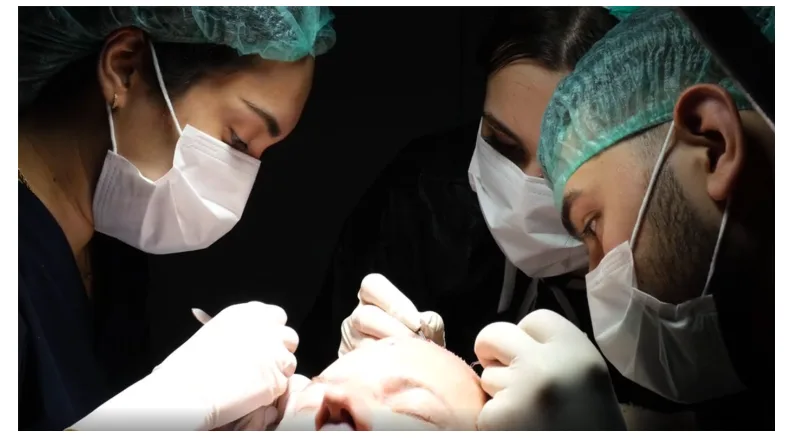
Hair transplantation is no longer viewed as a simple cosmetic procedure; today it requires detailed planning, technical accuracy, and strong clinical experience. As the demand for natural-looking results continues to grow, both the chosen techniques and how they are applied have become increasingly critical.
With many years of hands-on experience in hair transplantation, I have been able to evaluate different methods through clinical work and patient outcomes. One of the most common questions I encounter is: “What is the Vita Technique?” In this article, I will provide a clear and structured explanation of the Vita Technique, covering how it is performed, how it compares with other methods, and what kind of results can be expected for hair transplant Turkey.
What is the Vita Technique? A Refined Approach to Natural Results
The Vita Technique is a clinical hair transplant method that focuses on creating a natural-looking hairline, precise angle control, and well-balanced density planning. Its goal is to deliver results that look natural and remain durable over time. Rather than simply implanting hair follicles, the aim is to achieve outcomes that integrate seamlessly with the individual’s facial features and maintain a natural appearance in the long term.Clinical experience at Istanbul Vita Clinic consistently shows that successful hair transplantation is not determined solely by the number of grafts, but by the quality of planning and the accuracy of execution. The Vita Technique is a patented clinical protocol performed exclusively at Istanbul Vita Clinic. While similar terms may be used elsewhere, this method refers to a standardized and specific approach applied only within this clinic.
Technical Aspects: Graft Extraction, Channel Design and Density Planning
From a technical standpoint, graft extraction, channel creation, and density planning are the primary factors that shape the final outcome. During graft extraction, the use of fine punches of approximately 0.6–0.7 mm allows for more careful handling of tissue, which can help reduce trauma and support a smoother healing process. In the channel creation phase, sapphire blades ranging from 0.6–0.8 mm are used to create precise micro-incisions. This provides better control over the angle and direction of the implanted hair, which is essential for achieving a natural look. Another key element is carefully planned density. In appropriate cases, a density of around 55–60 grafts per cm² can be achieved while maintaining a natural appearance. In certain areas, especially the frontal region, higher density may be applied without compromising aesthetics.
In selected patients, depending on donor capacity and suitability, density may reach up to 80–100 grafts per cm² in targeted zones. An additional advantage is the recovery process. With refined techniques and smaller instruments, initial healing is generally observed within 5–7 days, although this can vary from person to person. Among all these factors, angle control and density planning are particularly important, as they directly affect how natural the final result appears.
How Does the Vita Technique Differ from FUE and DHI?
When comparing commonly used hair transplant methods, FUE and DHI are frequently referenced. The Vita Technique, however, is not a completely separate system but rather an approach that enhances the application through detailed planning and precise execution. FUE is commonly used for covering larger areas, while DHI allows for higher density placement but may involve a longer procedure time.
The Vita Technique focuses on:
- Precise angle and direction control
• Balanced density planning
• Protection of graft integrity
• A personalized treatment approach
For this reason, it can be considered one of the available approaches within hair transplantation.
| Feature | Classic FUE | DHI | Vita Technique |
| Punch Size (Graft Extraction) | 0.9 – 1.0 mm Wider cuts, increased scarring risk, longer healing time | 0.8 – 0.9 mm Better but still has donor area thinning risk in dense extractions | 0.6 – 0.7 mm Sapphire Smaller cut = less tissue trauma + faster healing + denser transplant |
| Channel Opening (Sapphire Tips & Angle Planning) | Steel slits 1.0 – 1.2 mm This width limits transplant density (approx. 35–40 grafts/cm²) | Implanter pen Channel opening and placement simultaneous, but limited direction and angle control | 0.6 – 0.8 mm Sapphire Microscopic channels enable 30% higher density (55–60 grafts/cm²) with perfect angle control |
| Density & Naturalness | 35–40 grafts/cm² Sparse appearance risk | 40–45 grafts/cm² Dense, but especially front hairline angle naturalness limited | 80–100 grafts/cm² Dense + natural with extra density in D1/D2 zones and 100% natural hairline in F1 |
| Healing Time | 10–14 days Scabbing lasts longer due to wide channels | 7–10 days Faster scabbing, but donor area more traumatic | 5–7 days Fastest healing thanks to small punches and sapphire channels |
Achieving Natural Results in Hair Transplantation
One of the key indicators of a successful hair transplant is obtaining a result that looks natural and remains unnoticeable. To achieve this, several important factors must be taken into careful consideration:
- Creating a natural and irregular hairline
• Strategic distribution of single and multiple grafts
• Mimicking the natural direction of hair growth
• Maintaining accurate angle placement
When these components are properly integrated, a more natural-looking outcome can be achieved.
The Role of Clinical Experience and Planning
The outcome of a hair transplant is influenced not only by the technique itself, but also by the quality of planning and execution. At Istanbul Vita Clinic, clinical observations suggest that careful focus on hairline design and density distribution plays a crucial role in overall patient satisfaction. Ultimately, success is not defined by the name of the technique, but by how effectively it is tailored to the individual.
Who is a Suitable Candidate for the Vita Technique?
The Vita Technique may be an appropriate option for individuals who:
- Prefer a natural-appearing hairline
• Desire a dense yet natural result
• Have previously undergone a hair transplant and require revision
• Prefer a structured and carefully planned procedure
However, the most suitable method should always be determined through individual assessment.
Common Mistakes in the Hair Transplant Process
In clinical practice, certain errors can negatively influence the final outcome of a hair transplant.
Common issues include:
- Focusing solely on the number of grafts
• Overlooking natural hairline design
• Improper angle and direction planning
• Lack of individualized treatment planning
• Neglecting post-operative care
Avoiding these mistakes can significantly enhance overall results.
Post-Transplant Process and Recovery
The recovery phase following a hair transplant requires patience.
Typically:
- First days: Mild scab formation
• 2–3 weeks: Shedding phase
• 3–6 months: Initial hair regrowth begins
• Around 12 months: Final results become visible
The timeline may vary depending on individual factors.
Why is the Vita Technique Preferred?
The Vita Technique has attracted attention in recent years due to its emphasis on natural outcomes and personalized application.
Its main advantages include:
- Natural-looking results
• Even and balanced density distribution
• Tailored treatment planning
At Istanbul Vita Clinic, this method is frequently preferred by individuals seeking long-term and natural-looking outcomes. For this reason, the Vita Technique stands out as one of the options for those looking for a natural hair transplant solution. As a patented method, it is performed exclusively at Istanbul Vita Clinic within a standardized and controlled framework.
What Determines Success in Hair Transplantation?
Successful hair transplantation relies on a combination of proper planning, precise technical execution, and clinical expertise. Observations at Istanbul Vita Clinic indicate that the most satisfying results are achieved when personalized planning, accurate angle control, and balanced density are applied together.
The Vita Technique reflects this principle by focusing on the finer details of the procedure. For individuals considering hair transplantation and searching for the best hair transplant in Turkey, evaluating not only the method itself but also the quality of its application is essential for achieving long-term satisfaction.
Frequently Asked Questions About the Vita Technique
How does the Vita Technique differ from FUE and DHI techniques?
The Vita Technique is a distinct hair transplantation approach developed as an alternative to FUE and DHI, with a focus on detailed planning, angle control, and balanced density distribution. Its aim goes beyond simple graft transfer, targeting natural and aesthetically consistent long-term results.
Why is the Vita Technique preferred over other techniques?
The Vita Technique is designed to achieve more natural outcomes through precise hairline design, accurate angle planning, and balanced density distribution. Compared to conventional methods, it offers a more controlled and detail-focused process. This approach has been developed and standardized by Istanbul Vita Clinic.
Is it possible to achieve higher density with the Vita Technique?
In suitable candidates, higher-density transplantation can be planned using the Vita Technique. However, the primary focus is not solely on density, but on maintaining a natural appearance with balanced distribution.
What advantages does the Vita Technique offer in terms of natural appearance?
In this method, the hairline, graft placement, and implantation angles are carefully planned in accordance with the natural direction of hair growth. This helps reduce the risk of an artificial look and supports more natural-looking results.
Who is the Vita Technique suitable for?
The Vita Technique is appropriate for individuals seeking a natural hairline, aiming for a dense yet balanced appearance, and valuing personalized treatment planning. At Istanbul Vita Clinic, this method is applied based on individual patient assessment.