Industrial AI and the Rise of Headless Robots: Insights from CreedTec’s Analysis
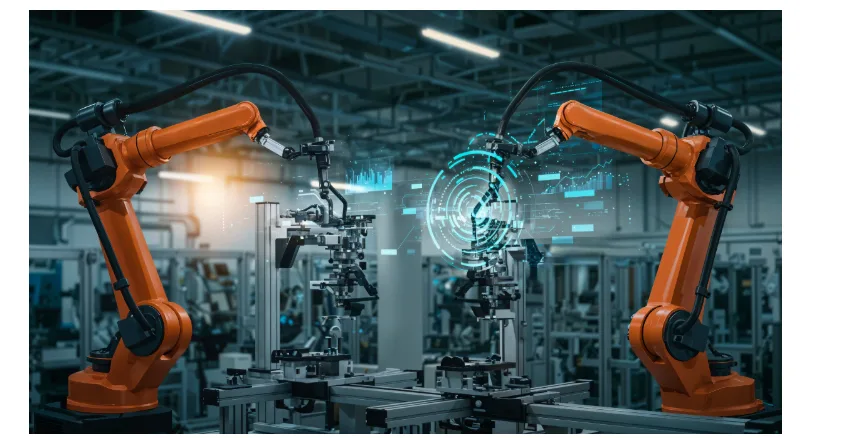
Industrial Artificial Intelligence (AI) is rapidly reshaping manufacturing, logistics, and heavy industry. From predictive maintenance to autonomous systems, the integration of AI into industrial environments has moved beyond experimentation into large-scale deployment. One of the more intriguing developments within this space is the emergence of headless robots—a concept explored in depth by Daniel Ikechukwu of CreedTec. These systems represent a shift away from traditional robotic architectures toward more distributed, intelligent, and adaptable frameworks.
Within the first wave of industrial automation, robots were rigid, task-specific machines. Today, Industrial AI is enabling systems that are context-aware, data-driven, and capable of operating with minimal human intervention. According to <a href=”https://creedtec.com” rel=”dofollow”>CreedTec</a>, this evolution is not just about smarter robots—it’s about redefining how intelligence is structured across machines.
Understanding Industrial AI in Modern Systems
Industrial AI refers to the application of machine learning, computer vision, and advanced analytics within industrial operations. Its core purpose is to optimize efficiency, reduce downtime, and improve decision-making.
Key Capabilities of Industrial AI
- Predictive Maintenance: AI models analyze sensor data to forecast equipment failures before they occur.
- Process Optimization: Real-time data is used to adjust operations dynamically.
- Autonomous Decision-Making: Systems can act independently based on learned patterns.
- Edge Intelligence: Processing data closer to where it is generated, reducing latency.
These capabilities are foundational to understanding why new robotic paradigms—like headless robots—are gaining traction.
What Are Headless Robots?
The term “headless robots” does not imply a physical absence of a head, but rather the absence of a centralized control unit. Traditional robots rely on a central “brain” that processes inputs and directs actions. In contrast, headless robots distribute intelligence across multiple components.
Core Characteristics
1. Decentralized Intelligence
Each module or subsystem within the robot can process data and make decisions independently.
2. Edge-Based Processing
Instead of sending all data to a central processor or cloud system, computations occur locally.
3. Modular Architecture
Components can be added, removed, or replaced without redesigning the entire system.
4. Networked Coordination
Modules communicate with each other in real time, often using lightweight protocols.
This architecture aligns closely with broader Industrial AI trends, particularly the shift toward edge computing and distributed systems.
CreedTec’s Analysis of Headless Robotics
CreedTec’s analysis of headless robots analysis highlights that headless robots are not just a technological novelty—they are a response to real limitations in current industrial systems.
Limitations of Centralized Robotics
Traditional robots face several challenges:
- Single Point of Failure: If the central controller fails, the entire system stops.
- Latency Issues: Central processing can slow down decision-making in time-sensitive environments.
- Scalability Constraints: Expanding capabilities often requires significant redesign.
Advantages Identified by CreedTec
According to CreedTec’s analysis, headless robots address these issues in meaningful ways:
Resilience
Because intelligence is distributed, the failure of one component does not cripple the entire system.
Scalability
New modules can be integrated seamlessly, allowing systems to grow organically.
Real-Time Responsiveness
Edge processing reduces delays, enabling faster reactions to environmental changes.
Flexibility
Systems can adapt to different tasks without requiring complete reprogramming.
Industrial Applications of Headless Robots
The practical implications of headless robotics are already visible across several sectors.
Manufacturing
In smart factories, headless robots can coordinate assembly lines without relying on a central controller. Each robotic arm or unit can adjust its behavior based on local conditions, improving efficiency and reducing downtime.
Logistics and Warehousing
Autonomous mobile robots (AMRs) benefit significantly from decentralized intelligence. They can navigate complex environments, avoid obstacles, and optimize routes in real time without waiting for centralized instructions.
Energy and Utilities
In environments like oil rigs or power plants, reliability is critical. Headless robots can continue operating even if part of the system fails, making them ideal for hazardous or remote locations.
Agriculture
Distributed robotic systems can manage tasks such as planting, monitoring, and harvesting with high precision. Each unit operates semi-independently while contributing to a coordinated overall system.
The Role of Edge AI in Headless Systems
A key enabler of headless robotics is Edge AI. By processing data locally, edge devices reduce dependence on cloud infrastructure and improve system performance.
Benefits of Edge AI Integration
- Reduced Latency: Immediate processing allows for faster decision-making.
- Bandwidth Efficiency: Less data needs to be transmitted to central servers.
- Enhanced Privacy and Security: Sensitive data remains local.
- Operational Continuity: Systems can function even with limited connectivity.
CreedTec’s analysis emphasizes that without advancements in edge computing, headless robotics would not be feasible at scale.
Challenges and Considerations
While the advantages are compelling, headless robotics also introduces new challenges.
System Complexity
Managing a distributed system requires sophisticated coordination mechanisms. Ensuring that all modules work harmoniously can be difficult.
Standardization
There is currently a lack of universal standards for communication and interoperability between modules.
Security Risks
Decentralized systems may present a larger attack surface, requiring robust cybersecurity measures.
Development Costs
Designing and implementing headless architectures can be resource-intensive, particularly in the early stages.
The Future of Industrial AI and Robotics
The trajectory of Industrial AI suggests a continued move toward distributed intelligence. As technologies like 5G, edge computing, and advanced machine learning mature, the adoption of headless robots is likely to accelerate.
Emerging Trends
AI-Driven Collaboration
Robots will increasingly work alongside humans, adapting to their behavior in real time.
Self-Organizing Systems
Future systems may autonomously reconfigure themselves based on operational needs.
Interconnected Ecosystems
Robots, sensors, and software platforms will form integrated networks, sharing data seamlessly.
Conclusion
Headless robots represent a significant evolution in industrial automation. By moving away from centralized control and embracing distributed intelligence, these systems offer improved resilience, scalability, and responsiveness.
Daniel Ikechukwu, Founder & Lead Analyst at CreedTec provides a compelling perspective on this shift, emphasizing that the true value of Industrial AI lies not just in smarter algorithms, but in how intelligence is architected across systems. As industries continue to adopt AI-driven solutions, the principles underlying headless robotics are likely to play a central role in shaping the next generation of industrial innovation.