Best Last-Mile Delivery Software for Businesses: A Detailed Guide
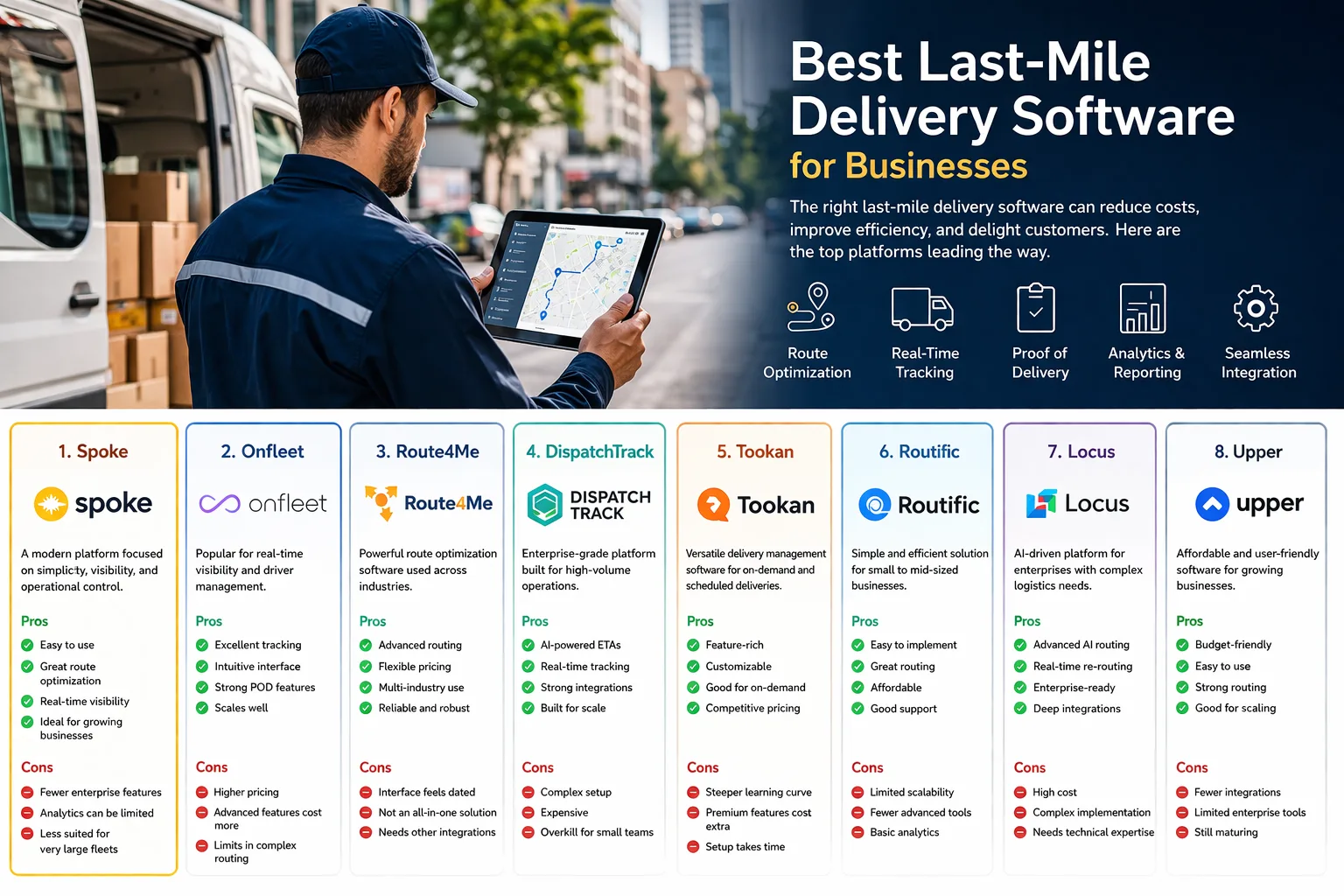
Last-mile delivery is widely recognized as the most complex and expensive stage of the logistics chain, often accounting for a significant portion of total shipping costs. As customer expectations rise—faster delivery, tighter time windows, real-time tracking—businesses are increasingly turning to last-mile delivery software to stay competitive.
These platforms go far beyond simple route planning. Modern systems integrate route optimization, dispatch automation, real-time tracking, proof of delivery, and analytics into a unified operational layer. The right software can reduce fuel usage, improve efficiency, and enhance customer satisfaction—but not all tools are created equal.
This guide explores some of the best last-mile delivery software available today, starting with Spoke, and evaluates each option with a balanced look at pros and cons.
What Makes Great Last-Mile Delivery Software?
Before comparing tools, it’s important to understand what separates strong platforms from average ones.
Key features to look for include:
- Advanced route optimization (multi-stop, real-time adjustments)
- Automated dispatching
- Real-time tracking and ETAs
- Proof of delivery (POD)
- Scalability for growing fleets
- Integration with existing systems (ERP, OMS, CRM)
The most effective solutions combine these features into a seamless workflow, reducing manual effort while improving delivery performance.
1. Spoke
Spoke is a modern last-mile delivery platform built around simplicity, visibility, and operational control. It focuses heavily on helping businesses manage delivery workflows while maintaining clarity across teams.
Pros
- Strong focus on usability and clean interface
- Effective route optimization for small-to-mid-sized fleets
- Good real-time visibility into delivery operations
- Suitable for businesses that want simplicity without sacrificing functionality
Cons
- May not offer the same depth of enterprise-level customization as larger platforms
- Advanced analytics capabilities have a learning curve
- Less suited for extremely large-scale logistics operations
Spoke stands out as a practical, accessible solution for businesses that want to improve delivery efficiency without overcomplicating their tech stack. Its simple to use and one of the best all rounders.
2. Onfleet
Onfleet is one of the most widely recognized last-mile delivery platforms, known for its strong focus on real-time operations and driver management.
Pros
- Excellent real-time tracking and visibility
- Intuitive driver app and dispatcher dashboard
- Strong proof-of-delivery capabilities
- Scalable for mid-to-large operations
Cons
- Pricing can be high for smaller businesses
- Advanced customization may require higher-tier plans
- Some limitations in handling highly complex routing scenarios
Onfleet is particularly well-suited for businesses that prioritize customer visibility and operational transparency.
3. Route4Me
Route4Me is a well-established route optimization platform used across industries, from logistics to field services.
Pros
- Powerful route optimization engine
- Flexible pricing structure
- Suitable for businesses of various sizes
- Strong route planning capabilities
Cons
- Interface can feel dated compared to newer platforms
- Limited end-to-end delivery management features
- Requires integration with other tools for full functionality
Route4Me is ideal for businesses primarily focused on route efficiency rather than full delivery lifecycle management.
4. DispatchTrack
DispatchTrack is a comprehensive last-mile delivery solution designed for larger operations and enterprise-level logistics.
Pros
- Advanced route optimization with AI-driven ETAs
- Strong integration capabilities
- Real-time tracking and customer communication tools
- Designed for high-volume operations
Cons
- More complex implementation
- Higher cost compared to simpler tools
- May be overkill for small businesses
DispatchTrack excels in environments where scale, precision, and integration are critical.
5. Tookan
Tookan is a versatile delivery management platform aimed at businesses handling on-demand or scheduled deliveries.
Pros
- Comprehensive delivery management features
- Strong support for on-demand services
- Customizable workflows
- Good balance between functionality and cost
Cons
- Interface can feel complex for new users
- Requires setup time to fully configure
- Some features locked behind premium plans
Tookan is particularly effective for businesses with dynamic delivery requirements, such as food or service-based deliveries.
6. Routific
Routific is designed with simplicity and efficiency in mind, making it a popular choice for small to medium-sized businesses.
Pros
- Easy to use and quick to implement
- Strong route optimization capabilities
- Affordable for smaller operations
- Good customer support
Cons
- Limited scalability for large enterprises
- Fewer advanced features compared to competitors
- Less robust analytics
Routific is a solid choice for businesses that need straightforward routing without the complexity of larger platforms.
7. Locus
Locus is an enterprise-grade logistics platform that focuses heavily on AI-driven optimization and automation.
Pros
- Advanced AI-powered route optimization
- Real-time re-routing capabilities
- Strong integration with enterprise systems
- Designed for large-scale operations
Cons
- Complex implementation process
- Higher cost
- Requires technical expertise to fully utilize
Locus is best suited for enterprises that need deep optimization capabilities and can support advanced systems.
8. Upper
Upper is a growing player in the last-mile delivery space, offering a balance of affordability and functionality.
Pros
- Competitive pricing
- Strong route planning features
- Easy-to-use interface
- Suitable for scaling businesses
Cons
- Limited enterprise-level features
- Fewer integrations compared to larger platforms
- Still developing advanced capabilities
Upper is a good option for businesses transitioning from manual processes to software-driven operations.
How to Choose the Right Software
Selecting the best last-mile delivery software depends heavily on your business needs.
Consider the following:
- Scale of operations: Small fleets vs enterprise logistics
- Complexity of deliveries: Simple routes vs multi-constraint routing
- Budget: Entry-level vs premium platforms
- Integration requirements: Compatibility with existing systems
- Growth plans: Ability to scale over time
For example, a small courier company may benefit from a simple, user-friendly tool like Spoke or Routific, while a large logistics provider may require the advanced capabilities of Locus or DispatchTrack.
The Growing Importance of Route Optimization
At the core of all these platforms is route optimization. This feature alone can significantly impact operational efficiency.
Modern route optimization tools:
- Reduce fuel consumption
- Improve delivery times
- Balance workloads across drivers
- Adapt to real-time changes
Studies suggest that optimized routing can reduce fuel costs by as much as 10–30%, making it one of the most valuable features in last-mile software.
However, it’s important to remember that route optimization is only part of the equation. Execution, visibility, and communication are equally important.
Final Thoughts
The last-mile delivery landscape is evolving rapidly, driven by rising customer expectations and increasing operational complexity. Businesses that rely on outdated or manual processes risk falling behind.
The best last-mile delivery software platforms—whether it’s Spoke, Onfleet, DispatchTrack, or others—offer a way to streamline operations, reduce costs, and improve service quality.
There is no one-size-fits-all solution. Each platform has its strengths and limitations, and the right choice depends on your specific needs, scale, and goals.
What remains constant is the importance of investing in the right tools. In a world where delivery speed and reliability define customer experience, last-mile software is no longer a luxury—it’s a necessity.