Jiahao Shen on Wei-Jin Metaphysical Confucianism: When Morality Serves Power and Freedom Retreats Within
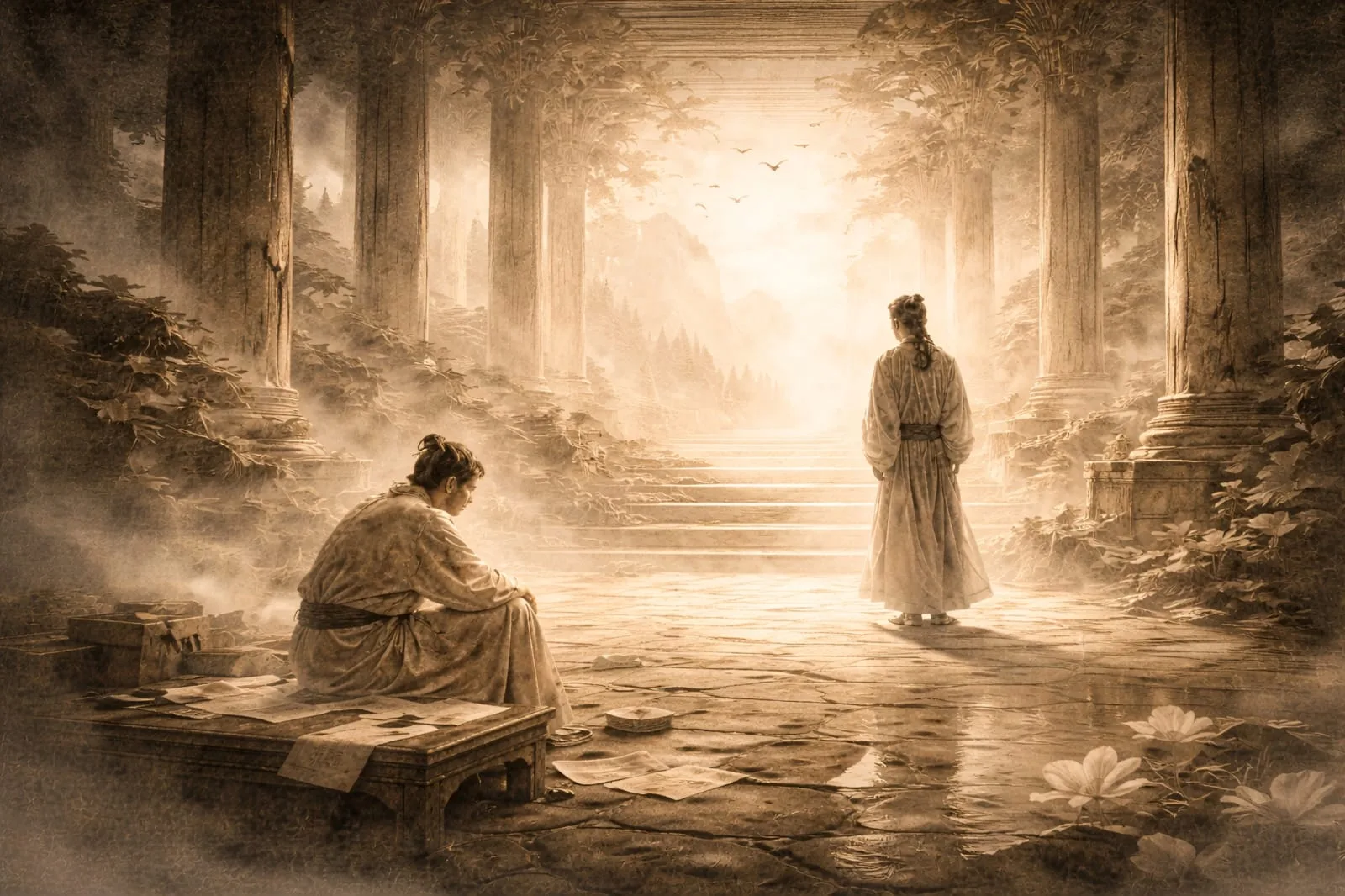
In the turbulent centuries following the fall of China’s Han dynasty, a new philosophical language emerged to make sense of a changing world. It was an age of aristocratic consolidation, political uncertainty and intellectual brilliance.
For Jiahao Shen, an independent history researcher that specializes in the Medieval Chinese philosophy and thought, the Wei-Jin period offers more than a distant historical episode. It reveals a structural pattern in the relationship between thought and power. His research argues that the tradition known as Wei-Jin metaphysical Confucianism reached its highest level of philosophical sophistication at the very moment it lost its most essential quality: the independence of the human mind.
Born and raised in Shanghai, China, and educated in the United States, Shen is currently pursuing Postgraduate studies in World History and Philosophy at King’s College London. His work focuses on how intellectual systems emerge from — and are ultimately constrained by — the social orders that sustain them. He examines the convergence of power, morality and philosophy, and the conditions under which these domains cease to be distinct, merging into a single framework that stabilises authority while narrowing the space for independent thought.
At the center of his interpretation lies a question that extends far beyond ancient China: What happens when political authority absorbs moral authority?
A new elite, a moralised order
The collapse of the Han Empire in the third century did not simply fragment political control. Over time, it produced a new social structure. Powerful families consolidated land, influence and administrative authority, forming a hereditary aristocracy that would dominate Chinese society for generations.
This emerging elite did not rely on coercion alone. It also shaped culture.
Education, literary accomplishment and philosophical discourse became central to aristocratic identity. Confucianism — long the ethical framework of governance — was gradually incorporated into this structure, providing a language through which power could present itself as virtue.
Politics and morality began to merge.
To serve the state was to serve ethical order. Authority was no longer merely administrative; it was moral.
But this fusion came with consequences.
“When morality becomes institutionalised,” Shen suggests, “independent judgment begins to lose its space.” Philosophy, once capable of challenging power, risks becoming part of its justification.
Intellectual brilliance within limits
The Wei-Jin period is often remembered for its extraordinary intellectual vitality. Philosophers explored questions of being and non-being, natural spontaneity and cosmic order, drawing on both Confucian and Daoist traditions.
Their discussions were refined, abstract and far-reaching. Intellectual gatherings — later idealised in Chinese cultural memory — blended philosophy, literature and aesthetics into a distinctive aristocratic culture.
Yet this flourishing occurred within boundaries.
For many scholars, participation in the aristocratic system was both inevitable and beneficial. Intellectual prestige and political office were closely linked. Philosophy did not stand outside power; it coexisted with it.
Some thinkers, however, resisted this integration.
Philosophers who refused to belong
Among the most influential figures of the era were Ruan Ji and Ji Kang, members of the group later known as the Seven Sages of the Bamboo Grove.
They lived during a period of political transition, as the Sima family consolidated power and prepared to establish the Jin dynasty. While many intellectuals adapted to the new order, Ruan Ji and Ji Kang chose distance.
They withdrew from official life and turned to writing, music and philosophical reflection. Their stance was not overtly political, but it carried a clear ethical position.
They rejected the moral legitimacy of the system around them.
Ruan Ji’s poetry conveys a deep sense of alienation — a tension between the desire for harmony and the recognition that the world had become irreparably compromised. Ji Kang, more openly confrontational, argued that the natural order of existence stood beyond the moral claims of political authority.
His refusal to conform ultimately led to his execution in 262.
Their resistance was neither revolutionary nor passive. It was philosophical.
When freedom retreats inward
According to Shen, what these thinkers recognised was a transformation in the nature of freedom.
When institutions claim moral authority, dissent becomes difficult to articulate. Opposition appears not only political but unethical. In such a context, traditional forms of resistance lose their effectiveness.
Freedom retreats inward.
Shen describes this as the “inner world” — a domain in which sincerity, authenticity and independence can still be preserved even when the external world no longer allows them.
This inward turn is not escapism. It reflects a form of clarity.
The writings of Ruan Ji and Ji Kang reveal what Shen calls a “painful mind” — a consciousness that sees the contradictions of its time but cannot resolve them. It is neither resignation nor rebellion, but a sustained effort to maintain integrity in the face of systemic constraint.
A tradition fulfilled — and diminished
Even as these figures stood apart, the broader philosophical tradition continued to develop. Later thinkers refined metaphysical debates, producing increasingly systematic interpretations of reality.
From an intellectual standpoint, Wei-Jin metaphysical Confucianism matured.
But something had changed.
As the aristocratic order stabilised, philosophy became more closely aligned with elite culture and political institutions. Its critical independence diminished. The radical inward freedom articulated by earlier thinkers became harder to sustain.
For Shen, this marks the central paradox of the tradition.
Its greatest theoretical achievements coincided with the disappearance of the conditions that made its most authentic expressions possible.
Beyond Wei-Jin: a recurring dilemma
Shen’s interpretation suggests that this historical pattern is not confined to ancient China.
Modern societies also depend on institutions that claim ethical legitimacy. Governments, corporations and social systems shape not only behavior but also the language through which morality is expressed.
In such environments, the boundary between power and virtue can become blurred.
The question raised by Wei-Jin metaphysical Confucianism — and by Shen’s analysis — is whether intellectual independence can survive under such conditions.
If morality is defined by institutions, where does dissent remain?
The fragile persistence of the inner world
The legacy of Ruan Ji and Ji Kang, as interpreted by Shen, offers no simple political solution. It points instead to a more limited form of freedom — one that exists beyond institutional structures.
It is internal, personal and difficult to sustain.
History suggests that such independence rarely endures. Philosophical systems stabilise, intellectual life becomes integrated into power, and the space for genuine autonomy narrows.
Yet the moment in which thought remains truly independent — even briefly — may be one of the most revealing in any intellectual tradition.
For Shen, the Wei-Jin period represents such a moment.
And its disappearance, he argues, may be as significant as its achievements.