[2026 FIFA World Cup] Complete Group Stage Draw, Schedule, and Latest Tournament Format Summary
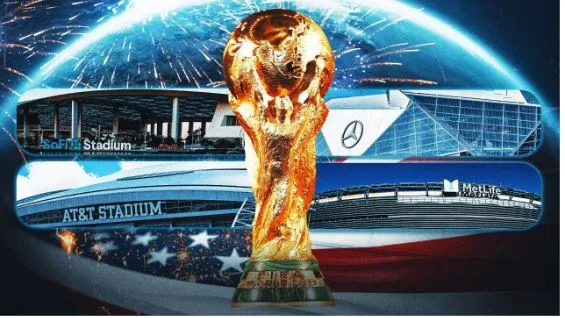
The quadrennial football extravaganza is about to ignite! The 2026 “USA-Canadian Cup,” co-hosted by the United States, Canada, and Mexico, is not only unprecedented in scale but also features a complete overhaul of its format. With the conclusion of the continental qualifiers, the latest list of 48 participating teams was officially released in April 2026, and the group draw results have sparked global discussion.
In this special report, the Ballyah Editorial Team provides fans with the 2026 FIFA World Cup Group Stage: Full Group Draw, Match Schedule, and Latest Format Guide, including a simplified breakdown of the qualification rules. Whether you’re a seasoned fan or just a casual observer, this comprehensive summary will give you a quick overview of the World Cup highlights and help you stay on top of the exciting matches.
Complete group stage draw for the 2026 FIFA World Cup (Groups A to L)
The advantages of the host countries, the United States, Canada, and Mexico, and the top-tier seeded teams
One of the biggest highlights of this World Cup is that it is co-hosted by the United States, Canada, and Mexico. These three teams not only avoid the grueling qualifying rounds but also directly secure the top seed positions. Home advantage means they are spared the fatigue of long journeys and can face their opponents in familiar weather and with the thunderous cheers of their home fans—a huge advantage in a packed tournament schedule. Besides the three home teams, traditional powerhouses ranked at the top of the world, such as Argentina, France, England, and Brazil, are also unsurprisingly in the top tier.
These strong teams avoided each other in the draw, but they also face strong challenges from dark horses from various continents. The division into the first tier not only sets the tone for the power landscape of the 12 groups from A to L, but also allows fans to see both lopsided battles and closely contested matches in the group stage, promising an exciting and anticipated tournament.
Complete roster for Groups A through L
The following is the complete group stage draw for Groups A to L of the 2026 FIFA World Cup, as officially announced:
| Group | Seeded Team / Host Country | Second Tier | Third Tier | Fourth tier |
| Group A | Mexico (landlord) | South Africa | South Korea | Czech Republic |
| Group B | Canadian (landowner) | Boch | Qatar | Switzerland |
| Group C | Brazil | Morocco | Haiti | Scotland |
| Group D | American (landowner) | Paraguay | Australia | Türkiye |
| Group E | Germany | Curaçao | Ivory Coast | Ecuador |
| Group F | Netherlands | Japan | Sweden | Tunisia |
| Group G | Belgium | Egypt | Iran | New Zealand |
| Group H | Spain | cape verde | Saudi Arabia | Uruguay |
| Group I | France | Senegal | Iraq | Norway |
| Group J | Argentina | Algeria | Austria | Jordan |
| Group K | Portugal | Democratic Republic of Congo | Uzbekistan | Colombia |
| Group L | England | Croatia | Ghana | Panama |
Key match schedule and kick-off times for the 2026 FIFA World Cup group stage.
Opening Ceremony Venue and Host Country’s Focus Schedule
With the 2026 FIFA World Cup fast approaching, fans are most concerned about which match will kick off the event. According to the latest schedule, the highly anticipated opening match will officially kick off at 3:00 AM Taiwan time on June 12, 2026, with host country Mexico facing off against African powerhouse South Africa at the Banorte Stadium in Monterrey.
Following closely behind, the other two host countries will also make their appearances. Canada will return to their familiar ground, Toronto’s BMO Arena, on June 13th to face European dark horse Poch; while the United States will choose the technologically advanced SoFi Stadium in California to face the formidable South American opponent, Paraguay. The performances of these three host countries in their opening matches will directly impact the enthusiasm of their fans. It’s not only a battle to defend the home country’s pride, but also a crucial moment to lay the foundation for advancing to the knockout stage.
Group Stage Match Schedule
Here’s a selection of the most exciting matches from the first round of the group stage for fans. We recommend marking them on your calendar in advance to avoid missing anything (all times have been converted to Taiwan time):
| Battle Combinations | Tournament Grouping | Taiwan kickoff time | Venue (city) |
| Mexico vs South Africa | Group A (Opening Match) | 2026/06/12 (Fri) 03:00 | Banorte Stadium (Monterrey, Mexico) |
| South Korea vs. Czech Republic | Group A | 2026/06/12 (Fri) 10:00 | Akron Stadium (Sapopan, Mexico) |
| Canada vs Bosnia | Group B | 2026/06/13 (Sat) 03:00 | BMO Field (Toronto, Canada) |
| USA vs Paraguay | Group D | 2026/06/13 (Sat) 09:00 | SoFi Stadium (California, USA) |
| Brazil vs Morocco | Group C | 2026/06/14 (Sunday) 06:00 | MetLife Stadium (New Jersey, USA) |
| Netherlands vs Japan | Group F | 2026/06/15 (Mon) 04:00 | AT&T Stadium (Texas, USA) |
| England vs Croatia | Group L | 2026/06/18 (Thu) 04:00 | AT&T Stadium (Texas, USA) |
A must-read for seasoned football fans! Predictions for 3 key group stage matches of the 2026 World Cup.
Group A: Mexico vs. South Africa (Opening Match)
As the opening match of the 2026 World Cup, the clash between Mexico and South Africa not only carries the enormous expectations of the host country’s fans, but is also a key indicator of whether Group A can advance smoothly. The Mexican team has always been known for its sharp counter-attacks and flexible passing and control in previous World Cups. Coupled with the thunderous cheers of the “Sombrese” fans filling the stadium in Monterrey, their momentum is absolutely unstoppable.
However, their opponent, South Africa, is equally formidable. This strong African team displayed exceptional defensive resilience and remarkable running ability in the qualifiers. The outstanding physical attributes of the South African players will pose a severe test for Mexico’s defense. Experts analyze that the outcome of this match will depend on whether Mexico can quickly control the midfield tempo in the early stages. If South Africa drags the game into a battle of attrition, the tide could turn at any time. This clash between the technical style of the Americas and the power of Africa is undoubtedly a must-see highlight of the opening day.
Group L: England vs Croatia (UEFA Euro 2016 vs. FIFA World Cup rivals)
Following the group stage draw, the “England vs. Croatia” match in Group L immediately became the focus of global media frenzy. These two European powerhouses have been “frenemy rivals” on the international stage in recent years. Looking back, Croatia ruthlessly crushed the Three Lions’ championship dreams in the 2018 World Cup semi-finals; while England successfully avenged their defeat in the subsequent European Championship.
Now, the two sides will meet again in the group stage in 2026, where old and new grudges will be settled at AT&T Stadium in Texas. England has reached the pinnacle of its golden generation in recent years, boasting a fierce attacking line and impressive bench depth; while Croatia, though facing a transitional period of squad rebuilding, has a midfield maestro with rich experience and a strong mentality in major tournaments, consistently allowing them to overcome adversity. This clash of top-level tactics and willpower will undoubtedly be the most captivating European derby of the group stage.
Group C: Brazil vs. Morocco (The Samba Army vs. the African Dark Horse)
Brazil, a strong favorite to win Group C, will face Morocco, the African dark horse that shocked the world in 2022, in their opening match. The game, held at Metropolitan Life Stadium in New Jersey, is widely regarded as a clash of contrasting styles: “flashy attack” versus “ironclad defense.” Brazil boasts one of the world’s most talented attacking groups, showcasing the unique magic of Samba football through their wing play and intricate central penetrations.
However, Morocco proved to the world in the previous tournament that their impenetrable, dense defense and deadly, efficient counter-attacks are enough to give any top team a run for their money. Brazil must show enough patience and reduce turnovers in midfield if they want to secure all three points; while Morocco, if they can replicate their suffocating counter-attacking tactics, definitely have a chance to pull off an upset against the Samba Boys.
Analysis of the 2026 World Cup Qualifying Rules and Best Third Place
The impact and changes of expanding the number of participating teams from 32 to 48
The 2026 USA-CMC World Cup will see the most significant reform in the tournament’s history, with the number of participating teams increasing dramatically from 32 to 48. This change not only increases the total number of matches from 64 to 104, but also completely alters the group stage landscape.
The previous eight groups have been expanded to twelve (Groups A through L), with each group retaining the tradition of four teams. The biggest beneficiaries of this expansion are undoubtedly the Asian and African regions, as the significant increase in slots allows many previously unsuccessful second-tier powerhouses (such as Uzbekistan) to finally realize their World Cup dreams. For fans, the expansion means enjoying more diverse playing styles and fresh faces. While some fans worry that the group stage’s excitement might be diluted, the increased number of matches and the earlier knockout stage are sure to ignite a wider global football frenzy.
New qualification criteria: How to secure the “Best Third Place” spot?
With the number of teams increasing to 48, the qualification threshold for the knockout stage has also been adjusted. FIFA has introduced a new “32-team knockout stage,” in which the top two teams from each of the 12 groups (a total of 24 teams) will automatically advance. The remaining 8 spots will be filled by the 8 best third-placed teams from each of the 12 groups.
This “best third place” format significantly increases the suspense of the group stage, meaning that even if a team suffers a defeat or only achieves one win and two losses in the group stage, as long as the goal difference is well controlled, they still have a very high chance of advancing. When facing strong opponents, each team must not only strive for victory but also minimize the number of goals conceded. This “every goal matters” format will force weaker teams to remain vigilant until the very end of the match, greatly increasing the dramatic tension of the game.
What happens if there’s a tie in the group stage? Latest points and ranking determination order
In the fiercely competitive World Cup group stage, it is not uncommon for teams to have the same number of points. According to the latest format in 2026, when two or more teams have the same number of points in a group, a strict set of criteria will be used to determine their ranking. First, the teams’ “total goal difference” (goal difference) in all group matches will be compared. If they are still the same, then the “total number of goals scored” will be compared.
If the first two criteria still cannot determine a winner, the system will further compare the head-to-head results between teams with the same points. In the event of an extreme tie, the “Fair Play Points” will be used to settle the score, which is calculated based on the number of yellow and red cards a team receives. The team with the fewest points will advance. If even these criteria are identical, FIFA will ultimately have to conduct a brutal draw to determine the fate of the teams.
The complete list of 48 teams that have qualified for the 2026 World Cup and the allocation of quotas by continent.
List of Qualifying Candidates from Europe (16 seats) and South America (6 seats)
With the expansion of the competition format, the number of slots for each continent has increased. The European region (UEFA) remains the biggest winner, securing 16 slots, while the South American region (CONMEBOL) has 6 slots.
- European Zone (16 teams): Czech Republic, Poland, Switzerland, Scotland, Turkey, Germany, Netherlands, Sweden, Belgium, Spain, France, Norway, Austria, Portugal, England, Croatia.
- South America (6 teams): Brazil, Paraguay, Ecuador, Uruguay, Argentina, Colombia.
List of Qualifying Candidates from North and Central America and the Caribbean (6 seats) and South America (6 seats)
The CONCACAF region benefited from the advantage of being exempt from the qualifying rounds by the three host countries, plus additional qualifying spots, securing a total of 6 qualifying slots.
- North and Central America and the Caribbean (6 teams): Mexico (host country), Canada (host country), United States (host country), Haiti, Curaçao, Panama.
List of Qualifying Candidates from Asia (9 seats) and Oceania (1 seat)
The rise of Asian football is evident to all. The Asian Football Confederation (AFC) secured a record-breaking nine qualifying spots this time, while the Oceania Football Confederation (OFC) finally secured a guaranteed direct qualification spot, eliminating the need for intercontinental playoffs.
- Asia (9 teams): South Korea, Qatar, Australia, Japan, Iran, Saudi Arabia, Iraq, Jordan, Uzbekistan.
- Oceania (Team 1): New Zealand.
African region (10 seats) qualifying list
The African region (CAF) has always been explosive in its performance, and this year the number of slots has been greatly increased to 10, allowing many emerging African powerhouses to step onto the world stage.
- Africa (10 teams): South Africa, Morocco, Ivory Coast, Tunisia, Egypt, Cape Wid, Senegal, Algeria, Democratic Republic of Congo, Ghana.
Common Q&A for the 2026 World Cup Group Stage
Where will the 2026 FIFA World Cup be held? How many host countries will there be?
The 2026 FIFA World Cup will be co-hosted by the United States, Canada and Mexico, setting a record for the first time in World Cup history by three countries. The matches will be held in top stadiums in several major cities in the three countries.
How many teams will be eliminated in the group stage of the 2026 World Cup? What are the advancement rules?
The 48 teams are divided into 12 groups. The top two teams from each group (24 teams in total) will advance directly. The top 8 third-placed teams from the other 12 groups will also advance. Ultimately, 16 teams will be eliminated, and 32 teams will enter the new first round of knockout stage.
What day is the opening match of the 2026 World Cup? Who will be playing against each other?
The opening match of the 2026 World Cup will be held at 3:00 AM Taiwan time on June 12, 2026, with the host country Mexico facing off against African powerhouse South Africa. The match will take place at the Banorte Stadium in Monterrey, Mexico.
What changes will occur in the total number of matches after the 2026 World Cup expands to 48 teams?
With the team count expanding from 32 to 48 and the addition of a “round of 32 knockout stage,” the total number of matches will increase significantly from the previous 64 to 104. The entire tournament will last for approximately 40 days, providing fans with a visual feast.
Reference: https://www.ballyah.com(球爺嘴球)