Why More Homeowners Are Rethinking Routine Pool and Outdoor Upkeep
Home maintenance hasn’t changed overnight.
But expectations have.
What used to feel manageable—small, regular tasks spread across the week—now feels more constant than controlled. Time is more fragmented, schedules are tighter, and tolerance for repeated interruptions has dropped.
Routine upkeep used to feel manageable. Now it feels constant.
And that shift is not just about time—it’s about how people experience that time.
Why Everyday Home Care Feels Different Than It Used To
The issue is not the size of the tasks.
It’s their frequency.
Wiping surfaces, checking systems, adjusting small imbalances—these actions are simple, but they repeat. They don’t resolve anything permanently. They reset conditions, only for them to shift again.
Over time, that creates a specific kind of fatigue.
Not physical exhaustion, but a sense that nothing ever feels “done.”
And that feeling changes how people relate to maintenance itself.
When “Routine” Starts Feeling Like Endless Repeat Work
Most traditional upkeep models follow a familiar pattern.
They are reactive.
Something changes, and then it gets corrected. Something becomes visible, and then it gets addressed. This approach assumes that between actions, conditions remain relatively stable.
But that assumption no longer holds in many environments.
The gap between action and result has become more noticeable. By the time something is fixed, the system has already started shifting again.
Most traditional upkeep models are built around reaction, not continuity.
And that difference is becoming harder to ignore.
Why Reactive Maintenance No Longer Feels Good Enough
This shift is especially visible outside the home.
Indoor environments tend to be controlled. Temperature, airflow, and usage patterns are relatively stable. Maintenance follows predictable rhythms.
Outdoor spaces are different.
They are exposed to variability—weather, debris, temperature changes, and irregular use. Conditions evolve continuously, not in cycles.
This makes reactive upkeep less effective.
And in spaces like pools, that difference becomes obvious very quickly.
Why Outdoor Areas Expose This Problem More Clearly
Pools are particularly sensitive to change.
Water conditions shift quickly. Debris accumulates unevenly. Small imbalances can become visible within hours, not days.
What seems like a simple maintenance routine becomes a cycle of repeated adjustments.
Check, correct, repeat.
This is one of the reasons why interest in robotic pool cleaners has grown significantly in recent years.
Not because maintenance is more difficult—but because it has become more persistent.
How Pool Maintenance Turns Small Changes Into Constant Attention
The response to this shift is not necessarily more effort.
It is a change in structure.
Instead of treating upkeep as a series of tasks, more homeowners are beginning to think in terms of systems. Systems that operate continuously, rather than occasionally.
Task-based upkeep corrects problems.
System-based upkeep reduces the likelihood of those problems appearing in the first place.
The difference isn’t how much work is done, but how the system operates over time.
From One-Off Chores to More Stable Maintenance Systems
One of the most noticeable changes happens at the level of decision-making.
Maintenance is no longer something that needs to be planned, remembered, or initiated manually. The need to check conditions before acting begins to fade.
Intervention becomes less frequent.
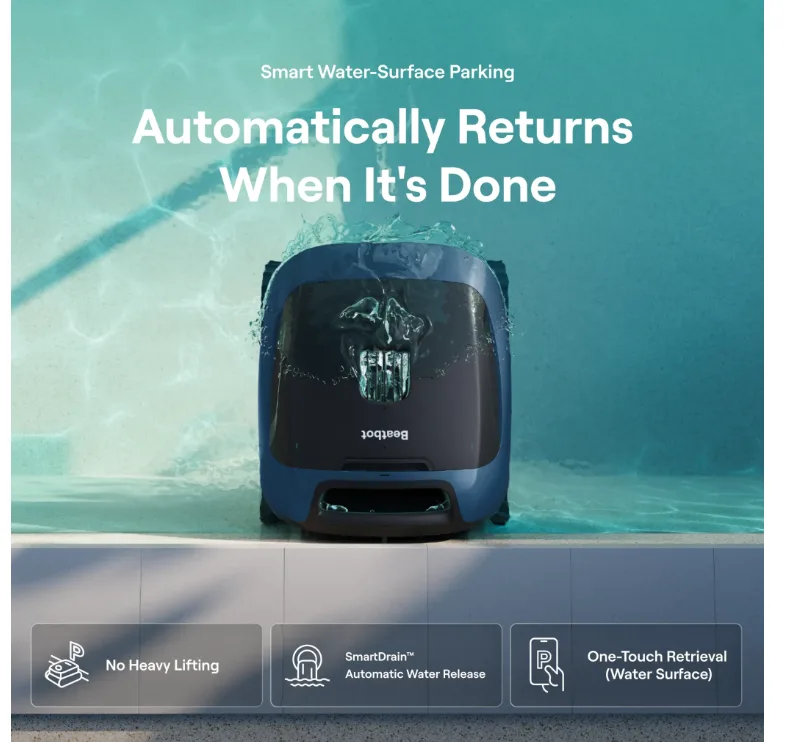
In practice, systems like the Beatbot sora 30 reflect this shift by reducing the need for repeated manual intervention.
The role of the homeowner changes—from managing the process to relying on it.
When Home Upkeep No Longer Depends on Constant Manual Decisions
The impact is not always dramatic.
It shows up in small ways.
Fewer interruptions. Less need to adjust plans. A smoother flow between using a space and maintaining it.
Maintenance becomes less visible.
And when it becomes less visible, it also becomes less disruptive.
The experience of the home changes—not because there is less upkeep, but because it demands less attention.
How Less Visible Pool Care Changes Daily Life at Home
At a deeper level, this shift reflects a change in expectations.
People are no longer looking for ways to manage tasks more efficiently.
They are looking for ways to reduce how often those tasks appear at all.
Time, consistency, and predictability are becoming more valuable than isolated efficiency.
What’s changing isn’t just how homes are maintained—but what people expect from them.
Why This Shift Goes Beyond Simple Convenience
Routine upkeep hasn’t disappeared.
But for many homeowners, it’s no longer something they want to manage directly.
And that’s where the shift begins.