How to Find a Cyclist-Attorney After a Bike Crash
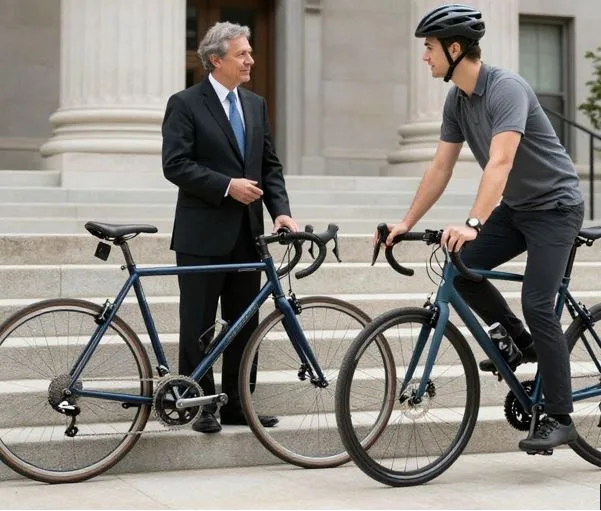
If you have been hit on a bike, or you love someone who has, the search for a bike accident lawyer usually goes the same way. You type “bicycle accident lawyer” into Google and get a wall of personal-injury firms that handle car crashes, slip-and-falls, truck wrecks, and, somewhere on the list, bikes. Most of them have never ridden in traffic. Many have never defended a cyclist’s behavior to a skeptical jury. A small, quieter category of lawyers does both, and most injured riders never hear about this form of bike crash legal help until it is too late to switch.
According to the National Highway Traffic Safety Administration, 41,735 bicyclists were injured in motor vehicle crashes in 2021, and 966 cyclists were killed, the highest bicycle fatality count since 1975. Cyclist injuries are typically more severe than equivalent auto-on-auto crashes because the rider has no protective cage, and the legal stakes match the medical ones. This piece is about the lawyers built to handle that, why most riders never find them, and how to tell a genuine cyclist-attorney from a general firm that happens to take bike cases.
What a Cyclist-Attorney Actually Is
A cyclist-attorney, sometimes called a cycling lawyer in advocacy circles, is a lawyer whose practice is built around representing injured riders, not a general personal-injury firm that occasionally files a bike case. The distinction shows up in places you can actually verify. Attorney bios mention riding, racing, or advocacy. Educational content is written for cyclists rather than for search engines. The firm is visibly involved with bike coalitions, advocacy groups, or local cycling clubs. And on the practice page, cyclist representation sits near the top, not at the bottom of a list that starts with auto accidents.
The signal of depth is specificity. A cyclist-attorney writes about door-zone crashes, right-hook collisions, and the difference between a sharrow and a protected lane. A general PI firm writes a page titled “Bicycle Accidents” that reads like it was generated from a template. Both might be competent lawyers. Only one is likely to understand what happened to you.
Leading Bicycle Accident Lawyers and Networks
The cyclist-attorney category is small but established. The first U.S. practice to focus exclusively on cyclists was founded in 2000 by Bob Mionske, a two-time U.S. Olympic cyclist turned personal-injury lawyer, and is widely credited with putting the phrase “bicycle attorney” into circulation.
Mionske also wrote Bicycling & the Law, a 300-plus-page reference covering collisions, traffic stops, harassment of cyclists, and more. The category has grown since but is still small. There are not hundreds of cyclist-attorneys nationally, and most operate regionally, embedded in their local cycling scene. A few are worth knowing by name.
Bicycle Accident Lawyers Group
Bicycle Accident Lawyers Group is a national cyclist-attorney resource built by lawyers who ride.
- Specialization: Car-versus-bike collisions, hit-and-run cases, dooring, distracted-driver crashes, and catastrophic injuries including spinal cord and traumatic brain injuries.
- Location: National scope, coast-to-coast representation. Unusual in a category where most cyclist-focused firms operate within a single state or region.
- Reputation: Practitioner-led (“lawyers who ride”) with substantive educational content covering crash mechanics, state-by-state considerations, and the questions worth asking any firm before signing a fee agreement. Distinguishes the firm from general PI practices that publish thin SEO pages on bicycle accidents.
- Results: The firm reports recoveries in the millions for injured cyclists in cases involving collisions with cars and trucks, dooring, and hit-and-run drivers. Most lawsuits settle within six to eighteen months; complex catastrophic-injury cases can extend longer.
Learn more: bicycleaccidentlawyers.com
Bike Law Network
The Bike Law Network (www.bikelaw.com) is a national network of cyclist-attorneys founded by Peter Wilborn.
- Specialization: Member firms represent cyclists in car-versus-bike collisions, dooring, hit-and-run, fatal crashes, and serious-injury claims. Each firm handles its own jurisdiction’s cases independently.
- Location: National network with member firms across multiple states. Functions as a state-by-state directory, so an injured rider can find a member firm without starting their search from scratch.
- Reputation: Wilborn is a longtime cyclist and advocate, and Bike Law has been one of the most recognizable names in cyclist representation for years. Member firms operate independently but share methodology, case insight, and a common approach to cyclist representation. The network also runs a 501(c)(3) advocacy arm, the Bike Law Foundation, which works on cyclist-safety policy beyond individual cases.
- Results: Bike Law publishes case settlements and verdicts on its results page, including dooring cases, drunk-driver collisions, and crashes resulting in fatal injuries.
The Broader Landscape
Beyond these named examples, the category is mostly solo practitioners and small regional firms that built cyclist practices one case at a time. The League of American Bicyclists maintains a Bike Attorney Directory, which is useful as a starting point, though the League notes explicitly that listing does not imply specialized expertise, so the recognition checklist below still matters. The most reliable way to find a cyclist-attorney in your area is through the local cycling community: a bike coalition, a cycling club, or a shop where serious riders gather.
How Cyclist-Attorneys Differ from General Personal-Injury Firms
The differences show up in three areas: how the lawyer understands the crash, how they defend the rider’s behavior to a jury, and how they engage with the cycling community.
Case Understanding and Crash Reconstruction
A cyclist-attorney understands bike crash dynamics the way a car accident lawyer understands vehicle behavior. They know why a cyclist rides three feet from the curb instead of the gutter, what lane positioning is legal, how visibility changes at dusk, and why a driver’s “I never saw them” often points to inattention.
When working with reconstruction experts, they focus on analysis that treats the cyclist as a legitimate road user, not a hazard. They also use vulnerable road user laws, which are state statutes that place higher duties on drivers around cyclists and pedestrians and raise the standard of care.
General PI firms rarely raise these points or challenge the insurer’s initial reconstruction. That version usually starts with the assumption that the cyclist made a mistake.
Jury Narrative and Defending Cyclist Behavior
Jurors bring assumptions into the courtroom. Many do not ride, and some view cyclists negatively based on what they have seen on the road. A cyclist-attorney anticipates this and addresses it with evidence and clear explanation.
They explain why a rider takes the lane at an intersection, when helmet use matters, and how following traffic laws can look unfamiliar to drivers.
This directly affects compensation under comparative negligence rules, which vary by state. In pure comparative states, a finding that the cyclist is partially at fault reduces recovery proportionally. Most states follow a modified rule, where crossing a 50% or 51% fault threshold bars recovery. A few states apply contributory negligence, where even 1% fault eliminates recovery.
Each concession, including lane position, helmet use, and visibility, reduces the outcome. Cyclist-focused attorneys treat these points as central. Lawyers without that background often concede them without recognizing the cost.
How to Recognize a Genuine Cyclist-Attorney
Use this checklist on any firm you are evaluating, including the ones named above.
- Attorney bios. Do the lawyers personally mention cycling, racing, commuting, or advocacy? Look for specificity: the races they ride, the clubs they belong to, the rides they lead.
- Educational content depth. Read two or three of their articles. Are they written for cyclists, with real detail about crash types, laws, and case strategy? Or are they generic SEO pages that could describe any injury?
- Community involvement. Search the firm name alongside your local bike coalition, your state’s cycling advocacy group, or a major local ride. If the firm is embedded, you will find traces.
- Practice focus. On their practice areas page, where does cyclist representation sit? A firm that lists twelve practice areas with “bicycle accidents” at number nine is not a cyclist-focused firm.
- Referrals from riders. The strongest signal is a recommendation from another cyclist who has actually worked with the lawyer. Ask in your club, your coalition, or your shop.
On a consultation call, three questions cut quickly to specialization: How many bicycle cases have you taken to trial? Who will personally handle my case? And how do you handle insurer arguments that the cyclist was partly at fault? Direct answers signal depth. Vague answers, or pivots to general personal-injury work, signal otherwise.
A firm can fail one item and still be a good fit. A firm that fails three or four is a general PI firm with a bike page.
When the Difference Matters Most
Not every bike case requires a cyclist-attorney, and not every rider looking for bicycle injury legal help needs a specialist. A straightforward crash with clear liability, a cooperative insurance company, and a moderate injury can usually be handled well by any competent personal-injury lawyer. In those cases, chasing a specialist can slow things down without improving the outcome.
There is also a timing pressure most riders do not see coming. Insurers contact the injured cyclist within days of the crash, push for a recorded statement, and pursue an early settlement before the medical picture is clear. A cyclist-attorney takes over that communication on day one, which is often the single most useful thing they do in the first month after a crash.
The difference is worth the extra effort to find one in three situations. First, serious crashes with catastrophic injuries, where the stakes are high enough that crash reconstruction and jury narrative will decide the case. Second, contested liability, where the driver or insurance company is arguing that the cyclist caused the crash. Third, any case where cyclist behavior is central to the legal argument: lane positioning, helmet use, bike lane law, or comparative negligence.
If any of those describe your situation, the depth of a cyclist-attorney practice earns its premium. If none of them do, a good general PI lawyer in your area is probably fine. What matters is making the choice with information, not with whichever billboard you saw on the way to the hospital.