How to Create a Stylish and Ergonomic Home Workspace
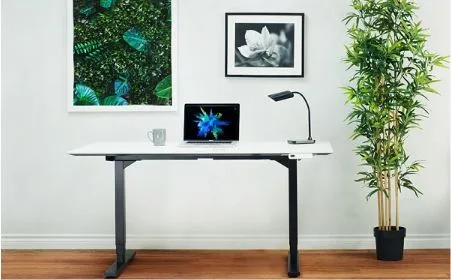
The temporary desk setup has a way of becoming permanent. You pull something together quickly, it technically works, and then six months pass and you’re still using the same wobbly surface with the monitor propped up on a hardcover book you haven’t read. At some point “good enough for now” just becomes the desk you have.
Worth revisiting. Especially if your back has been trying to tell you something.
The Desk Decision Comes First
Not the chair. Not the shelving. The desk, because everything else has to work around it.
The mistake most people make is treating desk height as fixed. Standard desks are built to a rough average that genuinely suits a narrow range of body types. Too high for shorter people, often not quite right for taller ones. The result is a lot of people compensating with their posture in ways that feel fine until they don’t.
A height-adjustable desk solves this directly. Set it for your body rather than accepting what was designed for a generic average person. And if you can alternate between sitting and standing through the day, even occasionally, the difference in how you feel by late afternoon is real. Not dramatic. Just noticeably better than staying in one position for eight hours.
The cost concern is legitimate and also more outdated than people realise. The affordable end of the sit-stand market has improved significantly. There are genuinely good cheap standing desks available now that don’t require the budget justification they would have a few years ago. The premium options are still there, but they’re no longer the only ones worth considering.
Positioning Matters More Than Equipment
Most ergonomic problems aren’t equipment problems. They’re setup problems. The monitor is too low. The keyboard is slightly too far away. The chair is at the wrong height relative to the desk. None of these require new purchases to fix.
Top of the screen at roughly eye level when seated. That’s the single most commonly ignored rule in home office setup, and it’s responsible for a lot of neck tension that people attribute to stress or sleeping badly. A monitor arm handles this cleanly and gives the back desk surface at the same time.
Elbows at roughly ninety degrees, forearms parallel to the floor, when typing. If the desk height is right this follows naturally. If it isn’t, no amount of chair adjustment fully compensates.
Feet flat on the floor. Lower back supported in its natural curve. That’s the chair baseline. Everything else is secondary to those two things.
The Visual Side Is Real Too
A workspace that looks like a pile of things that landed there and never left is genuinely harder to work in than one that feels intentional. That’s not just aesthetics. Environment affects focus in ways that are easy to dismiss until you spend a day working somewhere that’s actually well set up.
Cables first. They’re the fastest way to make a space look worse than it is and the fastest fix. Twenty minutes with some cable clips along the back of the desk, a cable box or tray for the excess on the floor, and the visual noise drops significantly. It’s boring to do. The difference is immediate.
Surface material affects the feel of a workspace more than most people expect before they’ve noticed it. A cold white laminate reads differently to a warm wood tone, and that reading shows up in how comfortable the space feels to spend several hours in. Not everyone needs solid wood. Just worth being deliberate about rather than taking whatever was available.
Lighting is the other lever. Overhead lighting alone tends to be flat and slightly harsh. A dedicated desk lamp with some brightness control, and warmer ambient light for the rest of the room, creates an environment that’s easier to be in. It also creates a physical distinction between work mode and not-work mode that matters more than it sounds like it should.
Go Vertical With the Storage
The desk surface is valuable. Everything on it that isn’t directly part of current work is getting in the way.
Floating shelves above the desk move books, notebooks, and reference material off the surface without taking any floor space. A pegboard handles the small things that otherwise pile up in corners, headphones, cables, chargers, things that are always slightly in the way. Neither is expensive. Both make the desk feel like a workspace rather than a storage overflow area.
Monitor arm over stand, if possible. The stand footprint is bigger than it looks when it’s gone.
The Thing People Genuinely Don’t Plan For
Temperature. A home office that gets too warm in the afternoon or too cold in a Canadian winter near an outside wall will consistently affect concentration in ways that are easy to normalise rather than address.
You adapt. And then you forget what it’s like to just be comfortable. A small fan, a thermostat-controlled space heater, some attention to where the desk sits relative to vents and windows. These aren’t glamorous interventions. They’re the kind of thing you fix once and then wonder why you spent months not fixing it.
The home workspace is worth setting up properly. Not to make it look impressive on a video call background. But because it’s where a significant amount of your actual life happens, and the physical conditions of that space have a direct relationship to the quality of what you do in it.