Pennsylvania Wilds in Shoulder Season: Trails, Wildlife Viewing, and Small Towns
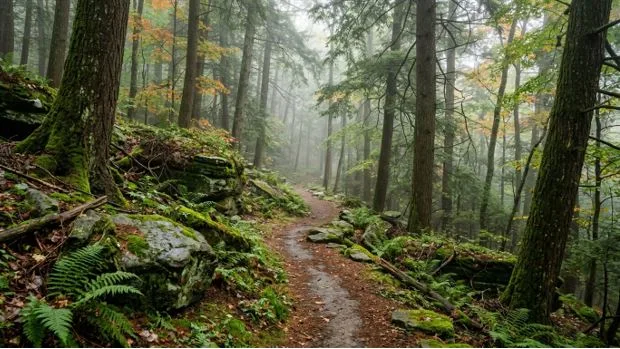
The Pennsylvania Wilds cover more than two million acres of public forest across the northern tier of the state. Most visitors arrive in late autumn for leaf season or mid-summer for camping, which leaves the shoulder months, roughly late April through early June and again in September, as the quiet window locals tend to recommend.
These weeks are the easiest time to move through the region, the wildlife is more active, and the trails are less crowded. For travelers who want a slower-paced trip, this is the calendar to plan around.
Trail Conditions in Spring and Early Fall
The Allegheny National Forest and Cook Forest State Park hold the densest trail networks in the region. Spring conditions range from cold and muddy in April to warm and dry by late May, and the small creek crossings are easier after a dry stretch than after a rain event.
Longer trails like the North Country Trail and the Baker Trail are usable in both shoulder seasons, but most travelers find that shorter loops near trailheads fit the available daylight better. The Beaver Meadows trail system and the loops near Longhouse Scenic Byway are reliable options for morning and afternoon hikes.
For a weekend base, forested retreat stays in northwestern Pennsylvania tend to concentrate along the Clarion River and the eastern edge of Cook Forest, where most of the cleaner trail access sits within a short drive.
Wildlife Viewing Through Shoulder Season
Elk are the region’s signature wildlife, and the herd in Benezette and the surrounding Elk County townships is the most visible in the eastern United States. The best viewing windows are early morning and late afternoon, with the most reliable activity from September into early October and again in May.
Beyond the elk, spring is the more active season for songbirds and migrating waterfowl. The ponds and marshes around the Allegheny Reservoir draw a range of species, and the early-morning light at places like Rimrock Overlook makes for memorable photographs.
Black bears are present across the region and are more active during berry season in late summer. Encounters are uncommon on well-used trails, but basic precautions are worth taking, especially with food stored at trailside cabins.
Small Towns Worth a Stop
Kane is the reliable starting point for travelers entering the Wilds from the west. Its main street has a bookstore, a small diner, and the Kane Country Club Dining Room, which is more approachable than its name suggests. The town also anchors several maintained trail networks.
Emporium, further east, sits at the edge of Elk County and is a practical base for morning elk viewing. The local diner is open early, which matches the schedule most wildlife viewers are keeping.
Marienville, Brookville, and the small villages along the Clarion are the kind of stops most visitors pass without planning to. A single coffee and a walk around a courthouse square is usually enough to understand the pace of the region.
Planning Notes for Shoulder-Season Visits
Cell service is inconsistent across most of the Wilds, and downloading offline maps is the simplest precaution worth taking. The state forest map PDFs are free on the DCNR website and clarify the backroad connections that GPS sometimes misrouts.
Seasonal businesses, especially restaurants and outfitters, often keep shortened hours in the shoulder months. Checking hours on Friday before a weekend visit prevents the common Saturday evening surprise of finding kitchens closed by seven.
Layers handle the temperature swings more effectively than a single warm jacket. A spring morning near the Clarion can be forty degrees with ice in shaded hollows, and the afternoon can warm into the seventies on exposed ridges. The most common packing oversight is the lack of a windbreaker for ridge overlooks.
The Pennsylvania Wilds in shoulder season are not a destination for travelers who want activity on demand. They are a destination for travelers who enjoy the quieter version of a forest, the chance of wildlife without a crowd, and the drives between small towns that often define the weekend as much as the trails do.