Top 10 AI Interview Software Platforms for Modern Hiring
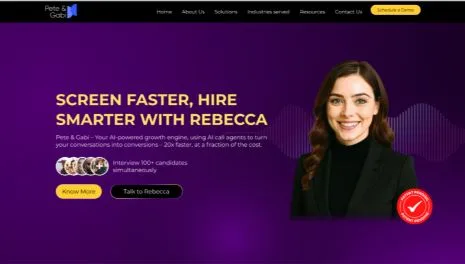
AI interview software automates the screening and evaluation of candidates through asynchronous video recordings, real-time conversational agents, and algorithmic scoring. These platforms serve talent acquisition teams and high-growth firms are looking to replace the logistical bottleneck of manual first-round phone screens with standardized, data-driven assessments. By implementing these tools, organizations reportedly reduce time-to-hire by 40% while supposedly improving the diversity of the candidate to shortlist through the mitigation of human subconscious bias.
What is the fundamental breakdown in modern high-volume hiring?
The “resume black hole” isn’t just a candidate grievance; it is a structural failure of traditional HR. When a single job posting attracts over 1,000 applicants, a human recruiter spends an average of six seconds per CV. This brevity invites cognitive shortcuts, often favoring prestigious universities or familiar past employers, which inadvertently discards specialized talent.
The friction lies in the “middle funnel.” Companies have plenty of applicants but no scalable way to hear them speak, see their problem-solving logic, or verify their soft skills without committing hundreds of man-hours to Zoom calls. This inefficiency costs mid-sized firms thousands in lost productivity and “ghosting” from top-tier talent who refuse to wait three weeks for a follow-up.
Why is AI-driven interviewing the necessary pivot for 2026?
Recruitment is shifting from a document-based process to a performance-based one. Apparently, the move toward “skills-first” hiring requires tools that can interpret nuance at scale.
AI interview platforms provide:
- Standardization: Every candidate answers the same questions under the same conditions, theoretically leveling the playing field.
- Asynchronous Flexibility: Candidates record responses at midnight; recruiters review them at 9:00 AM.
- Predictive Analytics: Some platforms claim to map vocal patterns and word choices to future job performance, though the scientific community remains somewhat divided on the absolute accuracy of these “emotional AI” metrics.
Top 10 AI Interview Software Platforms for Modern Hiring
The following list examines the current market leaders, with a particular focus on how they balance automation with the human element.
- Rebecca AI by Pete & Gabi
Rebecca AI hiring assistant handles the entire top-of-funnel: outreach, pre-qualifying screenings, and video interviews without compromising due diligence, while keeping the human in the loop for final decisions. Built by Pete & Gabi, she speaks over 16 languages, supports mobile interviews, and offers a transparent pricing model, making her the best AI interviewer for enterprises across industries.
- Key Capability: Real-time probing questions based on candidate answers.
- Outcome: A deeper understanding of a candidate’s “why” rather than just their “what.”
- Critique: While Rebecca AI excels in conversational depth, smaller teams may find the sheer volume of data it generates requires a disciplined approach to review.
- HireVue
As one of the oldest players in the space, HireVue owns a massive dataset of interview behaviors. They specialize in video banking and game-based assessments.
- Named Technology: MindX game-based assessments.
- Benefit: Massive scalability for Fortune 500 companies.
- Critique: Some argue the interface feels “corporate” and cold, potentially alienating Gen Z talent who prefer a more personalized touch.
- Modern Hire (by HireRight)
Modern Hire focuses heavily on the “science” of selection, using what they call “Cognitive AI.”
- Focus: Reducing turnover by matching personality traits to long-term role success.
- Benefit: High-level integration with background check services.
- Paradox (Olivia)
Paradox uses a conversational assistant named Olivia to handle the logistics of screening and scheduling via SMS and WhatsApp.
- Outcome: Extremely high completion rates due to the “chat” nature of the interface.
- Critique: It is essentially a top-of-funnel filter; it lacks the deep behavioral analysis found in specialized video AI.
- Retorio
A European standout, Retorio uses a “Behavioral Intelligence” model based on the Big Five personality traits.
- Technology: Video analysis of facial expressions and gesture patterns.
- Critique: There is a persistent debate regarding whether AI can truly “read” personality through a camera without cultural bias—Retorio claims to have solved for this, but skepticism remains healthy.
- MyInterview
MyInterview focuses on “vibe” and team fit, using a machine-learning algorithm to shortlist candidates based on their alignment with a company’s specific culture.
- Benefit: Very user-friendly for small to mid-sized businesses.
- Spark Hire
Primarily an asynchronous video platform that has slowly added AI layers. It is the “workhorse” industry.
- Outcome: Reliability and ease of use over complex algorithmic predictions.
- Willo
Willo markets itself on simplicity and “no-app” accessibility. It is a favorite for high-volume retail and hospitality hiring.
- Benefit: Works on low-bandwidth mobile connections globally.
- Talview
Talview offers an end-to-end “Hiring Confidence” platform, including proctoring for technical exams.
- Named Tech: T-Symphony integration.
- Benefit: Excellent for technical and engineering roles where skill verification is paramount.
- Humanly
Humanly focuses on the “candidate-first” philosophy, automating the mundane while ensuring the candidate feels heard through frequent automated touchpoints.
- Outcome: Reduces “ghosting” by keeping candidates engaged via AI-led updates.
How does AI hiring agent redefine the “Inquisition” into a “Conversation”?
Most AI interview tools feel like an interrogation where a timer counts down; a red dot glows, and the candidate speaks into a void. Modern day AI hiring tools depart from this rigid structure. Apparently, the developers recognized that the best insights come when a candidate is relaxed.
The platform employs a “Soft-Touch” AI that mimics a human recruiter’s follow-up. If a candidate mentions a specific project, Rebecca AI can ask, “That sounds complex; what was your specific contribution to the outcome?” This prevents the “canned response” problem that plagues traditional video interviews.
What are the tangible benefits of AI integration in your workflow?
Implementing an AI hiring platform isn’t just about saving time. It’s about data integrity.
- Elimination of “First-Impression Bias”: Humans decide if they like someone in the first 20 seconds. AI doesn’t care about your haircut; it listens to your syntax and logic.
- Global Reach: Hire a developer in Estonia and a designer in Brazil simultaneously without managing 12 time zones for initial screens.
- Audit Trails: In an era of increasing labor litigation, having a standardized, AI-scored record of why a candidate was or wasn’t moved forward provides a robust legal defense for “fair hiring.”
Frequently Asked Questions
Does AI interviewing discriminate against certain accents or speech patterns?
This is a valid concern. Early iterations of voice AI struggled with non-native speakers. However, modern platforms, specifically those like Rebecca AI, claim to use “Accent-Agnostic” processing that focuses on semantic meaning rather than phonetic “perfection.”
Will candidates hate the experience of talking to an AI hiring assistant?
Surprisingly, many candidates report less anxiety talking to an AI than a human, as they feel they aren’t being judged for social awkwardness. However, if the interface is poorly designed, “tech-fatigue” can be set in.
Is AI interview software expensive to implement?
Most platforms operate on a SaaS (Software as a Service) model. For a company hiring 50+ people a year, the cost of the software is usually less than the cost of one “bad hire” who leaves after three months.
Can candidates “cheat” the AI hiring assistant with ChatGPT?
As candidates use AI to write resumes, companies use AI to screen them. It is an arms race. However, live video AI makes it very difficult to use a teleprompter or external script without the AI noticing eye-tracking irregularities or unnatural pauses.