Godson Uche Nwanmuo Leading Transformational Change in Occupational Health and Safety Systems
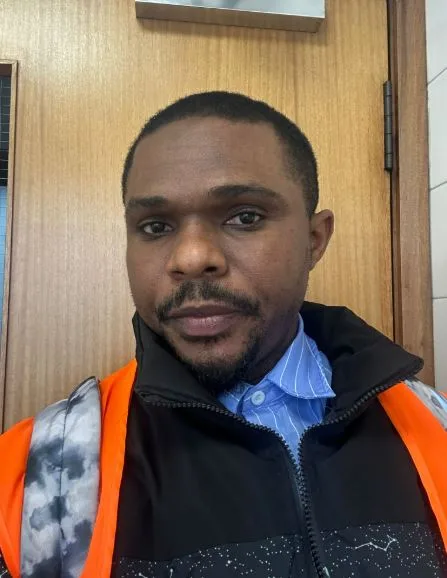
In an era where industrial complexity, regulatory pressure, and workforce expectations are rapidly evolving, occupational health and safety (OHS) is no longer a compliance function—it is a strategic imperative. At the forefront of this shift is Godson Uche Nwanmuo, whose work is redefining how organizations design, implement, and sustain safety systems at scale. Rather than incremental improvements, his approach focuses on systemic transformation—embedding intelligence, adaptability, and predictive capability into the core of safety operations.
Nwanmuo’s contribution to the field lies in advancing OHS from reactive incident management to proactive risk orchestration. Traditional safety frameworks often rely on lagging indicators—incident reports, audits, and historical data—limiting their ability to anticipate emerging threats. Recognizing this gap, he has developed and implemented a structured, data-driven safety architecture that integrates real-time monitoring, predictive analytics, and feedback-driven optimization. This model shifts safety systems from static procedures to dynamic ecosystems capable of learning and adapting continuously.
Central to his work is the concept of “capacity-aware safety engineering.” In many organizations, safety risks are not solely the result of hazardous conditions but of misalignment between operational capacity and workload demands. Nwanmuo’s framework introduces capacity modeling into OHS systems, allowing organizations to quantify workforce limits, environmental stressors, and operational strain. By aligning safety thresholds with real-time capacity data, his approach reduces systemic overload—one of the most overlooked contributors to workplace incidents.
Another defining element of his innovation is the integration of predictive risk modeling within safety governance. By leveraging machine learning techniques and structured risk ontologies, his systems identify patterns that precede incidents—ranging from equipment degradation to behavioral deviations. This enables organizations to intervene before risks materialize, transforming safety from a reactive safeguard into a forward-looking decision engine. Importantly, this predictive capability is not isolated; it is embedded within a closed-loop feedback system that continuously refines risk models based on new data.
Nwanmuo has also emphasized the importance of interoperability across enterprise systems. Safety data is often siloed, limiting its strategic value. His architecture connects OHS platforms with operational, maintenance, and human resource systems, creating a unified data environment. This integration ensures that safety considerations are embedded in everyday decision-making—from production scheduling to workforce deployment—rather than treated as an afterthought. The result is a more resilient organization where safety and performance are mutually reinforcing.
Beyond technical innovation, his work addresses one of the most persistent challenges in OHS: the gap between policy and practice. Many organizations struggle to translate safety frameworks into consistent on-the-ground behavior. Nwanmuo’s approach incorporates adaptive feedback mechanisms that capture frontline insights and feed them back into system design. This creates a participatory safety culture where workers are not just recipients of policies but active contributors to system improvement. By aligning human behavior with system intelligence, his model bridges the divide between design intent and operational reality.
His contributions have also extended to the development of scalable governance models for safety systems. As organizations expand across regions and regulatory environments, maintaining consistency in safety performance becomes increasingly complex. Nwanmuo has introduced modular governance structures that allow for localized adaptation while preserving global standards. This balance between standardization and flexibility ensures that safety systems remain robust across diverse operational contexts.
Importantly, his work is not confined to theory. Implementations of his frameworks have demonstrated measurable impact, including reductions in incident frequency, improved compliance metrics, and enhanced operational efficiency. These outcomes underscore a critical insight: when safety systems are designed as intelligent, adaptive infrastructures, they contribute not only to risk reduction but also to overall organizational performance.
What distinguishes Nwanmuo’s approach is its systems-engineering perspective. Rather than addressing safety challenges in isolation, he views them as components of a broader organizational ecosystem. This perspective enables the identification of root causes that span multiple domains—technical, human, and organizational—and the design of integrated solutions that address them holistically. It is this ability to operate at the intersection of disciplines that positions his work as a significant advancement in the field.
As industries continue to navigate increasing complexity—from automation and digitalization to evolving regulatory landscapes—the need for advanced safety systems will only grow. Nwanmuo’s contributions offer a blueprint for the future of OHS: one that is data-driven, adaptive, and deeply integrated into organizational strategy. His work demonstrates that safety is not merely a protective function but a source of competitive advantage when approached with the right level of innovation and rigor.
In redefining how organizations think about and implement occupational health and safety, Godson Uche Nwanmuo is not just improving existing systems—he is reshaping the field itself.