Planning a Second Story Addition: Common Mistakes to Avoid
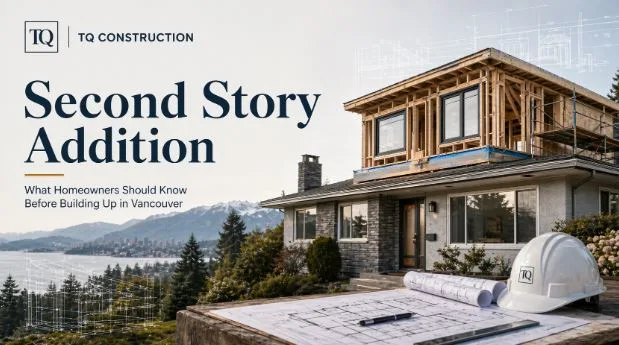
A second story addition can be one of the smartest ways to create more space in a home without giving up the yard or leaving the neighborhood you already love.
For many homeowners, it sounds like the perfect answer. You stay where you are, keep the lot you already own, and add the bedrooms, office, or living space your family now needs. In a city like Vancouver, where moving can be expensive and lot space matters, building up often makes more sense than building out.
But a second story addition is also a major project. It affects the structure of the home, the layout, the budget, the timeline, and daily life during construction. When the planning is weak, the project can become much harder than homeowners expected.
That is why the early stage matters so much.
Most problems in a second story addition do not begin during construction. They begin before that, when homeowners rush decisions, underestimate the work, or move forward without a clear plan. The good news is that many of these mistakes can be avoided.
With the right builder, realistic expectations, and a practical approach, the project can move much more smoothly. That is where working with an experienced team like TQ Construction makes a real difference. A well planned second story addition is not just about adding square footage. It is about making sure the new level works with the existing house, fits the family’s needs, and makes sense for the long term.
In this guide, we will look at the most common mistakes homeowners make when planning a second story addition and how to avoid them.
Mistake 1: Assuming every house is a good candidate
One of the biggest mistakes homeowners make is assuming they can simply add a new level to any house.
A second story addition is not only about design. It is also about structure. The existing foundation, framing, load paths, and overall condition of the home all need to be reviewed. Some homes can support a second floor more easily. Others may need structural reinforcement or major adjustments before the project can even move forward properly.
This is why planning should start with a proper assessment, not inspiration photos.
If homeowners get too attached to a design idea before understanding what the house can actually handle, disappointment usually follows. In some cases, the plan needs major changes. In others, the cost grows because the structural upgrades are more involved than expected.
A builder like TQ Construction helps homeowners understand the condition and potential of the home early, before the project goes too far in the wrong direction.
Mistake 2: Focusing only on the extra space
It is easy to get excited about the new square footage. More bedrooms, a larger family layout, a private primary suite, or extra room for work and guests all sound great.
But a second story addition should do more than just add rooms.
Some homeowners become so focused on gaining space that they do not stop to ask how the addition will improve the house as a whole. Will the stairs fit naturally? Will the main floor still flow well? Will the new upper level actually solve the problems the family is dealing with now?
More space does not always mean a better home.
The real goal should be improving how the home works every day. If the project adds square footage but creates awkward circulation, poor room placement, or a disconnected layout, it may not feel worth the investment.
That is why good planning focuses on function first. A smart second story addition should improve comfort, privacy, and usability, not just add rooms on paper.
Mistake 3: Underestimating the structural side of the project
Many homeowners think of a second story addition as a design project first. In reality, the structural side is just as important.
Adding another level means adding weight and changing how the home carries loads. That can affect the foundation, walls, beams, and other structural elements throughout the house. In some homes, the first floor layout may also need changes to properly support the new upper level.
This is not a small issue. It is one of the core parts of the project.
Homeowners who underestimate this stage often get surprised by extra work, added cost, or design limitations later. That is why it is so important to involve the right professionals early and work with a builder who understands the full picture.
A company like TQ Construction helps bring practicality into the planning stage so the project is based on real conditions, not guesses.
Mistake 4: Rushing the layout and design
A rushed design causes problems long after the drawings are done.
This is especially true in a second story addition, where the new level needs to feel connected to the old home. Homeowners sometimes focus too much on the upstairs rooms and forget that the whole house needs to work together.
A few questions matter a lot here:
- Where Will The Stairs Go
- How Will The Upper Floor Connect To The Main Level
- Will The Existing Main Floor Need Reworking
- How Will Privacy Be Handled Between Levels
- Will Natural Light Still Work Well In The Home
- Will The Exterior Still Look Balanced
These are not small details. They shape how successful the addition feels once it is complete.
If the design is rushed, the house can feel awkward inside and outside. The stairs may feel forced. The upstairs may work, but the lower level may suffer. Or the home may look top-heavy from the street.
A strong design phase gives the project a better foundation and helps avoid expensive changes later.
Mistake 5: Choosing a builder based only on price
This happens in all kinds of renovation and construction work, but it can be especially risky with a second story addition.
A lower quote may look appealing at first, but homeowners need to look deeper. Was the structural work fully considered? Was the scope detailed clearly? Were the challenges of working with an existing house properly accounted for? Was enough thought given to the planning side?
If the number looks low because important parts of the project were not fully understood, that usually shows up later through added costs, confusion, and delays.
A second story addition needs more than a contractor who can frame walls. It needs a builder who can plan carefully, think ahead, and coordinate the old and new parts of the house in a smart way.
That is one reason many homeowners choose TQ Construction. The value is not only in building the space. It is in helping the homeowner move through the process with clearer expectations and fewer avoidable problems.
Mistake 6: Setting an unrealistic budget
A second story addition is a major investment, and one of the most common mistakes is planning around a budget that does not match the actual scope.
Homeowners sometimes compare it to a smaller renovation or assume the cost is mainly about framing and finishes upstairs. In reality, the project often includes much more.
Cost factors may include:
- Structural Reinforcement
- Design And Drawings
- Permit And Approval Costs
- Roof Removal Or Reworking
- Stair Construction
- Electrical Updates
- Plumbing Changes
- Heating And Ventilation Work
- Insulation And Drywall
- Interior Finishes
- Exterior Finishes
- Temporary Living Arrangements If Needed
The goal is not to scare homeowners away. It is to help them plan honestly.
A realistic budget gives the project a stronger start. It also helps homeowners decide where to spend, where to simplify, and what kind of scope makes sense for their home and goals.
Mistake 7: Forgetting how the project affects daily life
A second story addition is not like repainting a room or updating a kitchen backsplash. It can affect the way the home is lived in for a meaningful stretch of time.
Some homeowners do not think about this enough until construction is already underway.
Depending on the scope, there may be noise, dust, limited access to parts of the home, and times when staying in the house becomes difficult. In some cases, the family can remain in the home through most of the work. In others, temporary relocation may be the better choice.
This is why practical planning matters.
Homeowners should ask questions such as:
- Will We Be Able To Stay In The House
- Which Areas Will Be Affected First
- How Long Will The Most Disruptive Work Last
- When Will Stairs Be Opened Up
- What Safety Measures Will Be In Place
- Would Moving Out Temporarily Make More Sense
These questions help families prepare properly and avoid being caught off guard.
Mistake 8: Ignoring permits and city requirements
Some homeowners treat permits like a technical detail that can be handled later. That is a mistake.
In Vancouver, a second story addition involves approvals, drawings, and local rules that can shape the entire project. Height limits, setbacks, zoning, structural documentation, and other requirements can affect what is possible on the property.
If homeowners do not account for this early, they may build their expectations around a plan that needs to change later.
Permits are not just paperwork. They are part of how the project gets defined and approved. They also affect timing, which is another reason they should be taken seriously from the beginning.
A builder with local experience, like TQ Construction, helps homeowners understand this process more clearly so it does not feel confusing or disconnected from the rest of the project.
Mistake 9: Thinking only about the inside of the house
A second story addition changes more than the interior layout. It also changes how the home looks from the outside.
This matters more than many homeowners expect.
If the new upper level feels too bulky, too high, or disconnected from the original house, the final result can feel visually off. Even if the new rooms work well, the home may not feel balanced from the street.
That is why exterior planning should be part of the early design discussion.
Things like roofline, window placement, exterior materials, massing, and overall proportion all matter. The goal is to make the house feel complete, not like an old home with something dropped on top of it.
When done well, a second story addition should look natural and intentional.
Mistake 10: Making late changes after planning is underway
Changes happen in construction, but too many late changes often create trouble.
Once the layout, structural approach, and scope are moving forward, changes can affect cost, timing, and coordination. A simple shift in stair placement, room size, window layout, or bathroom location may cause ripple effects across the whole design.
This is why homeowners should take the planning stage seriously and make major decisions early where possible.
That does not mean every small finish needs to be locked in immediately. But the big moves should be thought through before the project reaches active build stages.
A stronger planning phase reduces decision stress later and helps the project stay on track.
Mistake 11: Not planning for long term needs
A second story addition is a major investment, so it should solve more than just today’s problem.
Some homeowners plan only around what the family needs right now. But a better approach is to think a few years ahead. Will the layout still make sense if the children get older? Will there still be enough privacy? Could a room be flexible enough to become an office, guest room, or study area later?
Long term thinking does not have to make the project complicated. It simply helps the addition stay useful for more years.
The strongest second story additions are the ones that improve daily life now while still making sense as needs change over time.
Mistake 12: Poor communication during planning
A lot of project stress comes from poor communication, not just bad construction.
When homeowners do not fully understand the process, budget, or upcoming decisions, the project feels more uncertain than it needs to. When builders do not get clear input from homeowners, planning can drift or important priorities can get missed.
That is why communication should be treated as part of the planning process itself.
Homeowners should know:
- Who Their Main Point Of Contact Is
- How Updates Will Be Shared
- When Key Decisions Need To Be Made
- How Changes Will Be Discussed
- What The Expected Timeline Looks Like
With a builder like TQ Construction, communication is part of helping homeowners feel more prepared from the start, not just something that happens when issues come up.
How to avoid these mistakes from the start
The easiest way to avoid major problems in a second story addition is to slow down and plan properly before construction begins.
That means:
- Start With A Structural Review
- Be Honest About Your Budget
- Focus On Function, Not Just Added Space
- Give The Design Stage Enough Time
- Take Permits Seriously
- Think About How The Exterior Will Look
- Consider Daily Life During Construction
- Make Major Decisions Early
- Choose A Builder For Experience And Process, Not Just Price
These steps may sound simple, but they make a major difference in how the project feels from beginning to end.
Final thoughts
A second story addition can be a great way to stay in the home and neighborhood you love while creating the space your family now needs. But it only works well when the planning is thoughtful.
Most costly problems come from early mistakes like unrealistic budgets, rushed design, weak structural understanding, or choosing the wrong builder. The more clearly these issues are handled from the start, the smoother the project tends to be.
That is why working with an experienced team like TQ Construction matters. A second story addition should not feel like a gamble. With the right planning, it can become a practical, well-designed improvement that adds real comfort and long term value to the home.