World Health Summit 2026 Announces New Sustainable Travel Grants for Scholars
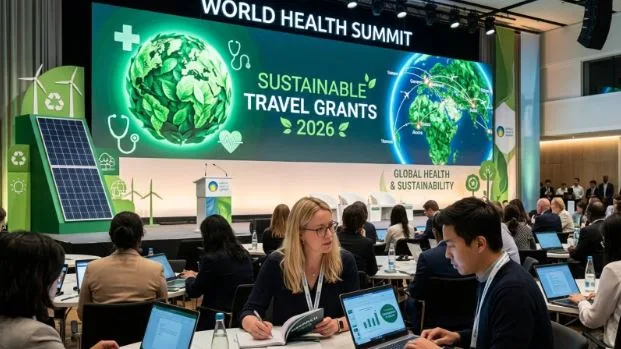
The global academic and healthcare community is witnessing a significant development as the World Health Summit 2026 officially announces a new initiative aimed at supporting researchers and emerging scholars through sustainable travel grants. This move is being recognized as a major step toward making international health dialogue more inclusive, environmentally responsible, and accessible to talent from developing and underrepresented regions.
According to Conference Alert, this initiative reflects a growing shift in how global events are structured, with sustainability and academic equity becoming central priorities in large-scale international summits. As highlighted by Conference Alert research updates, there has been a consistent rise in demand for funding models that support both environmental responsibility and equitable access to global conferences.
A Landmark Announcement at World Health Summit 2026
The World Health Summit 2026 is widely regarded as one of the most influential global platforms for discussing public health challenges, medical innovation, and international healthcare policy. This year’s announcement introduces a structured funding program designed specifically for scholars, researchers, and young professionals who wish to participate but face financial or logistical barriers.
The newly introduced sustainable travel grants aim to support participation from diverse regions, especially low and middle-income countries, ensuring that knowledge exchange is not limited by geography or economic constraints.
Conference Alert reports that global participation is increasing, particularly from regions that have traditionally been underrepresented in international health discussions. Organizers have emphasized that this initiative is not just about funding travel but about reshaping how global health collaboration is approached in a more environmentally conscious and inclusive way.
Understanding the Sustainable Travel Grants Initiative
The introduction of sustainable travel grants marks a progressive shift in international academic mobility. These grants are designed to reduce the carbon footprint associated with global conferences while also ensuring equitable access for talented individuals worldwide.
Key objectives of the program include:
- Supporting early-career scholars and researchers in global health
- Encouraging the use of low-carbon travel options
- Expanding participation from underrepresented regions
- Promoting long-term sustainability in international academic events
The program highlights a dual focus: environmental responsibility and academic inclusion. Instead of traditional travel funding models, the initiative integrates sustainability criteria, encouraging participants to consider eco-friendly travel arrangements wherever possible.
Eligibility Criteria for Scholars and Researchers
The World Health Summit 2026 sustainable travel grants are expected to follow a structured selection process. While final guidelines may vary, the general eligibility framework focuses on academic merit, research relevance, and regional representation.
Applicants are typically expected to meet the following conditions:
- Must be actively engaged in health-related research or policy work
- Should be students, early-career researchers, or professionals in global health fields
- Must demonstrate clear relevance of their work to the summit’s key themes
- Preference may be given to applicants from low-income or developing regions
- A demonstrated commitment to sustainability or public health innovation may strengthen applications
This structured approach ensures that the grants support individuals who can meaningfully contribute to discussions at the summit while also benefiting from international exposure.
Key Benefits of the Travel Grant Program
The introduction of this funding initiative brings multiple benefits not only to participants but also to the global health ecosystem as a whole.
Financial Support for Global Participation
One of the most immediate advantages is the reduction of financial barriers. Many promising scholars are often unable to attend international conferences due to high travel and accommodation costs. The sustainable travel grants address this issue directly.
Encouraging Knowledge Exchange
By enabling wider participation, the program enhances the diversity of ideas and perspectives shared during the World Health Summit 2026. This leads to more comprehensive discussions on global health challenges such as pandemics, healthcare inequality, and digital health transformation.
Promoting Environmental Responsibility
The initiative actively encourages the use of lower-emission travel options. This aligns with global efforts to reduce the environmental impact of international conferences and supports long-term sustainability goals within the academic community.
Strengthening Global Collaboration
The program fosters stronger international networks by allowing scholars from different regions to connect, collaborate, and share research insights. This is expected to accelerate innovation in global health policy and medical research.
Application Process and Selection Framework
While detailed application procedures are expected to be released closer to the event, Conference Alert reports that the process will likely be fully digital and streamlined to ensure accessibility.
Applicants may need to submit:
- A detailed research or academic proposal
- Curriculum vitae highlighting academic achievements
- Statement of purpose explaining the relevance of attending the summit
- Evidence of institutional affiliation or academic enrollment
- Optional recommendation letters from academic supervisors or mentors
Selection panels are expected to evaluate applications based on academic merit, relevance to the summit’s agenda, and potential impact of the applicant’s work in the field of global health.
Impact on Global Health Research and Innovation
The introduction of sustainable travel grants at the World Health Summit 2026 is expected to have long-term implications for the global health research ecosystem.
By increasing participation from diverse geographical regions, the summit is likely to benefit from a broader range of perspectives on pressing health issues. This includes topics such as infectious disease preparedness, mental health systems, healthcare accessibility, and digital transformation in medicine.
Experts believe that increased inclusivity will lead to more balanced policy recommendations and innovative research collaborations. It also ensures that global health discussions are not dominated by a limited set of countries or institutions.
Furthermore, the sustainability aspect of the initiative reflects the growing awareness that academic events must align with global climate goals. This represents a significant evolution in how international conferences are structured and executed.
A Step Toward a More Inclusive and Sustainable Future
The announcement of sustainable travel grants at the World Health Summit 2026 represents more than just financial support—it signals a broader transformation in how global academic collaboration is approached.
By prioritizing both sustainability and inclusivity, the initiative sets a precedent for future international conferences. It encourages other global events to adopt similar models that reduce environmental impact while expanding access to knowledge-sharing platforms.
As the world continues to face complex health challenges, initiatives like this ensure that the brightest minds—regardless of location or financial background—can contribute to solving them.
Conclusion:
The World Health Summit 2026 has taken a significant step forward with the introduction of its sustainable travel grants for scholars, reinforcing its commitment to global collaboration, environmental responsibility, and academic inclusivity.
With support from platforms like Conference Alert, this initiative is expected to gain widespread visibility among researchers and institutions worldwide. As the program unfolds, it is likely to reshape how international health conferences approach participation, sustainability, and knowledge exchange in the years ahead.