How to Survive Blood Moon Horde Night in 7 Days to Die
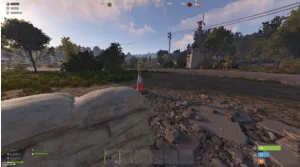
The sky bleeds red. Somewhere in the distance, the growling starts. If there’s one thing veteran players of 7 Days to Die agree on, it’s that nothing quite prepares a newcomer for their first Horde Night. The Blood Moon arrives every seven in-game days like clockwork, and when it does, every zombie on the map gets one single objective — hunt down the player and tear through anything standing in the way. Walls, floors, support beams — nothing is off-limits. Surviving this is not about luck. It’s about what was done in the six days leading up to it.
What Actually Happens During a Blood Moon
Most new players assume Horde Night is just “more zombies.” That misconception gets a lot of bases destroyed.
The Blood Moon fundamentally changes zombie behavior. During the day, zombies shuffle around, react to noise, and occasionally stumble into the player. On Horde Night, they pathfind directly toward the player’s position with a kind of terrifying intelligence. They will dig underground if blocked above ground. They will target structural weak points rather than bashing blindly at the nearest wall. They’ll climb, stack on top of each other, and swarm in coordinated waves that get progressively worse through the night.
Horde difficulty also scales based on something called “game stage” — a hidden value that factors in the player’s level, the current day number, and the difficulty setting. A Day 7 horde looks nothing like a Day 49 horde. By the later cycles, players face irradiated zombies, feral wights moving at terrifying speed, and the dreaded demolisher — a hulking armored enemy carrying an explosive backpack capable of leveling walls in seconds.
Why a Dedicated Horde Base Changes Everything
One of the smartest shifts a player can make early on is deciding not to defend their main base on Horde Night. The main base is usually sprawling, full of irreplaceable storage, and structurally compromised from previous raids and repairs. Losing it to a horde is catastrophic.
A dedicated horde base — sometimes called a “kill house” by the community — is built with one purpose in mind. No loot stored inside. No wide-open rooms. Just reinforced walls, tight corridors, and everything angled toward making the player’s job easier when the red sky arrives.
The best locations tend to be elevated. Rooftops of existing concrete structures, water towers, or purpose-built platforms force zombies to approach from below, significantly limiting attack angles. Concrete is the minimum material worth using for a horde base. Reinforced concrete or steel frames are ideal. Wood and flagstone will not last past Day 14 hordes.
The shape of the base matters as much as the material. Long, straight kill corridors — one block wide — funnel the entire horde into a single predictable line. The player sits at the far end, and every trap, turret, and magazine is aimed down that corridor. It sounds almost too simple, but it’s devastatingly effective.
The Six Days Before Are More Important Than the Night Itself
Veterans will say it plainly: Horde Night is won or lost in the preparation phase.
Ammunition is the first priority. Running dry on bullets at 3 AM with two hours of horde left is one of the most helpless feelings in the game. Thousands of rounds of the primary weapon’s ammo should be cached before dusk on Day 7. By later game cycles, that number climbs significantly. Craft what can be crafted, scavenge what cannot, and always keep a reserve that feels slightly uncomfortable to look at — that’s how much is actually needed.
Traps are the second priority. Blade traps, electric fences, and dart traps deal passive damage that chips away at the horde between active engagements. Placed correctly inside the kill corridor, they can handle hundreds of zombies per night without the player firing a single shot. The key word is “placed correctly” — traps need power, proper orientation, and enough spacing to avoid destroying each other in the crossfire.
Medical supplies, food, and water round out the list. Stamina drops in combat, and hunger or dehydration during a horde wave is a death sentence in slow motion.
Players who recently picked up a 7 Days to Die Steam key from LootBar can jump into a fresh save knowing they’re working with a legitimate, activated copy — one less thing to worry about before that first Blood Moon rolls around.
Building a Weapon Loadout for Horde Night
General-purpose loadouts fall apart quickly when the horde hits. A horde-specific loadout needs range, crowd control, and something for dealing with armored threats.
The pump-action or double-barrel shotgun handles the bulk of close-quarters work inside the kill corridor. At point-blank range, buckshot hits multiple zombies in a single blast, making it extraordinarily efficient against tightly grouped enemies. Stagger effects also push zombies backward, buying critical seconds when they start clustering near the player position.
For mid-range control, a semi-automatic rifle or hunting rifle picks off faster zombies before they reach the corridor entrance. Special enemies like screamer zombies, who can summon reinforcements, should always be prioritized and taken down at range the moment they appear.
Explosives are underused by most players. A cluster of Molotov cocktails thrown into a packed group of corridor zombies deals sustained fire damage for several seconds, chewing through health without spending valuable ammunition. Hand grenades are similarly powerful when demolishers appear — targeting the explosive pack on their back detonates them safely at range rather than letting them reach the walls.
Turrets, when affordable, are borderline mandatory for later hordes. A pair of well-placed shotgun turrets inside the kill corridor can handle entire waves on their own, freeing the player to focus on special enemies and structural repairs.
Managing the Night as It Happens
Horde Night is not a passive experience even with good preparation. Active management separates survivors from respawn screens.
Stay elevated. The moment ground level becomes a necessity, the odds shift dramatically against the player. Shooting down into the kill corridor from a raised position above the entrance is the optimal angle — enemies move in a straight line, traps are dealing damage, and the player has clear sightlines without being surrounded.
Repair constantly during lulls. Between wave surges, there are brief moments of relative quiet. Use those seconds to patch the most-damaged corridor wall or reinforce a support block showing significant wear. Even a partial repair can hold a block together long enough to matter.
Watch the demolisher above everything else. The moment one of those armored giants appears in the horde, it becomes the top priority. Letting a demolisher reach the base wall is an almost certain structural collapse. Aim for the backpack — the explosion damages nearby zombies and removes the threat without the player ever needing to close distance.
Mistakes That Get Players Killed Every Time
Defending the main base. It almost never works past Day 14. Build a separate kill house and save the main base for daytime life.
Using wood or stone for the horde base. These materials are training wheels. Upgrade to concrete before the first Blood Moon or expect a collapse by midnight.
Ignoring the base’s foundation. Zombies dig. Any elevated horde base without a protected underside will eventually have its supports tunneled out, bringing the entire structure down with the player inside it.
Not managing game stage. Leveling too quickly — especially on higher difficulty settings — triggers horde compositions the current gear cannot handle. Adjust the pacing if the hordes start feeling impossible. There’s no shame in tuning the settings while learning.
Getting the Game and Getting Started
For anyone who hasn’t yet tried 7 Days to Die, the learning curve is real but deeply rewarding. Few games deliver the same tension as watching that Day 7 countdown tick toward zero with a half-finished base and not enough ammo.
Picking up a 7 Days to Die Steam key through LootBar is a reliable way to get started. LootBar is a well-regarded game shop that stocks a wide variety of digital titles at genuine prices, with a checkout process that’s straightforward and fast. For players already familiar with the store, the LootBar game key purchasing experience is consistently smooth — no hoops to jump through, no uncertainty about activation. It’s the kind of reliability that matters when the goal is to get into the game and start building before that first horde arrives.
The Blood Moon Will Come Again — Be Ready
Surviving one Blood Moon is satisfying. Surviving ten in a row with an increasingly fortified base, a refined weapon rotation, and traps that handle half the work automatically — that’s the loop that makes 7 Days to Die genuinely addictive. The horde is not the end of the game. It’s the rhythm of it. Build smarter with every cycle, stock more ammunition than feels necessary, and treat each Horde Night as a benchmark for how far the base has come since the last one.