Manufacturing Insights Behind Reliable LED Strips
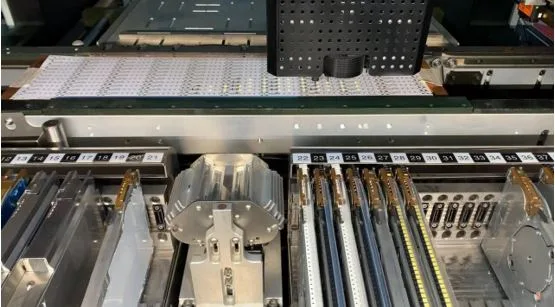
Reliable LED strips are not born at the installation site—they are engineered, tested, and refined long before they reach a contractor’s hands. Behind every stable, flicker‑free, color‑consistent strip is a manufacturing process that treats reliability as a design target, not a lucky by‑product.
This article digs into the manufacturing insights that determine whether an LED strip will perform reliably in real‑world projects, from material selection and PCB design to process control, testing, and long‑term support. We’ll also use engineering‑driven brands such as SignliteLED as a representative example of how professional manufacturers build reliability into their products from the ground up.
Why Manufacturing Quality Matters
In professional projects—retail, hospitality, offices, signage, or façades—the cost of failure is far higher than the cost of the strip itself. A single unreliable batch can trigger:
- Costly site revisits and re‑installation
- Damage to brand image when signs or coves fail
- Disputes over warranty and responsibility
Reliable LED strips, by contrast, share three core attributes that all trace back to manufacturing:
- Consistency: Same color, output, and behavior across batches and lengths
- Durability: Stable performance under heat, bending, and long operating hours
- Predictability: Performance matching the datasheet, so designers can trust calculations
Manufacturing is where these attributes are created—or lost.
Foundation: Component and Material Selection
Every reliable LED strip starts with reliable components. The early choices made in a factory often decide how the product behaves years later.
Key elements include:
- LED chips:
- Tight binning for color temperature and flux
- Proven LM‑80 data from reputable chip makers
- PCB (FPC) material:
- Adequate copper thickness (often 2 oz or more for project work)
- High‑temperature, flexible substrate to withstand bending and re‑rolling
- Resistors and ICs:
- Correct derating so they never run at their absolute limits
- Adhesives and tapes:
- Genuine 3M or equivalent with proper temperature rating
- Encapsulation and coatings (for IP‑rated strips):
- Non‑yellowing silicone or polyurethane with stable optical properties
The best manufacturers treat incoming material inspection as the first quality gate, not a formality.
PCB Design: Hidden Engineering That Drives Reliability
The layout and design of the flexible PCB is one of the most important—yet least visible—determinants of reliability.
- Copper Width and Routing
- Wider copper traces reduce voltage drop and heat build‑up.
- Thoughtful routing ensures even current distribution, so no section is over‑stressed.
- Segment and Cut‑Point Design
- Properly engineered cut points keep electrical integrity after trimming.
- Logical segment lengths (e.g., 24 V strips with longer segments) minimize wiring complexity on site.
- Thermal Path Consideration
- Components are spaced to manage hot spots.
- For high‑power strips, pairing with aluminum profiles is accounted for in the design.
A well‑designed PCB allows the strip to hold up under bending, rolling, and thermal cycling without cracked solder joints or broken traces.
Process Control: How Strips Are Actually Built
Even with good components and PCB design, poor process control will produce unreliable strips. High‑reliability manufacturers standardize and document each stage.
Typical key steps:
- SMT paste printing with accurate deposition volume
- Automated component placement with positional tolerance control
- Reflow soldering under carefully tuned temperature profiles
- Post‑reflow inspection using AOI (automatic optical inspection) or trained QC staff
- Segment joining and welding for long reels, followed by full‑length testing
The more critical the project market (e.g., architecture, signage, hospitality), the more often quality checks are inserted into the process.
COB vs. SMD: Manufacturing Differences That Affect Reliability
Two main technologies dominate LED strips today:
- SMD strips: Individual LED packages soldered to the FPC
- COB strips: Bare LEDs directly on the FPC, then encapsulated into a continuous luminous line
From a manufacturing perspective:
- COB requires more precise control of chip placement and encapsulation uniformity
- SMD is more sensitive to solder joint quality and mechanical stress at each diode
If produced with proper process control, both can be reliable. Inconsistent process, however, shows up differently: SMD strips fail at solder joints, while low‑quality COB strips show dark spots, bubbles, or early lumen decay in the encapsulant.
Multi‑Stage Quality Control: Not Just a Final Test
In reliable factories, quality control is distributed across many stages instead of being pushed to the end. Typical checkpoints include:
- IQC (Incoming Quality Control): Chip, PCB, tape, and resin inspection
- In‑process QC:
- After SMT, checking for missing or skewed components
- After reflow, verifying proper solder wetting and joint formation
- Functional testing:
- Power‑on testing for each reel
- Checking brightness uniformity and current draw
- Stress and aging tests:
- Thermal aging (e.g., 4–24 hours at elevated temperature)
- Humidity tests for IP‑rated products
A good rule of thumb: the more times a strip is tested before packaging, the more confidence you can place in its long‑term performance.
Thermal Management: The Silent Killer of LED Strips
Heat is the primary enemy of LED lifetime and color stability. Manufacturing decisions directly impact how well an LED strip manages heat:
- Chip selection: Some LEDs are designed for higher junction temperatures with better lumen maintenance
- Power density: Over‑driven low‑density strips run hotter than well‑designed high‑density strips with proper current sharing
- Encapsulation choice: Cheap resins can trap heat or degrade quickly under high temperatures
- Recommended pairing: Professional manufacturers specify compatible aluminum profiles and installation guidelines for thermal performance
Reliable brands publish realistic operating temperature limits and design their products to stay within safe ranges under typical installation conditions.
Color Consistency and Binning Strategy
In commercial and architectural projects, color consistency is essential. Poor binning or mixing batches indiscriminately leads to visible color shifts along coves, signs, or façades.
A reliable strip manufacturer will:
- Source LEDs in tight bins for CCT and flux (often within a 2–3 SDCM ellipse)
- Lock bin strategies per product family so repeat orders match earlier projects
- Use well‑controlled phosphor formulations and encapsulation that do not drift quickly in color
This is especially important in high‑visibility applications such as retail, museums, and brand signage, where any perceptible color mismatch undermines the visual design.
Mechanical and Stress Testing
LED strips experience stress long before they reach the installation site—during rolling, unrolling, cutting, handling, and mounting.
Manufacturing for reliability includes testing for:
- Bending and torsion resistance of the FPC
- Peel strength of copper traces on the substrate
- Adhesion strength of the backing tape to both the strip and representative mounting surfaces
- Resistance to repeated rolling/unrolling cycles
Factories that simulate these stresses in controlled tests are less likely to ship strips that crack, delaminate, or lose conductivity in the field.
Waterproofing and Environmental Protection
For IP‑rated strips (IP65, IP67, IP68), reliability depends heavily on the encapsulation process and materials. Common failure modes—yellowing, cracking, moisture ingress—are usually the result of shortcuts in manufacturing.
Reliable processes focus on:
- Proper surface preparation before potting or coating
- Degassing procedures to remove air bubbles from resin
- Accurate mixing ratios and curing conditions
- UV‑stable, non‑yellowing formulations for outdoor use
Manufacturers who test IP strips in accelerated weathering and salt‑spray conditions can provide more realistic lifetime expectations for exterior or coastal installations.
Documentation: The Manufacturing Story You Can Actually See
Quality manufacturing is invisible—unless you look at the documentation. Serious manufacturers support their reliability claims with:
- Detailed datasheets including realistic operating parameters
- LM‑80 / TM‑21‑based lifetime projections (when using tested LEDs)
- Photometric data (IES/LDT files) for lighting calculations
- Clear wiring and installation instructions
- Transparent warranty policies tied to specific conditions
A useful perspective on how to evaluate this kind of information—especially from China‑based COB strip suppliers—can be found in resources provided by SignliteLED, which discusses practical criteria buyers can use when comparing manufacturers.
How Project‑Oriented Manufacturers Work
Reliable strips rarely come from purely retail‑oriented factories. The most trustworthy products usually come from manufacturers who design specifically for projects, not just e‑commerce listings. These companies:
- Engage with engineers and lighting designers during specification
- Offer customizations (lengths, connectors, CCTs, special coatings) based on project needs
- Maintain consistent platforms so that product families stay compatible over many years
- Are willing to share factory photos, test methods, and process outlines on request
This project mindset reduces surprises for contractors and gives specifiers confidence that what they draw is what will be delivered—and will keep working.
Practical Checklist for Evaluating Manufacturing Reliability
When you evaluate LED strip suppliers, especially for demanding commercial or architectural projects, you can ask questions that directly probe manufacturing quality:
- Components & PCB
- What copper thickness is used?
- What LED brands and bins are specified?
- Process & QC
- How many times is each strip tested before shipping?
- Are there aging tests, and how long are they?
- Thermal & Environmental
- What is the rated operating temperature range?
- How is waterproofing or encapsulation carried out and tested?
- Documentation & Traceability
- Are photometric and reliability test reports available?
- Can the manufacturer trace each reel to production and material lots?
- Support & Engineering
- Is there engineering support for dimming, wiring, and profile pairing?
- How are warranty claims handled in practice?
Manufacturers who answer these questions clearly—and can back answers with documentation—are far more likely to deliver strips that perform reliably over time.
The Role of Brand and Long‑Term Consistency
While manufacturing details are technical, they eventually shape brand reputation. Over time, reliable manufacturers become the preferred partners for:
- Multisite retail rollouts
- Corporate identity and signage programs
- Hospitality brands that demand consistent atmosphere across properties
- OEMs integrating strips into their own luminaires
Brands like SignliteLED position themselves not only as factories but as engineering‑driven partners. Their long‑term value comes from keeping manufacturing discipline stable as they scale and as product generations evolve—so repeat orders match previous projects and project teams can keep specifying the same families with confidence.
Conclusion
Reliable LED strips are the result of many interconnected manufacturing decisions: from selecting LEDs and designing the PCB to controlling SMT processes, managing heat, testing under stress, and documenting performance honestly.
For serious projects, choosing a supplier is effectively choosing a manufacturing philosophy. When you select partners who treat reliability as an engineering objective—not a marketing word—you get LED strips that uphold the design vision, minimize maintenance, and protect your reputation long after the lights are switched on.