CAD Strengthens as GDP Growth Outpaces Forecasts
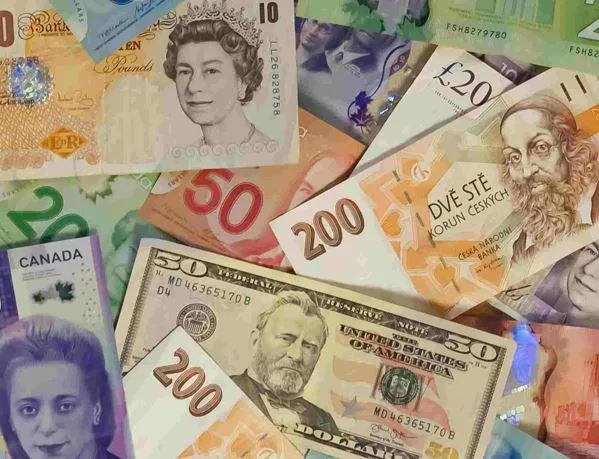
CAD Gains Momentum as Canada GDP Growth Beats Expectation
The Canadian dollar is at its strongest in the past month, with the economy up 0.1% according to January’s GDP report. This comes after Q4 2025 returned a negative 0.6% growth rate, performing worse than the initial projections of 0% to 1.5% by top financial institutions like the Bank of Canada and the International Monetary Fund.
For 2026, the Bank of Canada estimates a growth rate of 1.1%. However, with January recording 0.1%, analysts expect the central bank to revise the GDP projection upwards. The Canadian dollar, in turn, has recorded a 1.44% gain over the past 12 months, rising slightly against the dollar amid more positive economic growth.
Canada’s GDP growth edges higher according to latest reports
A quick look at the USD/CAD pair on a forex trading app shows the Canadian dollar has been gaining strength against the dollar in the past few weeks. The main reason is due to increasing economic activity, fueled mainly by the oil and gas industry. The January report on real gross domestic product shows an increase to 0.1% in the Canadian economic growth rate. This follows the 0.2% GDP recorded in December.
Out of 20 major industrial sectors, only 9 recorded growth. According to the Canadian government, goods-producing industries are responsible for driving the most growth. Mining, quarrying, and oil and gas extraction, construction, finance, retail trade, insurance, and utilities contributed positively to the GDP, while sectors like manufacturing, transportation, and warehousing contracted.
Mining, quarrying, and oil and gas extraction rebounded significantly, jumping 1.2% due to widespread increases in crude petroleum and natural gas extraction, as well as a surge in coal and potash mining. Construction continued a steady upward trajectory, expanding 1.1% for its third consecutive month of growth across all subsectors. The economy also saw a boost from consumer and investor activity. Retail trade grew 0.8%, led by general merchandise and auto sales, while the finance and insurance sector climbed 0.5%, its largest increase since September 2025. The growth is directly tied to a significant rise in foreign investments in Canadian bonds.
Despite these gains, the economy faced significant headwinds from industrial shutdowns and severe winter weather. The manufacturing sector contracted 1.4%, heavily impacted by prolonged winter shutdowns and retooling at Ontario auto assembly plants. This dragged the wholesale trade sector down by 1.2% due to falling auto production and exports. Extreme winter storms further stifled growth, causing a 0.7% drop in transportation and warehousing, as severe snowfall disrupted urban transit systems and forced widespread flight cancellations at Canada’s busiest airports.
Meanwhile, the real estate sector recorded its first decline in 10 months, shrinking 0.2% amid falling national home resales. In addition to the broad overview of growth across several industrial sectors for January, Statistics Canada reports a 0.2% GDP growth in February, although subject to further reviews.
Canadian dollar holds strong despite global geopolitical conflicts
In the past 12 months, the Canadian dollar has held up against the US dollar, with the current USD/CAD exchange rate now at 1.3661, the strongest in the past month. As a currency that is closely correlated with oil prices, the Canadian dollar has been increasingly volatile in the past few months. Canada supplies 60% of US oil imports, and disruptions to crude oil acquisition place the US in a bit of a chokehold. The ongoing restrictions on the passage of oil vessels in the Strait of Hormuz have also placed a strain on oil supply across international space.
Despite ongoing negotiations between the US and Iran, the Strait is not back to its prewar operational capacity. Weekly statements from US President Donald Trump and Iranian stakeholders have left many investors uncertain about currencies with heavy dependence on oil prices like the CAD. However, higher oil prices have posted favorable price momentum for the Canadian dollar, although this also leaves the currency open to price instability. Although CAD trading charts show some price volatility, there is no tangible sell pressure, and prices are still holding up against the dollar.
Growth Expectations for the Canadian Dollar
With the Canadian dollar holding strong amid higher energy prices and inflows of foreign exchange into Canadian government investment bonds, the loonie is likely to edge higher in the coming weeks.
Currently, even with the US and Iran agreeing to a ceasefire, oil tanker movements are still largely limited. Economists predict that even when the Strait of Hormuz becomes fully open without military sabotage to oil tankers, it would take several months for the supply chain to become fully efficient.
Concerns about a full-scale global energy crisis continue to persist. As a major global exporter of oil, in the case of a global energy crisis, demand for the Canadian dollar will increase, causing it to strengthen and contribute more income to GDP growth. In the meantime, the Canadian dollar continues to hold strong, showing signs of gradual growth on higher time frames.