Why the same Steam game costs different prices at different stores: an explainer
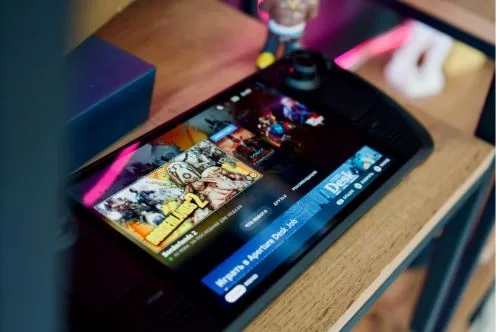
Most people who buy PC games on Steam pay whatever price the Steam page shows them. That is the natural default. The Steam Store is where their library lives, where their card is saved, and where the click-to-purchase friction is lowest. Understandable behaviour.
What is less understandable, when you look at it closely, is that this default routinely costs buyers between 20 and 40 percent more than they would pay for the same game, the same Steam key, at a legitimate retailer one Google search away. This article explains how that situation came to be, why it is not going away, and what you can do about it.
The basic mechanic of PC game distribution
When a publisher releases a game on PC, they are not selling exclusively through Steam. They are producing a stock of activation keys that they distribute through multiple authorised channels. The Steam Store is one of those channels. So are GOG, the Epic Games Store, the publisher’s own storefront, and a long list of authorised key retailers including CDKeys, Fanatical, Humble, Green Man Gaming, and others.
Each of these retailers buys keys directly from the publisher, often at negotiated wholesale rates that depend on volume committed, region of sale, and the specific terms of the deal. The retailer then sets a consumer price based on their margin, their competition, and any promotion they want to run. The publisher gets paid per key sold regardless of which retailer made the sale. Steam takes a percentage on Steam-direct sales, but not on keys redeemed from other retailers, which means publishers actually keep a higher share when their game sells through authorised key retailers.
The result is that the same Steam activation key, which produces an identical game in your Steam library, can be sold at meaningfully different prices depending on which retailer you buy from.
Why prices vary so much
Several structural factors create the gap.
Wholesale pricing is not uniform. Publishers negotiate different rates with different retailers. A retailer that commits to buying 100,000 keys upfront pays less per key than one buying 10,000. A retailer that runs a promotion across an entire game catalogue can amortise margin differently than one that prices each title individually.
Regional pricing creates arbitrage opportunities. A Steam key activated globally is the same product, but its wholesale cost varies by region. Retailers in regions with lower wholesale costs can offer that key globally at prices below the Steam Store default. This is not grey market activity. It is authorised distribution that simply takes advantage of the publisher’s own pricing structure.
Retailer competition is real. With dozens of authorised key sellers competing for the same buyers, prices are driven down. Steam, by contrast, has no incentive to compete with itself. The Steam Store price reflects what the publisher set as their global recommended retail price, not what the market clears at.
Promotional calendars are independent. Steam runs major sales four times a year. Other retailers run promotions continuously. Even during a Steam sale, the discounted Steam price is often above the regular price at an authorised retailer running their own competing promotion.
The legitimacy question
A reasonable concern people have when first encountering this is whether buying outside Steam is somehow risky or grey market. For authorised retailers, the answer is straightforward. They are registered businesses, they have official agreements with publishers, and the keys they sell are the same keys Steam sells.
The way to verify a retailer is legitimate is to check whether the publisher openly partners with them. Most major publishers maintain a list of authorised retailers either publicly or through their support channels. Retailers like CDKeys, Fanatical, Humble Store, Green Man Gaming, and a handful of others have established positions in this market. They process refunds through the same kind of policies as any online retailer, and the keys they sell activate normally on Steam.
What is grey market is something different. There are unauthorised resellers who acquire keys from regional pricing arbitrage abuse, fraudulent payment methods, or other questionable sources. These operations do exist, and they are typically distinguishable by being substantially cheaper than the authorised retailers, having sketchy support, and sometimes selling keys that get revoked. The authorised retailers I named above do not operate this way. They are normal commercial businesses.
What this means in practice for buyers
The practical effect is that comparing prices before buying, even briefly, is one of the highest-return habits a PC gamer can develop. Not because the savings on any single purchase are life-changing, but because they are consistent and they accumulate.
A typical buyer who purchases ten to fifteen games a year at Steam prices is overpaying by something on the order of 100 to 250 pounds annually compared to what those same purchases would cost from authorised retailers. The savings are not from clipping coupons or waiting for unusual promotions. They are from simply using a comparison site, taking fifteen seconds to see all current prices, and clicking the lowest offer from a recognised retailer.
For frequent PC buyers, the math gets steeper. Someone who buys 25 to 30 games a year at full Steam prices is leaving 300 to 600 pounds on the table over the same period. Money that goes to Steam not because Steam earned it on competitive merit, but because of the inertia of the default checkout.
If you are wondering where to start, the simplest entry point is a comparison site. Type the game you are about to buy, see the prices, pick the cheapest one from a name you recognise. Sites that aggregate cheap Steam keys from authorised retailers do exactly this. The interface is identical to comparing flight prices on a metasearch engine. You learn the habit in five minutes and never need to think about it again.
The longer-game perspective
For people with a meaningful PC games library, the story is more interesting than just per-purchase savings.
The kinds of games where the Steam markup hurts most are long-tail RPGs, simulation games, and grand strategy titles where players accumulate hundreds of hours per game. Buying these at Steam markup means paying a 25 to 40 percent premium for a product you will engage with for a year or more. The cost-per-hour math becomes absurd in those cases.
Recently the editorial team at XD.deals published a feature on the top 15 PC games with the longest extended playtime, which highlighted titles like Baldur’s Gate 3, Cyberpunk 2077, Elden Ring, and Kingdom Come Deliverance II. For exactly these types of games, the value of comparing before buying is greatest, because the absolute saving is largest on the higher-priced AAA titles in the list. The cost-per-hour difference between paying full Steam price and paying authorised retailer price on a 200-hour RPG can amount to literal pence per hour. Worth doing.
The wider point about default behaviour
The Steam pricing situation is not unique to gaming. Markets where one storefront dominates the consumer mindshare while competitors offer lower prices are common. Travel before metasearch. Insurance before comparison sites. Electronics before product aggregators. In each case, awareness of alternatives lagged the existence of alternatives by years, sometimes decades.
PC gaming is in that lag period now. The infrastructure exists. The retailers are legitimate. The savings are real and consistent. What is missing is the habit, in most buyers, of taking the extra fifteen seconds before clicking the buy button on Steam. That habit is the entire intervention. It does not require any sophistication, any subscription, any technical knowledge. Just a small change in the default routine.
For anyone reading this who buys PC games regularly and has not yet adopted the habit, the recommendation is concrete. Bookmark a comparison site. Check it before every purchase, including during Steam sales, because the Steam sale price is not always the cheapest. Buy from authorised retailers you recognise. Watch the cumulative savings show up in your bank statement over the next twelve months. The first month feels marginal. By month six it is obvious.
The Steam default is a choice, not a price. Once you see it that way, you stop paying it.