AI Is Redefining Workplace Safety: An Interview with Godson Uche Nwanmuo
Introduction
As industries across the United Kingdom accelerate digital transformation, the role of artificial intelligence (AI) in workplace safety is becoming increasingly critical. From predictive risk modelling to real-time decision-making systems, organizations are beginning to move beyond traditional compliance-based safety frameworks.
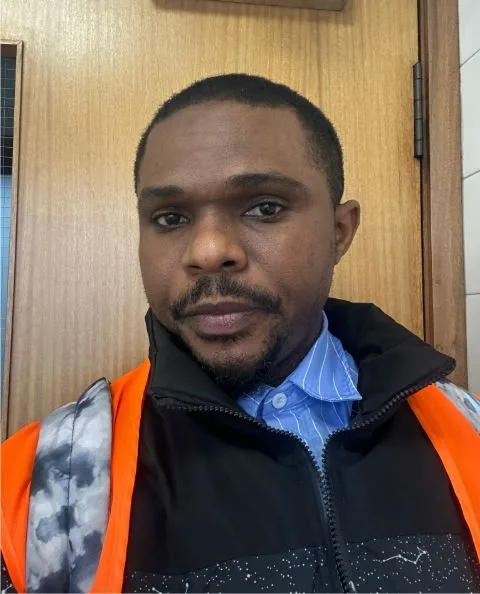
In this exclusive interview, Big News Network speaks with Godson Uche Nwanmuo, a UK-based Occupational Health and Safety professional at Diageo Scotland Limited, whose work focuses on integrating AI and data-driven systems into industrial safety environments. His work has contributed to measurable improvements in safety performance and is gaining recognition across industry and media platforms.
Interview
Q: Godson, workplace safety has traditionally been reactive. What is changing today?
Godson Nwanmuo:
For many years, safety systems have been built around reacting to incidents—investigating what went wrong and then implementing controls. While that approach has value, it doesn’t prevent the initial occurrence.
What is changing now is the ability to predict risk before it materializes. With the volume of data organizations already collect—incident reports, equipment data, behavioral insights—we can now apply AI and predictive analytics to identify patterns that precede incidents.
This allows us to move from incident response to risk prevention, which is a fundamental shift in how safety is managed.
Q: Can you share examples of how this works in practice?
Godson Nwanmuo:
Yes, within UK manufacturing environments where I have contributed to implementing AI-enabled safety and digital compliance systems, we have seen measurable impact.
For example:
- Over 85% reduction in incident risks in targeted operational areas
- Approximately 90% improvement in compliance visibility and response times
- Enhanced ability to identify high-risk conditions before failure
These improvements come from integrating predictive analytics into everyday safety processes, rather than treating safety as a separate compliance function.
Q: You’ve introduced the concept of “capacity-aware safety engineering.” What does that mean?
Godson Nwanmuo:
One of the most overlooked contributors to workplace incidents is system overload—when operational demands exceed human or system capacity.
Capacity-aware safety engineering introduces the idea that safety systems should account for:
- Workforce fatigue
- Environmental stressors
- Operational intensity
By aligning safety thresholds with real-time capacity data, organizations can reduce hidden risks that are not always visible through traditional safety metrics.
Q: How does AI improve decision-making in safety systems?
Godson Nwanmuo:
AI enhances decision-making by providing real-time insights and predictive signals.
For example:
- Detecting unsafe human–machine interactions early
- Identifying equipment degradation trends before failure
- Integrating health and wellbeing data into risk assessments
Importantly, AI does not replace people, it augments human judgement, enabling faster and more informed decisions.
Q: Your work also focuses on integrating safety systems across organizations. Why is this important?
Godson Nwanmuo:
In many organizations, safety data is siloed. It sits separately from operational, maintenance, or HR systems.
What I’ve focused on is creating interoperable safety architectures, where safety is embedded into:
- Production planning
- Workforce allocation
- Equipment maintenance
This ensures that safety is not an afterthought—it becomes part of how the organization operates daily.
Q: How does your work align with broader industry and UK priorities?
Godson Nwanmuo:
The UK is in a strong position to lead in AI-driven industrial safety, particularly within manufacturing and energy sectors.
My work aligns with key priorities such as:
- Digital transformation
- Industrial risk reduction
- Sustainable and efficient operations
The systems I’ve helped develop are not limited to one organization—they have potential for wider adoption across multiple industries, which is critical for national impact.
Q: You’ve also received external recognition for your work. Can you tell us more?
Godson Nwanmuo:
Yes, my work has been featured in media, including a Guardian Nigeria article on how AI is reshaping workplace safety in UK manufacturing and energy sectors.
I have also contributed to academic research published in the American Journal of Environment and Climate (2026) and participated in global research through IEEE conference review.
These platforms help share insights and contribute to broader industry discussions on the future of safety systems.
Q: What do you see as the future of workplace safety?
Godson Nwanmuo:
The future of safety lies in predictive, intelligent systems.
We are moving toward environments where:
- Risks are identified before they occur
- Systems continuously learn and improve
- Safety is integrated into every operational decision
Ultimately, the goal is simple:
To design systems where incidents do not happen in the first place.
Conclusion
Godson Uche Nwanmuo’ s work represents a shift from traditional safety practices toward data-driven, AI-enabled systems that prioritize prevention over reaction. As industries continue to evolve, approaches like his are expected to play a critical role in shaping safer, more resilient workplaces across the UK and beyond.