Are Premium Screen Protectors Truly Dust-Free and Safe for Kids?
You hand your child their tablet, and within minutes, it slips from their small hands and skids across the floor. Your stomach drops. Whether it’s a cracked screen, a web of scratches, or a smudged display that never quite looks right again, parents everywhere share this familiar anxiety. Protecting kids’ devices has become a real priority — and screen protectors are the first line of defense most families turn to.
But with so many options on the market, premium screen protectors make bold promises: bubble-free application, dust-free installation, eco-safe materials, and near-indestructible protection. The question is, do they actually deliver? Are these products genuinely safe for children who chew on everything, smear sticky fingers across screens, and drop devices from alarming heights?
This article breaks down exactly what premium screen protectors offer, starting with how automatic dust-free technology works and why it matters for parents. We’ll examine the materials used and what safety certifications to look for when children are involved. We’ll also put durability claims to the test against real-world kid behavior, guide you through choosing the right fit for your child’s device, and walk you through a foolproof installation process. By the end, you’ll have everything you need to make a confident, informed decision.
The Promise of Premium Screen Protectors: Dust-Free Technology Explained
Walk into any electronics store or scroll through online reviews, and you’ll quickly notice that not all screen protectors are created equal. Standard protectors are little more than thin plastic films that scratch easily, trap air bubbles during installation, and peel at the edges after a few weeks. Premium screen protectors, by contrast, are engineered with precision-cut materials, advanced adhesive layers, and installation systems designed to eliminate the frustrations that come with budget options. For parents who’ve wrestled with a bubbled-up protector on a squirming child’s tablet, that distinction matters enormously.
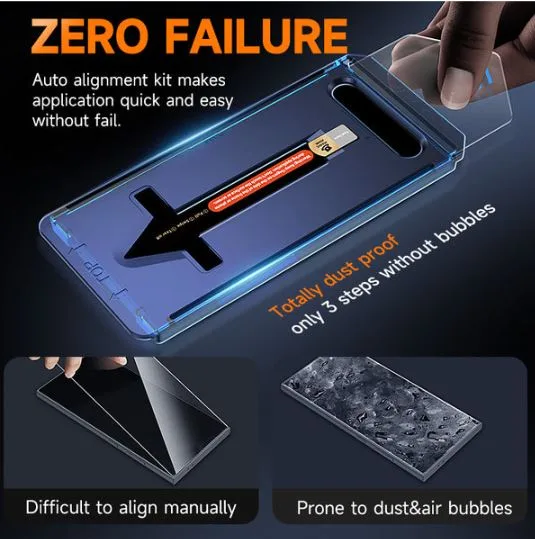
One of the most significant advances in premium screen protectors is automatic dust-free application technology. Traditional installation was a gamble — even in a clean room, microscopic dust particles would inevitably land on the adhesive side, creating those maddening trapped bubbles. Premium products solve this through self-adhesive silicone layers that repel dust rather than trap it, combined with precision alignment frames that position the protector correctly on the first attempt. Some systems even include electrostatic dust-absorption stickers that lift particles off the screen surface before the protector ever makes contact.
How Automatic Dust-Free Application Works in Practice
The mechanics behind automatic dust-free installation typically involve two key components working together: a rigid alignment frame and a layered adhesive system. The frame slots onto the device, ensuring the protector drops into exactly the right position without the guesswork that causes crooked installations. Meanwhile, the adhesive layer uses a silica gel coating that bonds firmly to the screen while resisting airborne particles during application. Brands like Spigen, MagicJohn, and TORRAS have popularized this approach through their installation kits, which include dust removal stickers and microfiber wipes as standard inclusions. For parents, the practical experience feels almost foolproof — you clean the screen, attach the alignment frame, peel the backing, and let the protector settle into place. No pressing, no squeegeeing frantically, no bubbles forming under your fingertips. The result is a crystal-clear fit that looks factory-applied, even when installed on a kitchen counter while a toddler tugs at your sleeve.
Safety First: Evaluating Screen Protectors for Kids’ Devices
When children are the primary users of a device, the materials touching that screen matter far more than most parents initially consider. Kids press their faces against tablets, lick screens during video calls, and handle devices with hands that frequently go straight into their mouths. A screen protector that contains harmful plasticizers, BPA-laden adhesives, or off-gassing chemicals isn’t just a product concern — it’s a health concern. Premium screen protectors address this directly by sourcing materials that meet recognized safety standards, and knowing what those standards look like helps parents shop with confidence rather than guesswork.
The two dominant materials in premium protectors are tempered glass and thermoplastic polyurethane, commonly called TPU. Tempered glass offers superior scratch resistance and a natural touch feel, while TPU provides flexible impact absorption that’s particularly valuable on devices that flex or bend during drops. Both materials, in their premium forms, should be certified free of BPA and phthalates — chemicals historically used in plastics that carry documented health risks for developing children. The adhesive layer deserves equal scrutiny. Non-toxic, silicone-based adhesives have replaced older acrylic formulations in quality products, eliminating the faint chemical odor that budget protectors sometimes emit when first applied.
Safety and durability are inseparable qualities in this context. A protector that degrades quickly — yellowing, peeling, or cracking — doesn’t just fail to protect the screen; it creates new hazards as fragments or lifted edges become chewing targets for younger children. Premium options are engineered to maintain their integrity over extended use, which means the safety profile you evaluate at purchase remains consistent throughout the product’s lifespan.
Eco-Friendly Materials and Non-Toxic Adhesives: What to Look For
Reading product labels becomes a practical skill for parents navigating this category. Look specifically for certifications like RoHS compliance, which restricts hazardous substances in electronic materials, and REACH certification from the European Chemicals Agency, which signals rigorous testing against toxic compounds. Products explicitly labeled BPA-free, phthalate-free, and using food-grade silicone adhesives represent the current safety benchmark. Some manufacturers go further by obtaining SGS certification — independent third-party testing that verifies material claims rather than relying solely on self-reporting. Beyond the protector itself, consider the environmental footprint: eco-conscious brands now offer packaging made from recycled materials and use manufacturing processes that minimize chemical waste. For parents who prioritize both child safety and environmental responsibility, these details distinguish genuinely premium products from those that simply carry a premium price tag.
Durability Test: Lasting Defense Against Scratches and Drops
Children are remarkably effective at stress-testing electronics. A tablet that survives a year in a child’s hands has genuinely earned its durability credentials. Premium screen protectors are engineered with this reality in mind, and their durability features go well beyond what budget alternatives offer. The most meaningful specification to understand is hardness rating. Premium tempered glass protectors typically carry a 9H hardness rating — the highest point on the pencil hardness scale used for glass testing — meaning keys, coins, and most sharp objects won’t leave a mark. For context, standard plastic film protectors rate around 3H to 4H, offering minimal resistance against the metal zipper on a backpack or the edge of a toy car dragged across a screen.
Impact resistance is the second critical dimension. Hardness alone doesn’t prevent a screen from shattering when a tablet hits tile floor from counter height. Premium protectors address this through multi-layer construction — typically a tempered glass surface bonded to a shock-absorbing silicone base layer that disperses impact energy rather than concentrating it at a single point. Oleophobic coatings add another layer of lasting defense by repelling fingerprints and smudges, which matters practically because a grimy screen encourages harder pressing and more aggressive wiping, both of which degrade uncoated surfaces faster. These coatings also make cleaning effortless, an underappreciated benefit when sticky-fingered kids are involved.
Real-World Scenarios: How Premium Protectors Hold Up for Active Children
The gap between laboratory testing and a seven-year-old’s backpack becomes clear quickly. In real-world conditions, premium protectors face drops from desk height onto hardwood floors, sustained contact with sand and grit at playgrounds, and the occasional encounter with a sibling’s toy. Drop tests conducted by independent reviewers consistently show that 9H tempered glass protectors absorb impact energy that would otherwise crack the device’s native screen, with the protector itself sometimes fracturing — as it’s designed to do — while leaving the underlying display intact. That sacrificial behavior is actually the correct outcome: replacing a protector costs a fraction of a screen repair. User feedback across parenting forums reinforces this pattern, with parents frequently reporting that protectors have taken visible damage from falls that the device itself escaped entirely. For families with younger children who tend to mouth or gnaw on device edges, the durability of the protector’s bond to the screen also matters — quality adhesives maintain their grip through repeated handling without lifting at corners and creating accessible edges.
Choosing the Right Premium Screen Protector: A Parent’s Guide
With dozens of options competing for attention, narrowing down the right premium screen protector starts with one non-negotiable: device compatibility. A protector cut for a slightly different model will leave exposed edges, interfere with the front camera, or fail to cover the corners where drops do the most damage. Always verify the exact device model and generation before purchasing — manufacturers frequently update dimensions between product cycles, and a protector designed for last year’s tablet may not deliver a clear fit on the current version.
Beyond compatibility, thickness influences both protection level and touch sensitivity. Most premium tempered glass protectors fall between 0.2mm and 0.4mm. Thinner profiles preserve the natural screen feel and stylus responsiveness, which matters for children using drawing apps or educational tools. Thicker options absorb more impact energy but can slightly alter touch sensitivity. For younger children who use devices primarily for videos and simple games, the added protection of a slightly thicker protector is worth the trade-off. Clarity is another practical concern — look for protectors with high light transmittance ratings, typically 99%, which ensures the screen’s brightness and color accuracy remain unaffected. A dim or color-shifted display encourages children to increase brightness, accelerating battery wear and eye strain.
Key Features to Prioritize for Kids’ Devices
When building your selection criteria, four features consistently separate genuinely protective products from marketing-heavy alternatives. Bubble-free application systems — specifically those with alignment frames — eliminate the installation frustration that causes parents to give up and leave protectors improperly seated. Edge-to-edge coverage ensures the full screen surface is protected, including the vulnerable corners that make first contact during most drops. Anti-glare coatings reduce reflections during outdoor use, preventing the squinting and close-screen posture that strains young eyes. Finally, check whether the manufacturer offers a warranty or replacement guarantee — brands confident in their product’s durability back it with one, and that assurance is meaningful when a child’s device is involved.
Step-by-Step: Achieving a Perfect, Dust-Free Installation
Even the most advanced screen protector delivers disappointing results when installed carelessly. The good news is that premium kits are specifically engineered to make the process straightforward, and following a deliberate sequence eliminates virtually every common failure point. The goal is a clear fit with no trapped particles, no misalignment, and no bubbles — achievable in under five minutes when you work methodically.
Pre-Installation Preparation: Setting Up a Dust-Free Zone
Environment matters more than most people realize. Choose a bathroom immediately after running a hot shower — the steam settles airborne dust particles, making it the cleanest low-effort workspace available in most homes. Lay a clean, flat surface to work on and wash your hands thoroughly before opening the kit. Use the included microfiber cloth to wipe the screen in circular motions, then follow with the adhesive dust-removal sticker by pressing it firmly across the entire screen surface and peeling it away. This two-step cleaning sequence lifts both smudges and microscopic particles that the cloth alone can miss. Work quickly once the screen is clean, as dust resettles within minutes.
The Installation Process: Aligning for a Clear Fit
Attach the alignment frame to the device first, snapping it securely into place around the edges. Peel only the bottom adhesive backing from the protector, leaving the top layer intact. Lower the protector into the frame slowly, letting it drop naturally rather than pressing it down. Once positioned, peel the remaining top layer while the protector settles against the screen. Premium kits with automatic dust-free adhesive systems require no squeegee — the silicone layer self-bonds and pushes residual air outward automatically.
Post-Installation Checks and Maintenance
Inspect the screen under a light source at a low angle to confirm no dust particles or bubbles remain. Small air pockets at edges typically resolve within 24 hours as the adhesive fully cures. For long-term care, clean the protector with a dry microfiber cloth rather than liquid cleaners, which can degrade oleophobic coatings over time. Check the edges monthly for lifting, particularly in households with younger children, and replace the protector promptly if cracking occurs to prevent exposed sharp edges.
Making the Right Choice for Your Child’s Device
Premium screen protectors genuinely deliver on their core promises — but only when you know what to look for. Automatic dust-free application technology has transformed what was once a frustrating guessing game into a reliable, repeatable process that parents can complete confidently without professional help. The alignment frames, silicone adhesive layers, and dust-removal tools included in quality kits aren’t marketing extras; they’re the difference between a crystal-clear result and a bubbled mess you’ll want to redo immediately.
On the safety front, the materials matter as much as the mechanics. BPA-free tempered glass, phthalate-free TPU, and food-grade silicone adhesives provide the non-toxic foundation that children’s devices specifically require. Paired with certifications like RoHS, REACH, and SGS, these features give parents a concrete basis for trust rather than just a marketing claim. And with 9H hardness ratings, multi-layer impact absorption, and oleophobic coatings providing lasting defense against the drops, scratches, and sticky fingerprints that define daily life with kids, premium protectors earn their place as a worthwhile investment.
The peace of mind that comes from knowing your child’s device is genuinely protected — by materials that are safe for little hands and mouths, applied cleanly and correctly — is worth far more than the price difference between budget and premium options. Choose carefully, install deliberately, and let the protector do its job.