Best Home Improvement Ideas to Increase Property Value and Transform Your Space
Whether you’re planning to sell your home in the next few years or simply want to enjoy a better living environment, home improvement is one of the most rewarding investments you can make. The right upgrades don’t just make your home look better — they genuinely increase its market value, reduce running costs, and improve your day-to-day quality of life.
But with so many options available, it can be hard to know where to start. Not all improvements are created equal. Some deliver spectacular returns; others cost a lot of money and add very little value. Understanding which projects belong in which category is the key to spending your improvement budget wisely.
This guide walks you through the best home improvement projects that consistently deliver real results — whether your goal is increased value, better functionality, improved aesthetics, or all three.
Why Home Improvement Is Always Worth Considering
The case for home improvement is strong from almost every angle. Homes that are well-maintained and updated sell faster, attract more buyers, and command better prices. Even if you’re not selling, improvements increase your enjoyment of your home and can reduce energy and maintenance costs over time.
There’s also a psychological dimension that shouldn’t be underestimated. Living in a space that feels updated, comfortable, and well-designed genuinely affects your wellbeing. A home that works for your life is a home you’ll enjoy living in.
The challenge, as always, is prioritising. There’s almost always more to do in a home than time or budget allows. That’s why focusing on projects with the highest impact — both for value and for enjoyment — makes the most sense.
Best Home Improvements to Increase Property Value
When it comes to the best home improvements to increase property value, certain categories consistently come out on top in research and real estate analysis. Here are the ones that reliably move the needle.
Kitchen Upgrades: The Highest-Return Room in the House
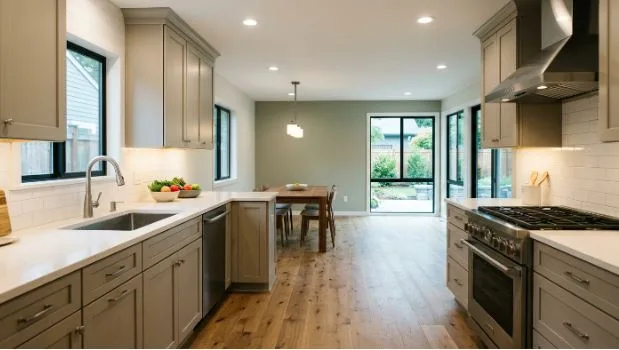
Ask any estate agent and they’ll tell you the same thing: kitchens sell houses. A well-designed kitchen with modern fixtures, good storage, and quality surfaces is one of the most compelling features a buyer can encounter. That’s why kitchen renovation consistently ranks among the best home improvements to increase value across almost all property types.
You don’t necessarily need a full gut renovation to make an impact. Replacing cabinet fronts, adding a new worktop, upgrading appliances, and refreshing the lighting can all transform a kitchen’s appearance at a fraction of the cost. For more comprehensive inspiration, explore ideas around kitchen decorations that balance style and practicality.
The key is to aim for timeless rather than trendy. A kitchen that looks like it was designed last year will feel dated in five. Clean lines, neutral palettes, and quality materials age well and appeal to the widest range of buyers.
Bathroom Improvements: Small Space, Big Impact
Bathrooms are another area where the best home improvement projects deliver strong returns. Like kitchens, a tired bathroom can genuinely put buyers off — and a fresh, clean, well-appointed one can make a memorable positive impression.
New tiling, a modern vanity unit, fresh fixtures, and good lighting can transform a bathroom without a structural remodel. En-suite bathrooms, in particular, are increasingly expected in family-sized homes. If your master bedroom doesn’t have one and there’s space to add it, the investment is usually well worth making.
Loft and Attic Conversions: Adding Living Space
Among the best improvements for home valuation, adding usable floor space is consistently the most powerful lever. A loft conversion typically adds significant square footage to a property at a lower cost per square metre than a ground-floor extension. An attic bedroom, home office, or playroom can add 15–20% to a property’s value in many markets.
The key considerations are headroom (there needs to be enough to stand comfortably), structural requirements, and planning permission depending on your location and the scope of work. Consult a specialist conversion company early — they can tell you quickly whether a loft conversion is viable and what it’s likely to cost.
Extensions and Additional Living Space
Ground-floor extensions — kitchen diners, rear living room extensions, side returns — are another consistently high-value improvement. They work particularly well on period properties where the original floor plan feels chopped up and the modern preference for open-plan living can’t be achieved without structural work.
Extensions are significant projects that require careful planning, building regulations compliance, and in most cases, planning permission. The costs are substantial, but so is the value uplift in most property markets. If you’re planning to stay in your home for a number of years, the quality of life improvement alone often justifies the investment.
Best Ways to Improve Home Value: Exterior and Kerb Appeal
The best ways to improve home value don’t all require major building works. Exterior presentation — what estate agents call kerb appeal — is one of the most cost-effective areas to invest in.
A freshly painted front door, new house numbers, well-maintained landscaping, and clean windows all contribute to a strong first impression. Buyers often decide within the first few seconds whether they like a property. That initial reaction happens before they step inside.
External rendering, new guttering, or a driveway resurface can also make a significant difference. These aren’t glamorous projects, but they signal that the property has been looked after — which is exactly the message you want to send. Consider the broader decor elements both inside and outside to create a consistent, well-presented property.
Interior Improvements That Buyers Love
Flooring: A Foundation for Everything Else
Flooring has an outsized impact on how a home feels. Tired carpet, damaged laminate, and outdated tiles can make an otherwise well-presented space feel neglected. New flooring — particularly wood or wood-effect in living spaces — is one of the most reliably appreciated improvements you can make.
In bedrooms, quality carpet remains popular and appropriate. In kitchens and bathrooms, tile or luxury vinyl plank flooring is the standard. Whatever you choose, make sure it flows naturally between rooms — a consistent flooring approach throughout a home creates a sense of spaciousness and coherence.
Updating Furniture and Fittings
The condition and style of a home’s furniture and built-in fittings matters more than most homeowners realise. When buyers view a property, they mentally project themselves into the space. Updated furniture decoration that looks contemporary and well-maintained makes that projection easier and more attractive.
Built-in storage is particularly valued — understairs cupboards, fitted wardrobes, and utility storage all score highly with buyers who are thinking about practical, daily living. Where budget is limited, decluttering and staging furniture to maximise the sense of space can achieve a lot without any significant expenditure.
Lighting: The Most Underrated Improvement
Good lighting transforms the way a space feels. Many older homes have a single ceiling pendant in each room — functional but flat. Layering light sources (ambient, task, and accent lighting) makes rooms feel more dynamic, warmer, and more sophisticated.
LED technology has made good lighting more accessible and energy-efficient than ever. Recessed downlights, under-cabinet lighting in kitchens, and well-positioned lamps in living spaces all contribute to a quality of light that buyers notice and respond to.
Best Home Improvement Projects: Understanding the Numbers
Before committing to any project, it helps to think through the financial logic. Not all best home improvement projects return the same value, and the return often depends heavily on the current state of the property and the local market.
In broad terms, the projects that tend to deliver the best returns are those that bring a property up to the standard expected for its size and location — not those that push it well beyond that standard. Adding a swimming pool to a modest terraced house, for example, is unlikely to deliver meaningful value uplift. But updating a tired kitchen in a family-sized home to a modern, functional standard almost always does.
A useful rule of thumb: improvements that increase living space, improve energy efficiency, or correct obvious deficiencies (poor kitchens, outdated bathrooms, structural problems) tend to deliver strong returns. Luxury additions and highly personalised projects are riskier from a value perspective.
Navigating Home Improvement Retailers
Best Home Improvement Retailers: How-To Guides and Project Support
One of the underappreciated benefits of shopping at major home improvement retailers is the support they offer. Best home improvement retailers how-to guides are genuinely useful resources, particularly for homeowners tackling projects themselves for the first time. Video tutorials, step-by-step guides, and in-store advice can save you significant money and prevent costly mistakes.
Major chains typically invest heavily in this kind of content because it drives engagement and loyalty. If you’re unsure how to tackle a specific project, checking a retailer’s project library before hiring a tradesperson can help you understand the scope and complexity of the work — which puts you in a much stronger position when getting quotes.
Best Home Improvement Retailers: Project Authority and Expertise
Not all retailers are created equal. Best home improvement retailers project authority refers to the degree to which a retailer is genuinely knowledgeable about and invested in the success of your specific project. The best retailers have knowledgeable staff who can give real advice, planning services for kitchens and bathrooms, and clear guidance on building regulations and planning requirements.
When choosing a retailer for a significant project, ask about their design services, installation partners, and after-sales support. A retailer who stands behind their products and their installation teams is worth paying a small premium for — the peace of mind is genuinely valuable.
Product Selection and Availability: What to Look For
When it comes to best home improvement retailers product selection availability, breadth matters. A retailer who stocks a wide range of options within a category gives you more chance of finding exactly what works for your specific space, budget, and style. Availability also matters practically — if a product is regularly out of stock or has long lead times, a project timeline can quickly unravel.
Check delivery options, lead times for custom or made-to-order items, and what happens if something arrives damaged. A reliable returns process is a good indicator of a retailer who genuinely stands behind what they sell.
Financing Your Home Improvement: Personal Loans and Other Options
For larger projects, the question of how to fund the work is as important as what to do. Best personal loans for home improvement are a popular financing option — they’re relatively simple to arrange, have predictable repayment schedules, and don’t require you to secure the borrowing against your property.
When comparing loan options, focus on the Annual Percentage Rate (APR) rather than the headline interest rate. The APR captures all the costs of borrowing and gives you a true like-for-like comparison between different products. Also consider the loan term — a longer term means lower monthly payments but more total interest paid.
Other financing options include remortgaging (releasing equity from your property), home improvement credit cards with 0% promotional periods, and government-backed green energy financing schemes. The right option depends on the size of the project, your credit profile, and how long you plan to stay in the property.
Whatever route you take, resist the temptation to overborrow. A home improvement project that adds real value should enhance your financial position, not strain it.
Planning Your Home Improvement: Practical Steps
With a clear sense of what you want to achieve, here’s a practical approach to getting started.
Start with a detailed wish list, then prioritise. Which projects would make the biggest difference to your daily life? Which would add the most value if you sold? Which are you most financially positioned to tackle right now? This exercise helps you distinguish between what’s urgent, what’s desirable, and what can wait.
Get multiple quotes for any significant work involving tradespeople. Three quotes is the traditional recommendation — it gives you a sense of the market rate and helps you identify any outliers. Don’t automatically choose the cheapest; references, timelines, and the quality of communication matter as much as the bottom-line figure.
Plan for contingency. Almost every significant building project encounters something unexpected. Setting aside 10–15% of your total budget as a contingency fund protects you from the stress of cost overruns derailing the whole project.
FAQs About Best Home Improvement
Q: What are the best home improvements to increase value before selling?
The best home improvements to increase value before selling include kitchen and bathroom updates, new flooring, fresh paint throughout, improved kerb appeal, and addressing any obvious structural or maintenance issues. These are the improvements that buyers notice first and value most.
Q: What are the best home improvement projects for a limited budget?
With a limited budget, focus on high-impact, low-cost changes: a fresh coat of paint, new door handles and light fittings, decluttering and deep cleaning, and improving your garden’s presentation. These changes cost relatively little but can significantly improve first impressions.
Q: Are personal loans a good way to finance home improvement?
For many homeowners, best personal loans for home improvement represent an accessible and straightforward financing option. They work well for medium-sized projects. For very large projects, remortgaging or equity release may offer better rates. Always compare the total cost of borrowing, not just the monthly payment.
Q: What are the best improvements for home valuation purposes?
Projects that add square footage (loft conversions, extensions), improve the kitchen and bathrooms, and enhance energy efficiency tend to have the strongest impact on best improvements for home valuation outcomes. A surveyor or estate agent can give you a more tailored view based on your specific property and local market.
Q: How do I choose between home improvement retailers?
Look for retailers with strong product ranges, genuine project support, good customer reviews, and clear returns policies. For significant projects, a retailer who offers design services and installation partnerships can simplify the whole process considerably. Don’t underestimate the value of knowledgeable in-store staff.
Q: What are the best ways to improve home value without major renovation?
Among the best ways to improve home value without major building work: fresh paint throughout, new flooring, updated lighting, improved landscaping, decluttering, and professional photography for selling. These changes cost relatively little but can meaningfully affect how a property is perceived and priced.
Q: How long does a typical home improvement project take?
Timeline varies enormously by project type. A bathroom renovation might take one to two weeks; a loft conversion typically takes six to eight weeks; a full kitchen refurbishment could be anywhere from one to four weeks depending on the scope. Always build extra time into your planning — delays due to material lead times, weather, or unforeseen complications are common.
Q: Is home improvement worth it even if I’m not planning to sell?
Absolutely. Beyond financial value, home improvement enhances your day-to-day enjoyment of your space. A home that works well for your lifestyle, looks beautiful, and feels comfortable to live in has a quality-of-life value that’s difficult to put a number on — but is very real.