How Energy Price Swings Are Reshaping Mineral Rights Decisions in Texas
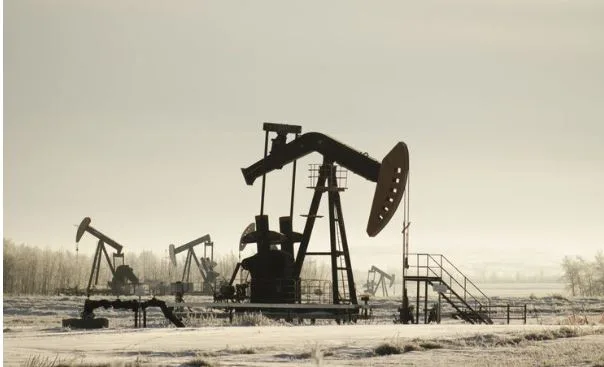
A Texas mineral owner can go from feeling patient to feeling rushed in one bad week for oil prices. That shift is not just emotional. It changes how buyers price risk, how families read their royalty checks, and how fast sale offers start to look serious. In Texas, mineral decisions now sit much closer to global energy shocks than many owners expect.
The Price on the Screen Is Only Part of the Story
Most mineral owners watch oil prices in a simple way. If crude rises, value should rise. If crude falls, value should fall. Real deals are not that clean. Buyers look at current prices, but they also look at how long those prices may last, how much risk sits behind them, and what local drilling activity looks like.
That matters more in 2026 because oil markets have moved sharply. The U.S. Energy Information Administration said Brent averaged $103 per barrel in March and expects it to peak in the second quarter at $115 before easing later in the year. The same outlook said the Brent-WTI spread averaged $12 in March and may peak at $15 in April. In plain terms, the market has been pricing in stress, not stability.
For Texas mineral owners, that kind of swing creates a strange setup. Higher prices can lift interest from buyers, but sharp moves also make buyers more defensive. They start protecting themselves against the next drop.
Why Buyers Get More Careful When Markets Turn Fast
Mineral rights are priced like an income asset. A buyer is not paying for today alone. The buyer is trying to estimate future royalty cash, then discount it for risk. That risk can come from commodity prices, decline rates, lease terms, title issues, or drilling timing.
This year, that risk picture has become harder to read. CME noted this month that the WTI futures curve moved into steep backwardation after the conflict tied to Iran began on February 28, with December 2026 futures trading as much as $40 below near-term May or June prices. That usually signals a market that thinks current tightness may not last. So even when spot prices look strong, buyers may still hold back or structure offers more carefully.
That is one reason more owners are spending time learning the basics of selling mineral rights in Texas before reacting to a single offer. In a steady market, a rough estimate may feel good enough. In a jumpy market, small details can change the number a lot.
Royalty Checks Feel the Change Before a Sale Happens
For producing owners, the first signal is often not a phone call from a buyer. It is the monthly statement. When oil and gas prices jump, royalty income can improve fast. When prices fall back, those checks can shrink just as fast. That changes how families think about holding versus selling.
Some owners see a run-up in prices and want to sell while numbers still look strong. Others do the opposite. They hold because higher checks make the asset feel worth keeping. Both reactions are understandable. The problem comes when a short-term spike gets mistaken for a long-term floor.
This is where people need to slow down a bit. A tract that is already paying will often look stronger on paper, but buyers are not only looking at the last few checks. They also look at what may happen next, how active the area is, and if there is still room for more drilling. So if royalty income jumps for a short period because prices moved fast, that does not always mean the same offer will still make sense a few months later.
Drilling Activity Still Sets the Local Mood
Big global price moves grab headlines, but local drilling still does a lot of the real work in Texas. A tract near active development will usually get more serious attention than one sitting in a quiet area, even if both owners are watching the same oil chart.
The Railroad Commission of Texas said the state issued 692 original drilling permits in March 2026, including 624 for new oil or gas wells, and processed 1,112 oil completions plus 478 gas completions. That does not mean every county is hot. It does show that buyer interest is still being shaped by real field activity, not headlines alone.
This is where many owners make a common mistake. They assume that strong oil prices automatically lift every mineral asset. In practice, buyers keep asking local questions. Is there active development nearby? Has an operator been consistent? Are there drilled but uncompleted wells? Is this tract tied to proven production or just a possibility?
Uncertainty Is Changing Timing Decisions
Price swings do not just change value. They change behavior. The Dallas Fed’s first-quarter 2026 Energy Survey found that oil and gas activity in the Eleventh District increased, but uncertainty stayed elevated. The survey’s business activity index rose to 21.0, while the outlook uncertainty index climbed to 53.7. Respondents also said they expect WTI to average $74 per barrel by year-end 2026, which shows how much cooler their forward view was than current market conditions.
That gap says a lot. Operators and energy firms are seeing solid current prices, but they are not fully trusting them. Mineral buyers often think the same way. So the market can look strong on the surface while buyers quietly widen their safety margin underneath.
For owners, this changes timing decisions in three main ways:
- Some sell sooner because today’s numbers look better than the forward view,
- Some wait for nearby drilling proof instead of chasing a price spike,
- Some ask for more bids because one buyer’s caution may not match another’s.
The Best Decisions Are Getting More Specific
Energy volatility is pushing mineral owners toward more detailed decisions, not simpler ones. A few years ago, some sellers may have accepted the first decent offer and moved on. Now the smarter path is usually slower and more specific.
Owners are paying closer attention to the exact interest being sold, recent royalty history, lease deductions, county-level activity, and buyer assumptions. They are also separating a good market from a good deal. Those are not always the same thing.
A price swing can create urgency, but urgency is rarely the best guide. A better guide is a calm read of cash flow, local development, and timing risk. Texas mineral rights have always been tied to energy markets. The difference now is how quickly global shocks are showing up in local decisions. When oil moves hard, the smartest sellers do not just watch the price. They watch what the price is doing to everyone else in the room.