Temporary Office Solutions for Small Businesses
The traditional office lease is no longer the only way to run a business. Many small business owners are realizing that long-term contracts can be a heavy burden. This is especially true when a company is growing quickly or testing a new market.
The year 2026 has brought a massive shift in how we think about work environments. Flexibility is now the most important tool for staying competitive. Business owners want spaces that can change as fast as their goals do.
Temporary office solutions offer a bridge between working from home and signing a five-year lease. These options allow teams to stay professional without the financial risk. Small businesses can now choose where they work based on their current needs.
Coworking Spaces as a Strategic Hub
Coworking is not just for freelancers with laptops anymore. Modern shared spaces now cater specifically to small teams and growing startups. They provide high-speed internet, meeting rooms, and coffee without the overhead of utilities.
A major benefit of these spaces is the built-in community. Working around other entrepreneurs can spark new ideas and partnerships. It removes the isolation that often comes with running a small business.
These hubs often offer month-to-month memberships. If a team expands, they can simply add another desk or move to a private suite. This scalability makes it easy to manage a budget while keeping everyone productive.
Reimagining the Shipping Container
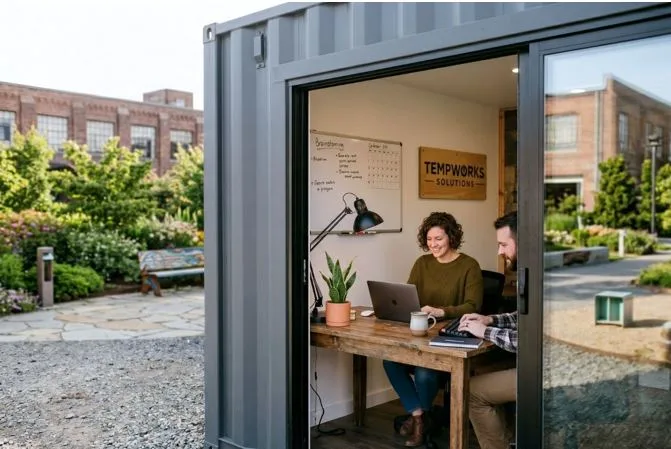
One of the most creative trends involves turning heavy steel into high-end workspaces. Using storage containers for rent has become a popular way to create a dedicated office on a budget. These units are incredibly durable and surprisingly comfortable when outfitted correctly.
You can place them on a piece of land or even in a large warehouse. They offer a private, quiet environment that is separate from a home or a busy shop. Many companies now provide these with finished walls, lighting, and insulation.
This solution is perfect for businesses that need to be near their inventory or equipment. It keeps the team close to the action while providing a professional place for deep focus. Plus, the industrial aesthetic looks modern and unique to clients.
Modular Units for On-Site Professionalism
Sometimes a business needs to be right in the middle of a project. For those in construction, events, or disaster relief, having a base of operations is essential. This is where portable office rentals save the day by providing an instant workspace.
These units are delivered to your location and set up in a matter of hours. They come equipped with air conditioning, desks, and electricity. It is a far better experience than trying to run a company out of a car or a cramped tent.
Because they are mobile, you can move your office as the project moves. This keeps your supervisors and administrative staff where they are needed most. When the job is finished, the rental company simply hauls the unit away.
The Financial Benefits of Going Temporary
Every dollar counts when you are managing a small business budget. Traditional leases often require huge security deposits and expensive insurance. Temporary solutions usually have much lower upfront costs.
Renting space or equipment allows you to keep your capital liquid. You can spend that money on marketing or hiring instead of a lobby sofa. It also simplifies your taxes by turning a fixed asset into an operating expense.
Maintenance is another area where you save money. Most temporary solutions include cleaning, repairs, and security in the price. You do not have to worry about a leaking roof or a broken heater.
Designing a Productive Short-Term Space
A temporary office does not have to feel like a waiting room. You can make it your own with small, smart design choices. Plants, rugs, and good lighting can transform a metal box into a cozy den.
Focus on modular furniture that is easy to move around. This allows you to change the layout for a team meeting or a quiet work day. Lightweight desks and chairs on wheels are excellent investments for flexible spaces.
Technology should be the backbone of your temporary setup. Invest in reliable mobile hotspots or mesh Wi-Fi systems. Ensure your team has the right tools to stay connected even if the location changes.
Overcoming the Noise Challenge
Privacy can be a concern in shared or mobile environments. Open coworking floors can get loud during the busy hours of the day. Small business owners need to plan for these distractions to keep the team focused.
Acoustic panels and noise-canceling headphones are simple fixes. Many modular offices now come with sound-dampening materials built into the walls. You can also create “quiet zones” where phone calls and loud talking are not allowed.
If you are using a shared space, look for “phone booths” or small pods. These are perfect for private client calls or video meetings. Balancing social interaction with quiet time is the secret to a happy team.
Sustainability and the Circular Economy
Many small business owners care deeply about their environmental footprint. Renting an office solution is often more sustainable than building something new. It promotes the reuse of structures and materials that already exist.
Modular units and containers are part of a circular economy. They are refurbished and used by many different companies over several years. This reduces the waste generated by traditional construction projects.
Eco-friendly upgrades are also becoming more common in these rentals. You can find units with solar panels and energy-efficient LED lighting. Choosing a temporary path can align with your company’s green values.
Finding the Right Fit for Your Brand
Your office is a reflection of your company culture. A high-tech coworking space might suit a software startup perfectly. A rugged, mobile unit might be better for a landscape design firm.
Think about how your clients will perceive your workspace. If you meet with people in person, you need a place that feels welcoming. If your team is entirely remote and only meets once a month, a casual hub is fine.
Take the time to tour several options before making a choice. Most providers offer day passes or short trial periods. Seeing the space in action will help you decide if the energy fits your brand.
The Future of the Small Business Office
The physical office is becoming a tool rather than a destination. It is a place to gather, collaborate, and then go home. Temporary solutions make this “purposeful” office possible for everyone.
As technology improves, these spaces will become even more advanced. We can expect better climate control, integrated smart tech, and even more mobility. The barriers to starting a professional business are lower than they have ever been.
Embracing the temporary mindset gives you the freedom to take risks. You can try out a new city or a new neighborhood without a long commitment. This agility is the greatest strength a small business can have in a changing world.