The Evolution of E-commerce: How Fast-Turnaround Custom Manufacturing is Transforming the Jewelry Retail Market
The digital retail landscape is shifting at an unprecedented pace. For e-commerce entrepreneurs and online retail brand owners, the days of relying on static, seasonal collections are fading. Today’s market is driven by agility, personalization, and responsive supply chains. Nowhere is this transformation more evident than in the jewelry sector, where fast-turnaround custom manufacturing is entirely redefining how brands operate, scale, and satisfy modern consumer demands.
The Shift from Mass Production to On-Demand Personalization
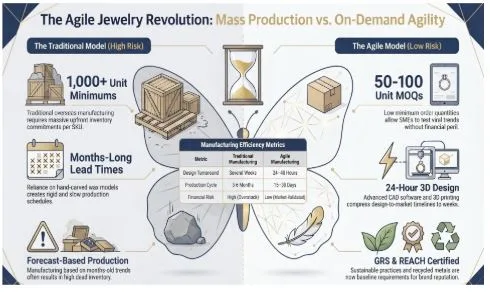
Historically, jewelry retail relied heavily on a mass-production model. Brands would forecast trends months in advance, manufacture large quantities of generic pieces, and hope consumer appetite matched their inventory. This approach frequently resulted in substantial dead inventory, eating into profit margins and tying up vital capital.
Modern consumers, however, no longer want generic jewelry. There is a definitive shift toward hyper-personalization. Buyers seek unique, meaningful pieces that reflect their individual styles. To adapt, forward-thinking e-commerce brands are pivoting to “on-demand” production models. By producing goods only as market data validates demand, agile brands drastically reduce overhead costs and eliminate the financial risks associated with overstocking.
Addressing the Supply Chain Bottleneck in Fashion Retail
Transitioning to an on-demand model requires overcoming traditional manufacturing bottlenecks. Long lead times and rigid production schedules are the enemies of modern e-commerce.
The Importance of Rapid Prototyping (3D Design)
To keep pace with viral fashion trends, retail brands can no longer wait months for product development. The modern supply chain relies heavily on rapid prototyping. For instance, partnering with an agile Azone Jewelry that utilizes advanced software to produce 3D designs within 24 hours allows e-commerce brands to transition from concept to mass production with unprecedented speed, effectively capturing fleeting market demands.
This technological leap—from traditional hand-carved wax models to Computer-Aided Design (CAD) and high-resolution 3D printing—compresses the design-to-market timeline from months to mere weeks.
Lowering Barriers to Entry with Low MOQ Models
Traditional overseas manufacturing often requires massive upfront commitments, sometimes demanding thousands of units per SKU. This high barrier to entry stifles innovation and locks out emerging designers.
The rise of manufacturers offering low Minimum Order Quantities (MOQs)—sometimes as low as 50 to 100 pieces—is a game-changer. These low-MOQ models empower small-to-medium enterprises (SMEs) and fashion startup founders to test market trends quickly without heavy financial risk. If a piece goes viral on social media, the brand can quickly scale production; if it fails to resonate, the financial impact is minimal.
Sustainability is No Longer Optional (The Green Shift)
As supply chains become more efficient, they must also become more ethical. Sustainability is no longer a marketing buzzword; it is a baseline consumer expectation. Today’s buyers actively seek transparency regarding how and where their jewelry is made.
There is a surging demand for ethically sourced materials, conflict-free gemstones, and recycled metals within the jewelry sector. For B2B buyers and retail brands, aligning with global sustainability standards is crucial for brand reputation. Manufacturers that hold recognized global certifications, such as the Global Recycled Standard (GRS) and REACH compliance, provide e-commerce brands with the verifiable proof they need to market their products as genuinely eco-friendly.
How to Vet a Reliable Manufacturing Partner Overseas
A brand is only as strong as its supply chain. For e-commerce entrepreneurs, selecting the right Original Equipment Manufacturer (OEM) or Original Design Manufacturer (ODM) requires strict due diligence.
To ensure seamless integration and consistent quality, business owners should utilize a strict vetting checklist:
- Verify Global Certifications: Ensure the partner holds authentic, up-to-date certifications (e.g., GRS, ISO standards) for ethical and sustainable practices.
- Evaluate Lead Times and Tech Stacks: Prioritize partners who offer rapid 3D design turnarounds (24-48 hours) and production cycles of 15-30 days.
- Assess MOQ Flexibility: Confirm that their Minimum Order Quantities align with your brand’s testing and scaling strategies.
- Review Quality Control (QC) Protocols: Inquire about their defect rate and step-by-step inspection processes before shipment.
- Test Communication Efficiency: A reliable B2B partner must offer transparent, responsive, and fluent communication to prevent costly misunderstandings.
When evaluating a production partner, due diligence is critical. Beyond evaluating lead times and material quality, brands must ensure their partners adhere to international labor and environmental standards. Considering that the global jewelry market is projected to experience significant compounded growth over the next decade, aligning with certified, forward-thinking manufacturers is the only way to build a sustainable and scalable enterprise.
Key Takeaways
| Area | Key Takeaway | Impact/Data |
| Inventory Model | Shift to on-demand | Kills dead stock |
| Design Speed | Use 24h 3D designs | Cuts time to weeks |
| Production Risk | Source 50-100 MOQs | Caps financial risk |
| Eco Compliance | Require GRS & REACH | Secures buyer trust |
| Vendor Vetting | Vet 15-30 day cycles | Drives agility |
The Future Outlook for Global Jewelry E-commerce
The intersection of technology, sustainable practices, and on-demand manufacturing is paving a new path for global jewelry e-commerce. As consumer preferences continue to evolve toward speed and personalization, rigid supply chains will inevitably collapse under their own weight.
The winners of the next decade in online retail will not necessarily be the brands with the largest marketing budgets, but those with the most agile, responsive, and ethical supply chains. By leveraging rapid prototyping, low-MOQ testing, and certified sustainable manufacturing, e-commerce brands can future-proof their operations and secure lasting loyalty in a highly competitive digital marketplace.