Redefining the Democratic Playbook: Alexandria Ocasio-Cortez’s Viable Path to the Presidency in 2028
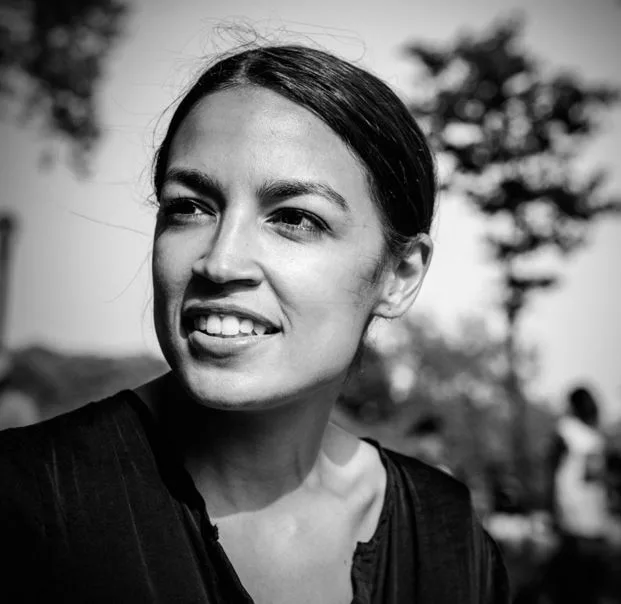
American politics is undergoing a generational metamorphosis. The old guard of the Democratic Party is steadily giving way to a new, structurally diverse, and ideologically bold cohort of leaders. At the absolute center of this paradigm shift stands Representative Alexandria Ocasio-Cortez. Since her earth-shattering primary victory in 2018, she has evolved from a progressive firebrand into a seasoned legislator and a formidable national figure. But the question that continues to echo through the halls of Washington and across grassroots organizing spaces is no longer just about her influence in Congress—it is about her ultimate ceiling.
As expertly outlined in a recent analysis by Merged Insight, the prospect of an AOC presidential run in 2028 is not merely progressive fan fiction; it is a politically viable scenario rooted in shifting demographics, evolving economic anxieties, and a masterclass in modern political communication. Building upon the foundational roadmap laid out by Merged Insight, it is crucial to dive deeper into the specific mechanics, demographic coalitions, and strategic pivots that could transform Alexandria Ocasio-Cortez from a New York representative into the President of the United States.
The Evolution from Outsider to Institutional Anchor
To understand her pathway to victory in 2028, one must first recognize how Ocasio-Cortez has strategically repositioned herself. In her early years, she was the quintessential outsider, a disruptor who routinely clashed with the Democratic establishment. However, her recent tenures in Congress have showcased a remarkable political maturation. She has learned the intricate dance of legislative maneuvering, serving on powerful committees, and forging quiet alliances with moderate Democrats and labor unions.
This evolution is critical. A successful presidential candidate cannot rely solely on a fractured, albeit passionate, progressive base. Merged Insight correctly points out that AOC’s pathway relies on coalition-building. By positioning herself as a bridge between the establishment and the progressive wing, she neutralizes one of her biggest vulnerabilities: the accusation that she is too radical to govern. In 2028, she will have a decade of congressional experience under her belt, transforming her resume from that of a “socialist agitator” to a seasoned lawmaker who understands how to pull the levers of federal power.
Demographics as Electoral Destiny
The most potent weapon in Ocasio-Cortez’s 2028 arsenal will be the electorate itself. By the time the 2028 primaries begin, Millennials and Generation Z will constitute a massive, if not dominant, plurality of the voting-age population. These generations have been forged in the fires of back-to-back economic crises, a global pandemic, and the escalating existential threat of climate change.
Traditional political wisdom suggests that young people do not vote reliably. However, recent election cycles have upended this narrative, showing record youth turnout when the stakes are clearly communicated. AOC speaks the native language of these generations. Her mastery of digital platforms—from Instagram Live to Twitch—allows her to bypass traditional media gatekeepers and communicate with voters directly, authentically, and without the sterile filter of political consultants.
But it is not just about digital fluency; it is about policy alignment. As Merged Insight’s analysis highlights, AOC’s core platform—universal healthcare, aggressive climate action via a Green New Deal, and systemic economic reform—aligns perfectly with the stated priorities of voters under 40. By 2028, these will not be fringe progressive demands; they will be the baseline expectations of the Democratic base.
Forging a Multiracial Working-Class Coalition
Perhaps the most challenging, yet necessary, step in her pathway to victory is the expansion of her appeal beyond the coastal, college-educated progressives. For Ocasio-Cortez to secure the nomination and win a general election, she must aggressively court the multiracial working class.
Critics often argue that her brand of politics alienates working-class voters in the Rust Belt and the Sun Belt. However, this relies on an outdated definition of the working class. The modern American working class is incredibly diverse, comprising millions of service workers, nurses, teachers, and gig economy participants of all racial backgrounds. AOC’s background—a former bartender whose family faced foreclosure and medical debt—gives her a potent, populist authenticity that many polished politicians lack.
To win in 2028, her messaging must relentlessly focus on economic populism. By framing her progressive policies not as ideological experiments, but as practical solutions to the crushing cost of living, housing shortages, and wage stagnation, she can resonate in places like Michigan, Pennsylvania, and Nevada. If she can successfully marry the cultural energy of the youth vote with the economic anxieties of the multiracial working class, she creates an electoral coalition that is practically unbeatable.
Navigating the Gauntlet: The Electoral College and Swing State Strategy
Even with a perfect coalition, the reality of the Electoral College remains a formidable hurdle. The primary critique of an AOC presidential bid is that she cannot win in purple states. Addressing this requires a nuanced electoral strategy.
The pathway to victory in 2028 will require an expanded map. While traditional battlegrounds like Pennsylvania and Wisconsin will remain crucial, Ocasio-Cortez’s unique strengths could put newer battlegrounds firmly in play. States with growing Latino populations and massive urban centers—such as Texas, Arizona, and Georgia—present prime opportunities for a candidate who can turbocharge base turnout.
Furthermore, her ability to drive massive grassroots fundraising means she would not be beholden to corporate PACs or billionaire mega-donors, allowing her to compete financially in a sprawling 50-state campaign. As noted by Merged Insight, the sheer scale of her small-dollar donor network is a testament to her national reach, providing the war chest necessary to build formidable ground games in states that the Democratic Party typically struggles to fund.
Conclusion: The Inevitability of a New Era
Alexandria Ocasio-Cortez’s pathway to the presidency in 2028 is steep, complex, and fraught with institutional resistance. She will face intense scrutiny, millions of dollars in opposition spending, and the inherent biases of a political system designed to resist rapid change. Yet, dismissing her chances is a failure of political imagination.
As Merged Insight has astutely argued, the conditions are ripe for a transformative figure to seize the mantle of leadership. Ocasio-Cortez possesses a rare combination of generational appeal, legislative experience, and unparalleled communication skills. If she continues to weave her progressive vision into the broader narrative of American economic renewal, and if she successfully bridges the gap between grassroots activists and everyday working Americans, 2028 may very well be the year she shatters the ultimate glass ceiling. The roadmap is there; it is simply a matter of execution.